15 May 2025 - {{hitsCtrl.values.hits}}
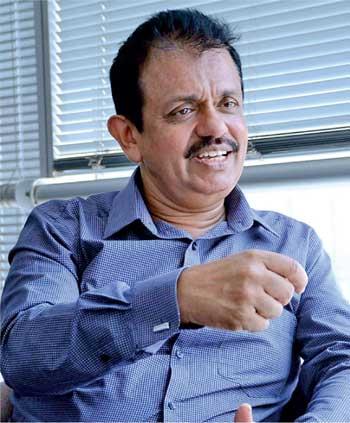 |
| Dr. Dharmasri Kumaratunga Pic by Waruna Wanniaarachchi |
By Nishel Fernando
A recent decision by the Central Bank (CB) to double the Merchant Discount Rate (MDR) for QR code transactions, raising it from 0.5 percent to 1 percent, has ignited strong criticism from a leading digital payments expert and former Central Banker.
Dr. Dharmasri Kumaratunga, who held key roles as a former Central Banker, Secretary of the Ministry of Technology, Telecommunications Regulatory Commission, and Chairman of ICTA, has voiced noteworthy opposition to the move.
Notably, he played a crucial role in overseeing digital payments at the CB, particularly during the tenure of former CB Governor Indrajith Coomaraswamy.
Dr. Kumaratunga currently serves as a Consultant at MasterCard and an Independent Director at Union Bank of Colombo.
In an interview with Mirror Business, Dr. Kumaratunga asserted that the MDR hike directly undermines the nation’s ongoing efforts to promote digital payments and enhance financial inclusion, especially through the LankaQR national standard.
His comments underscore a perceived lack of proactive engagement from the CB in fostering LankaQR adoption in recent years.
“This increase in MDR is a step backward. We are striving to encourage merchants, particularly small businesses in rural areas, to embrace digital payments via QR codes. Imposing a higher charge will undoubtedly discourage their participation and impede the very objective of integrating the informal sector into the formal economy,” he said.
Dr. Kumaratunga drew a stark contrast with the successful digital payment ecosystems in Singapore and India, where the MDR for QR code transactions stands at 0 percent.
While acknowledging potential concerns from banks regarding lost revenue with a zero MDR, he emphasised the potential for increased transaction volumes and the overall cash flow generated by broader QR code adoption to compensate these concerns. He pointed out that developed nations and India, partly through government funding, recognise the net positive impact of promoting QR code usage on the banking sector.
China leads in QR code payments with Alipay and WeChat Pay, boasting over 90 percent urban user adoption. India has rapidly adopted QR payments via its UPI system and popular fintech apps. Indonesia’s mandatory QRIS standard aims for a cashless economy by 2025.
Thailand’s PromptPay integrates with QR codes and supports cross-border payments. Singapore’s unified SGQR is widely used and links with other countries’ systems. Malaysia’s DuitNow QR ensures interoperability and participates in a regional QR network while Vietnam is experiencing rapid growth in QR payments driven by local fintech and the VietQR initiative.
Dr. Kumaratunga also shed light on previous collaborative efforts to streamline Sri Lanka’s fragmented QR code landscape. Initially, individual banks promoted their own proprietary QR codes, leading to confusion and inconvenience for both merchants and consumers.
To address this, a collaborative community was established, bringing together key stakeholders from the banking, non-bank financial institutions, telecommunications, and FinTech sectors to champion the national LankaQR standard. This initiative fostered unprecedented cooperation, shifting away from isolated endeavors and intense competition.
“This community-driven approach, which even included dedicated communication channels for swift technical issue resolution, demonstrated the industry’s commitment to unified progress.
Banks themselves have shown a willingness to align with Central Bank regulations to advance the digital payments agenda. Yet, progress has been slow, and this MDR increase feels like a setback to this collaborative spirit,” he said.
He further underscored that the primary goal of introducing QR codes extends beyond large retailers to promote financial inclusion at the grassroots level. Imposing charges on small shops in villages could prove to be a significant deterrent, undermining the broader aim of formalizing the informal economy.
He clarified that the LankaQR system is a national initiative, developed independently, and utilizes the EMI core with domestic regulations. While acknowledging a prior QR payment system, he affirmed that the current LankaQR is the established standard. He believes that proactive promotion through diverse media channels, drawing inspiration from successful campaigns in India, is crucial for wider adoption.
Dr. Kumaratunga also drew parallels with the successful adoption of ATMs in Sri Lanka, which initially faced resistance but became widespread with increased awareness and accessibility. He argued that a similar focused effort on building awareness and trust is essential for digital payments. He pointed to the successful implementation of awareness programs in India, Singapore, and Malaysia, spearheaded by their respective central banks.
He went on to strongly advocate for the Central Bank’s active involvement in promoting digital payments, emphasising the need for security, efficiency, and public trust in systems handling public and customer funds. He noted that while LankaQR was launched in 2018, similar to Singapore, and India had a QR code system even earlier, these nations have progressed at a faster pace, likely due to strong central bank initiatives driving adoption.
He urged the Central Bank to reconsider the MDR increase and instead prioritise awareness campaigns and user-friendly solutions to accelerate the adoption of digital payments and realize the full potential of LankaQR for Sri Lanka’s economic growth and financial inclusion.
05 Jun 2026 3 minute ago
05 Jun 2026 6 minute ago
05 Jun 2026 9 minute ago
05 Jun 2026 13 minute ago
05 Jun 2026 29 minute ago