25 Nov 2025 - {{hitsCtrl.values.hits}}
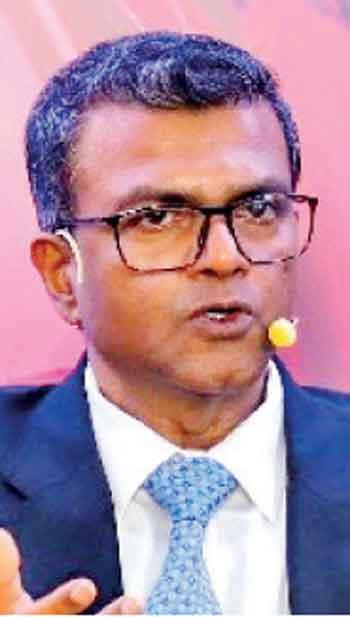 |
| Dr. Harshana Suriyapperuma |
By Shannine Daniel
Sri Lanka must put in place a comprehensive digital property database before introducing a property tax in 2027, a requirement under the International Monetary Fund’s (IMF) Extended Fund Facility, a senior official said.
Treasury Secretary Dr. Harshana Suriyapperuma told a recent forum that the database must capture valuations, property types, distributions, structures and other related information to support tax administration.
“We need a database that gives the administration information on the valuations, property types, distributions, property structures and other details,” he said.
He added the government would first look at other measures to broaden the fiscal base.
“But before we establish a property tax, there are other areas we can explore to strengthen our revenue base and generate more revenue,” he said, noting the authorities hope to diversify the revenue sources next year.
The taxes on imported motor vehicles remain one of the state’s important income channels. The government also aims to support taxpaying businesses, with the SMEs receiving almost Rs.80 billion through the financing facilities in the current budget.
“We hope to support the taxpayers, so their businesses can be bigger, better and more profitable. When they are more profitable, they will be able to contribute to the country’s economic development, by contributing to the treasury through levies or dividends,” Dr. Suriyapperuma said.
A research paper published earlier this year by Verité Research and Institute of Development Studies Professorial Fellow Prof. Mick Moore noted it has been more than two years since Sri Lanka agreed with the IMF to introduce a new property tax.
The Valuation Department is digitising its property valuation records and developing a nationwide Sales Price and Rents Register, intended primarily to provide the basis for property valuation for tax purposes. Prof. Moore said the register could also enable more effective levying of capital gains tax on properties and support other uses.
He added there is a strong case, independent of the IMF programme, for a “radical overhaul” of the current property tax, known as the rate assessment system. While the rate assessments generate limited revenue for the local councils, the system has greater potential and could give the councils more independent financial resources.
The valuations are currently conducted manually through site inspections, a process he said is expensive, slow and vulnerable to corruption. Prof. Moore called for the adoption of widely used digital technologies capable of generating fair and consistent property valuations on a mass basis at low cost.
07 Jul 2026 2 hours ago
07 Jul 2026 3 hours ago
07 Jul 2026 3 hours ago
07 Jul 2026 3 hours ago
07 Jul 2026 4 hours ago