21 Jan 2025 - {{hitsCtrl.values.hits}}
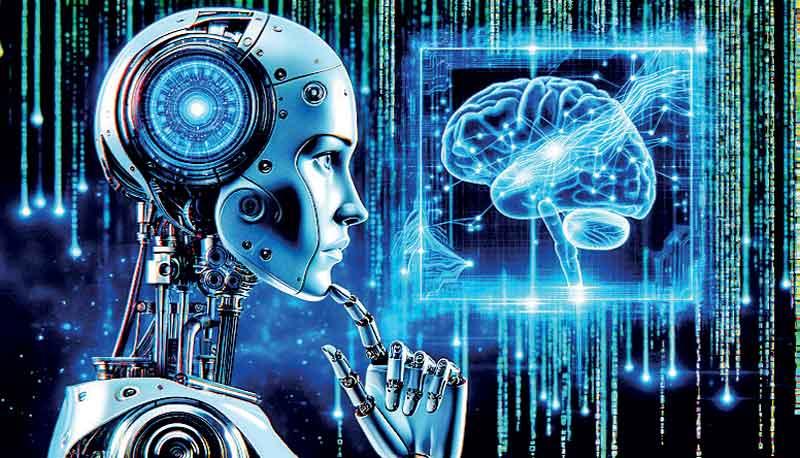
The Asian FinTech Academy (AFTA) has launched a certificate programme focusing on finance.
The programme is based on the Introduction to Artificial Intelligence (AI) Technology, a joint initiative by the World Travel and Tourism Council and Microsoft; Artificial Intelligence in Finance by The Alan Turing Institute; Introduction to FinTech by The University of Hong Kong; and Knowledge Hub of the Global Finance & Technology Network (GFTN), an organisation established by the Monetary Authority of Singapore (MAS).
In 1950, codebreaker and now celebrated computer scientist, Alan Turing, posed one of the most interesting questions ever faced by humankind - can machines think? Artificial Intelligence (AI) has occupied scientists for decades. But in 2023, it caught the attention of global businesses, policymakers and civil society alike.
In the UK, King Charles III called it “one of the greatest technological leaps in the history of human endeavour”. The UN Secretary General described AI as “unprecedented” and even the Pope stated that AI “has the potential to contribute in a positive way to the future of humanity” before dedicating World Peace Day 2023 to the use of AI.
“…It happened gradually, then suddenly…” This famous quote from Ernest Hemingway’s 1926 novel, The Sun Also Rises could be used to describe some of the world’s most profound technological changes. Small advancements accumulate and then all of a sudden, the world is a different place. That could describe the world before and after the birth of the internet and could now be applied to Artificial Intelligence (AI), which has ‘gradually, then suddenly’ burst onto the scene after nearly a century of research.
AI has gained significant attention in recent years – and especially in 2023 – but AI is not new and can trace its history back to the development of computers after the Second World War, with the Dartmouth Conference in 1956 bringing together researchers from multiple fields to explore “thinking machines”. This is widely considered the start of AI as a distinct field of study and where the term “Artificial Intelligence” was used for the first time by the visionaries at that conference.
But it was not until the turn of the century that AI really came to the public’s attention, when the IBM Deep Blue supercomputer beat chess grandmaster Gary Kasparov in 1997, with artificial intelligence algorithms developed by IBM engineers.
A few years later, in 2011, the IBM Watson computer won the US game show Jeopardy, after being trained on a huge data set.
These events showed the world that computers, powered by vast data and AI, could outperform humans in complex tasks.
AI has therefore been regularly hitting the news headlines and as with all new trends, a few high-profile cases can propel a technology that is initially only used by a few early adopters, into global mass adoption.
For AI this happened with the international release of a sophisticated AI powered chatbot, named ChatGPT, in November 2022 from a company called OpenAI.
This caught the public’s attention, registering over 100 million users in only 2 months and making it (at the time) the fastest growing consumer product of all time.
This tipped AI into the public mainstream in 2023 and sparked the current worldwide interest in AI.
While ChatGPT is not the only way to use AI, but it has exposed the power of AI to the general public, which everyone can now access on their desktop computers and smartphones, unlike the 1990’s when the use of AI was limited to a very small number of owners of supercomputers (such as IBM Deep Blue).
AI technologies have been around for more than 50 years, but advances in computing power, the availability of enormous quantities of data and new developments in software algorithms have led to major AI breakthroughs in recent years.
It is these three components of advanced algorithms, data and computing power, that explain how machines can exhibit intelligent behaviour and why AI has suddenly exploded into our everyday lives.
The future of AI is exciting and evolving very fast. It is impossible to accurately predict how AI will shape our lives over the next 5 to 50 years.
19 Jul 2026 2 hours ago
19 Jul 2026 2 hours ago
19 Jul 2026 2 hours ago
19 Jul 2026 5 hours ago