 SHABIYA ALI AHLAM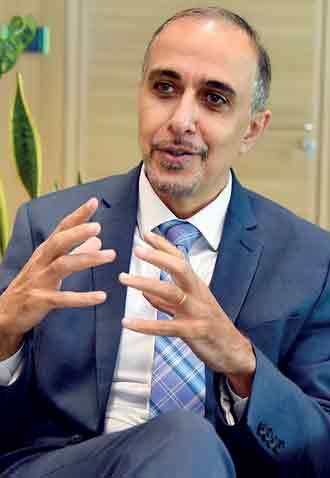
Reply To:
Name - Reply Comment
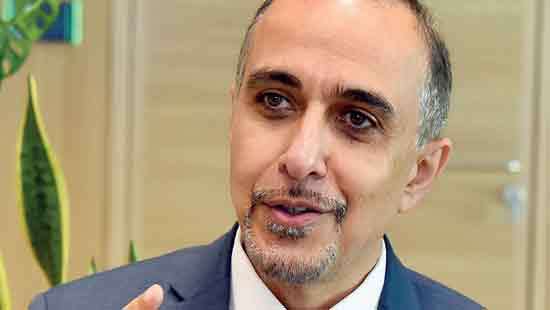
 Sri Lanka’s economic comeback has won praise from the creditors, multilaterals and investors. Yet, beneath the headline numbers is hidden a more uncomfortable question: Can the island nation create enough jobs, attract enough investment and remain competitive in an increasingly uncertain world?
Mirror Business recently sat down with World Bank Group Country Manager for Sri Lanka and Maldives Gevorg Sargsyan for an exclusive interview, where he offered a frank assessment of the opportunities and vulnerabilities shaping Sri Lanka’s future. With the conversation ranging from trade liberalisation and foreign investment to youth migration and the next phase of reforms, Sargsyan outlined what must happen if the country’s recovery is to become lasting prosperity.
Following are the excerpts from the interview.
|
World Bank Group Country Manager for Sri Lanka and Maldives Gevorg Sargsyan |
Q Sri Lanka has stabilised economically but many people say that they do not feel the recovery. Has the country truly moved beyond the crisis?
At macro level, Sri Lanka has stabilised; that’s clear. In fact, it has done a phenomenal job exceeding the expectations of most experts. Growth has rebounded to around 5 percent. Inflation is back in single digits. Foreign reserves have climbed from roughly US $ 500 million at the peak of the crisis to over US $ 5 billion today. Debt is starting to come down. For a country that was in an unprecedented crisis in 2022, that’s a significant turnaround and a genuine achievement.
But economic stabilisation and economic recovery are not the same thing and for many Sri Lankans, the difference is felt every day. Poverty still affects more than one in five Sri Lankans and about a third of the households are experiencing food insecurity. Wages are recovering but for most workers, they are still below where they were before the crisis. And the job market, especially for women, has not fully caught up.
So, has Sri Lanka moved beyond the immediate crisis? Yes. Is the recovery over? Far from it. The recovery is not yet broad-based or inclusive. The external shocks, including Cyclone Ditwah and the Middle East conflict, have made the road harder. This is why the next phase of this journey matters the most. Sri Lanka must stay the course on reforms, while ensuring that recovery is felt in people’s lives. From the World Bank Group’s perspective, this means accelerating private sector-led job creation.
Q Why has job creation become the central focus of the World Bank Group’s new Country Partnership Framework for Sri Lanka?
 The World Bank Group’s role in Sri Lanka and globally is to help countries solve their most pressing development challenges. For Sri Lanka, we see ‘quality formal jobs’ as the greatest challenge the country will be confronted with in the coming years.
We estimate that over the next decade, nearly a million young people will enter Sri Lanka’s formal workforce but at the current growth rates, the economy will generate only about 300,000 formal jobs. That means, around seven in 10 young people risk being left without a quality job. That gap is simply too large to ignore. This challenge is made even more urgent by the fact that nearly 70 percent of Sri Lanka’s workforce is employed informally, one of the highest rates among the peer countries. Left unaddressed, this could put an entire generation at risk.
Like I said before, economic recovery must be felt in people’s lives. So, we’ve made a clear choice, put job creation at the centre. That means shifting from a recovery driven by stabilisation to one driven by private investment and growth.
Our focus is on the fundamentals that unlock this potential. It means better business climate, stronger infrastructure, like energy and ports, that enables industries to expand and focusing on the sectors that create the most jobs, such as tourism and agribusiness, especially in the underserved regions like the North and East. It also means investing in people and skills that the employers need and supporting the SMEs, which are the backbone of job creation. To do so, we’re bringing the full World Bank Group toolkit to the table, bringing about US $ 2 billion in direct financing, with plans to mobilise around US $ 1.25 billion in private investment.
At the end of the day, jobs are not just an economic issue; they are the foundation of stability, dignity and long-term prosperity. Without creating more and better jobs, Sri Lanka’s hard-won gains, from debt restructuring to economic reforms, risk being built on fragile ground.
... has Sri Lanka moved beyond the immediate crisis? Yes. Is the recovery over? Far from it
QWhat are the biggest barriers preventing private investment flowing into Sri Lanka today and is Sri Lanka doing enough to attract the scale of FDI needed?
Let’s start with why FDI matters. There is a common perception that Sri Lanka has enough domestic capital to finance investments. But FDI is not just about the money; it is about knowledge, technology, skills and access to global markets. It brings cutting-edge production processes, management expertise and international networks that help economies become more productive and competitive. It also creates competition, drives innovation and helps upskill the workforce. The reality is that no country has built a modern, export-oriented economy in isolation.
The bigger challenge is that Sri Lanka is still not attracting the scale or quality of investment needed for economic transformation. FDI inflows remain relatively low and nearly 90 percent is concentrated in non-tradable sectors like real estate and domestic services. While these investments have value, they are less likely to drive exports, productivity or create the kind of jobs that Sri Lanka urgently needs. If you look at the regional peers like Vietnam, it is the exact opposite; over 80 percent of their FDI goes straight into manufacturing and processing. When you look at the overall volume, Sri Lanka captures about one percent of its GDP in foreign investment. Competitors like Malaysia and Vietnam pull in 3-5 percent of their GDP year after year.
Sri Lanka’s competitiveness challenge is not one single issue; it’s a combination of cost, unpredictability and structural rigidity.
First, the cost structure is uncompetitive. Sri Lanka’s trade regime remains one of the most restrictive in the region. Para-tariffs drive up the cost of imported inputs, which means that for any investor looking to integrate into regional supply chains, the math simply doesn’t work.
Then there’s predictability or the lack of it. Investment decisions are made over years, even decades. But businesses often face a fragmented approval system, multiple agencies, frequent tax changes and slow turnaround times. That kind of uncertainty makes long-term commitments harder to justify to a board or investment committee. For example, setting up a new hotel in Sri Lanka can take years. Most investors cannot afford to wait that long when capital has a cost and opportunities exist elsewhere. The same challenge applies across several other industries.
There are also everyday constraints that add to the cost of doing business, including tax burdens, governance challenges, labour market rigidities and infrastructure gaps. Individually, these may seem manageable but together they can significantly affect investment decisions.
While reforms are underway and I want to be clear that progress has been made, it’s not at the pace the country needs. To attract the investments that create quality jobs at scale, Sri Lanka needs to move faster on trade reform, simplify regulations and be consistent on policies.
Q How can Sri Lanka remain competitive amid the rising global trade tensions, tariffs and economic uncertainty?
Sri Lanka can absolutely remain competitive but only if it’s willing to adjust.
The reality is that Sri Lanka’s productivity has been largely stagnant for years, long before the crisis. While the economy is recovering, much of the recent growth has been driven by demand, rather than improvements in productivity and competitiveness. At the same time, Sri Lanka has become less integrated into global trade. The country’s exports-to-GDP ratio has fallen significantly since the early 2000s, even as many of its regional peers have expanded their presence in global markets.
That matters because openness drives growth. The countries that are more connected to global markets tend to attract more investment, adopt new technologies faster, create better jobs and achieve stronger productivity growth. Turning inward may offer short-term protection but over time, it risks reducing competition, slowing innovation and weakening economic dynamism.
For Sri Lanka, competitiveness starts with improving productivity, getting more value from its workforce, land and capital. The potential is significant. In agriculture, for example, the yields in key exports such as coconut remain well below those achieved by the regional competitors, despite the comparable conditions.
But competitiveness is not just about producing more; it is about competing smarter. Sri Lanka needs to lower the cost of doing business, strengthen the investment climate, attract more export-oriented investment and integrate more deeply into the regional and global value chains. That means simplifying the tariffs and reducing the para-tariffs, modernising customs and trade facilitation, lowering the logistics costs, more flexible labour markets, ensuring reliable and affordable energy, expanding access to finance, especially for the SMEs and creating a more predictable regulatory environment, with faster approvals and greater policy consistency.
Just as importantly, Sri Lanka must focus on where it can compete globally. For example, in tourism, success should be measured not only by the number of visitors but by the value generated per visitor. In agriculture, it means moving up the value chain and expanding access to premium export markets.
Ultimately, competitiveness is about credibility. Investors back countries that are open, predictable and committed to reform. Sri Lanka has already done the hard work of stabilising the economy. Now it needs to do the equally hard work of becoming competitive again.
Q What do you see as the biggest risks to Sri Lanka’s economic outlook over the next two years?
I would say the outlook is cautiously optimistic but there is no room for complacency. Sri Lanka has shown remarkable resilience over the past year, despite facing a series of shocks, from the Middle East conflict to the costs of cyclone recovery. The economy has stabilised faster than many expected and that progress has rightly attracted international attention.
That said, stabilisation and sustainable growth are not the same thing. While growth of around 3.5-4 percent is encouraging, the recovery remains fragile and buffers are still thin.
Looking ahead, the biggest risks broadly fall into two categories: external shocks and reform momentum.
Without creating more and better jobs, Sri Lanka’s hard-won gains, from debt restructuring to economic reforms, risk being built on fragile ground
On the external side, Sri Lanka remains highly exposed, whether through oil prices, global trade disruptions or tourism flows. The recent events in the Middle East are a reminder of how quickly the external developments can affect economies like Sri Lanka. While the government has taken important steps to manage these pressures, external vulnerabilities remain a key risk.
The second risk is maintaining momentum on reforms. Sri Lanka’s stabilisation was achieved through difficult but decisive policy choices. The next phase, however, is fundamentally different. It requires sustained, system-wide change across institutions over time and the real test is whether the country can stay the course. If reforms slow down, the recovery could stall. It would also leave less fiscal space for investments in people, infrastructure and essential public services, while keeping debt burdens elevated and that has real consequences, especially for poverty reduction and for how resilient the country is to the next shock.
So, overall, while the outlook is optimistic, it’s still delicate and the next phase depends on staying the course on reforms while managing the external risks.
Q If there is one reform Sri Lanka cannot afford to delay in creating jobs and sustaining growth, what would it be?
If I had to pick one, it would be trade openness, genuinely opening the economy to the world.
History is remarkably clear on this point. Every country that has successfully leaped from low-income to middle-income to high-income over the past half century, from South Korea and Taiwan to Singapore, Vietnam and China, did so by integrating into global markets, expanding exports and attracting investments. You will struggle to find a single country that grew fast, sustained that growth and made its people meaningfully richer while remaining closed. Protectionism has never been a path to prosperity. It has only ever been a path to stagnation.
Here is what makes this particularly relevant for Sri Lanka: small economies have a natural advantage in global value chains. They grow by connecting to larger markets, competing globally and becoming part of international supply chains. The size is not the constraint; Singapore, Vietnam and Bangladesh have shown that. The real question is whether a country is open enough to seize those opportunities.
But Sri Lanka has been moving in the wrong direction. The country’s export share of GDP fell from nearly 40 percent in 2000 to around 23 percent by 2019, while the export basket has barely changed in decades. At the same time, the para-tariffs have increased the cost of imported input, making it harder for the exporters from day one.
However, the issue goes beyond any single instrument; it is the overall orientation of the economy away from the world. Free trade agreements are a critical part of the answer here. They send a powerful signal about the kind of economy Sri Lanka wants to be; they lock in reforms in ways that the domestic politics cannot easily reverse and they give the Sri Lankan exporters the preferential access to large markets that competitors like Vietnam have used to greater effect.
The cost of delay is significant. The global supply chains are being reshaped and the countries across Asia are competing aggressively for investment. Every year Sri Lanka waits is a year of lost investment, lost jobs and missed opportunities that will be very difficult to recover. Of course, trade openness is not a silver bullet. It must go hand in hand with investment in skills, infrastructure and a stronger business climate. But if there is one reform that can unlock productivity, attract investment, expand exports and create more and better jobs, it is opening Sri Lanka more fully to the world economy.
Q Many young Sri Lankans continue to seek opportunities overseas. What must Sri Lanka do to create the jobs and opportunities needed to retain talent?
Let’s be real; young people leave when they don’t see enough opportunity at home. That’s not unique to Sri Lanka; it’s a rational response to limited job prospects, low wages or career progression. The solution is to make Sri Lanka a place where talented young people choose to stay.
That starts with creating more and better jobs at scale. It starts with sectors that can absorb talent, like tourism, manufacturing, agribusiness but many of these sectors are still operating at the lower end of the global value chains. So, the real challenge is helping them move up, through better trade integration, stronger investment climate and more reliable infrastructure. That’s what allows businesses to grow, compete and ultimately create better jobs.
For this, skills are part of the equation but skills alone are not enough. Even highly educated youth will leave if the right opportunities don’t exist. The challenge is to better align education and training with the needs of employers, while creating an environment where firms have the confidence to hire and grow. In tourism, for example, programmes like World Bank Group’s Tourism for Heritage, Resilience, Inclusion and Value-driven Employment (THRIVE) programme are trying to do exactly that, linking training directly to what the industry needs.
At the same time, businesses need the confidence to hire. Right now, rigid labour regulations and high separation costs make formal hiring a real risk. That pushes firms to stay small or informal and that limits opportunities for young people. Addressing these constraints would make a material difference.
Then there’s the geography of opportunity. Too many opportunities remain concentrated in and around the Western province. Creating stronger regional economic hubs, investing in skills and infrastructure outside Colombo and improving connectivity can help ensure that growth benefits young people across the country.
Ultimately, talent stays where opportunity is real. If Sri Lanka can create a more dynamic, competitive economy, one where businesses invest and grow, young people will choose to stay and build their future here.
Q Which sectors are attracting the strongest interest from the World Bank Group and international investors and where do you see the biggest investment opportunities for Sri Lanka?
We see particularly strong investor interest in four sectors: renewable energy, tourism, agribusiness and logistics. These are areas where Sri Lanka has genuine competitive advantages and where investment can deliver what the country needs most – jobs, exports and foreign exchange earnings. That is why these sectors are central to the World Bank Group’s engagement in Sri Lanka and feature prominently in our new Country Partnership Framework.
Energy is perhaps the most immediate opportunity. High energy costs act as a brake on competitiveness, raising costs for businesses across the economy. At the same time, global crises such as the Middle East conflict remind us that energy security is not an abstraction; dependence on imported fuel carries real economic risk, as Sri Lanka experienced firsthand in 2022. The good news is that Sri Lanka has significant potential in solar, wind, storage and transmission and global capital is actively seeking for these opportunities. To attract that investment, Sri Lanka needs a strong pipeline of well-prepared projects, sufficient scale and a regulatory framework that gives the investors confidence. Get that right and energy can move from being one of Sri Lanka’s biggest competitive disadvantages to one of its most compelling investment stories.
Agribusiness is another area with enormous potential. Sri Lanka already produces globally recognised products, from tea and cinnamon to a growing range of high-value agricultural exports. The opportunity now is to move further up the value chain, increase processing and value addition and strengthen the links to international markets. We’ve seen through the IFC’s work with companies like Ceylon Biscuits Limited that this is possible; the local businesses can scale, work with smallholders and compete globally if they have the right capital and support.
Tourism also remains one of Sri Lanka’s most compelling opportunities but success will be driven by value rather than volume. Investors are increasingly interested in unique, high-quality experiences that differentiate destinations. For instance, in Colombo, there’s a growing interest in heritage, urban wetlands and niche segments like MICE, wellness and food tourism. Through initiatives such as THRIVE, we’re helping catalyse private investment, including a US $ 15 million innovation fund and new tourism products that can unlock this potential.
Then there’s logistics. Sri Lanka sits at the crossroads of some of the world’s busiest shipping routes, a natural advantage few countries possess. To fully capture it, we need more efficient ports and value-added services around them. That’s where we see the next wave of investment.
Across all of these sectors, the message from investors is actually quite consistent: investors need clarity, predictability and well-prepared projects. They want clear rules, policy consistency and confidence that reforms will continue. The opportunity for Sri Lanka is significant. The fundamentals are attractive, sectors are compelling and investors are paying attention. The challenge now is execution, turning interest into investment and investment into jobs, exports and sustainable growth.