18 May 2026 - {{hitsCtrl.values.hits}}
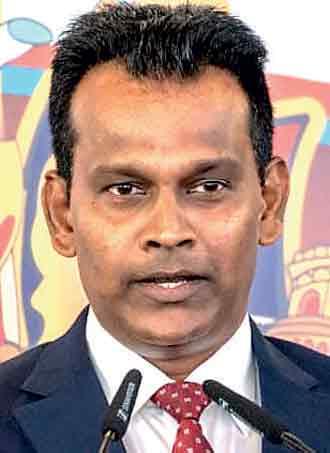
Prof. Ruwan Ranasinghe

Buddhika Hewawasam

Nalin Jayasundra
By Nishel Ferando
Sri Lanka’s tourism authorities are gearing up to launch a targeted interim digital marketing campaign within days to cushion an ongoing slump in tourist arrivals, which will serve as a precursor to a Rs. 4 billion global promotional drive.
The urgent rollout comes as the industry grapples with a steep 22 percent year-on-year drop in arrivals, heavily driven by the escalating Middle East conflict and shifting dynamics in key source markets. While the long-delayed state intervention is a welcome move, an underlying financial gap remains for the sector to achieve its long-term targets.
Speaking at the 13th Sancharaka Udawa exhibition in Colombo, Deputy Minister of Tourism Prof. Ruwan Ranasinghe confirmed that the administrative hurdles delaying the campaigns have finally been cleared. “We have cleared the National Procurement Commission to go for 14-day tenders, and we aim to launch an interim digital campaign within the next couple of weeks,” Ranasinghe announced. He further clarified the strategic timeline, noting, “Digital marketing, which we are launching within the next few days, will be our short-term focus, followed by a national promotion campaign of nearly Rs. 4 billion.” This interim digital push will specifically target emerging markets such as China and India, alongside a broader focus on the Asia-Pacific region, including Australia.
Despite the optimism surrounding the Rs. 4 billion campaign, a deeper analysis of the required marketing spend highlights a significant shortfall. Hoteliers and tourism sector analysts point out that to achieve the national target of 5 million tourist arrivals and US$ 10 billion in revenue by 2030, Sri Lanka must invest a minimum of US$ 50 million—or approximately Rs. 16.4 billion at current exchange rates—annually in destination marketing.
The proposed Rs. 4 billion state campaign covers only a fraction of this threshold required to aggressively compete with heavily funded regional peers like the Maldives, Thailand, and Vietnam. Furthermore, this gap underscores the heavy burden currently placed on the private sector. The President of the Sri Lanka Association of Inbound Tour Operators (SLAITO) Nalin Jayasundra emphasised that their members alone already spend over Rs. 2 billion per annum to proactively promote the destination globally, in addition to their formal tax contributions.
To mitigate the immediate geopolitical fallout and maximise current resources, the Sri Lanka Tourism Development Authority (SLTDA) and Sri Lanka Tourism Promotion Bureau (SLTPB) are strategically pivoting toward regional markets. SLTDA and SLTPB Chairman Buddhika Hewawasam highlighted that reaching out to Asian buyers is a vital strategic move in the current climate to maintain stability. “The geopolitical situation affected us recently, but it highlights the need to balance our tourism market portfolio,” Hewawasam explained. “We manage our tourism arrival drop to around 20 percent because we have a larger share from Asia to balance out fluctuations.”
At Sancharaka Udawa, SLAITO has facilitated a massive platform to connect local micro, small, and medium enterprises directly with the global market to help bridge these promotional gaps. “We have more than 10,000 B2B and B2C meetings expected to take place between hosted international buyers and local tourism stakeholders, creating valuable opportunities for partnerships, business growth, and market expansion,” the SLAITO head noted.
Reaffirming the industry’s commitment to the broader macroeconomic goals, he added, “We value the target set for 5 million tourist arrivals with a revenue of US$ 10 billion to be achieved by the year 2030.” To achieve these globally competitive numbers, integrating the upcoming state campaigns with the private sector’s relentless networking will be critical, though scaling up the overall national marketing budget to the Rs. 16.4 billion mark remains a pressing challenge.
Pix by Kithsiri de Mel
19 Jul 2026 15 minute ago
19 Jul 2026 2 hours ago
19 Jul 2026 3 hours ago
19 Jul 2026 3 hours ago