16 May 2026 - {{hitsCtrl.values.hits}}
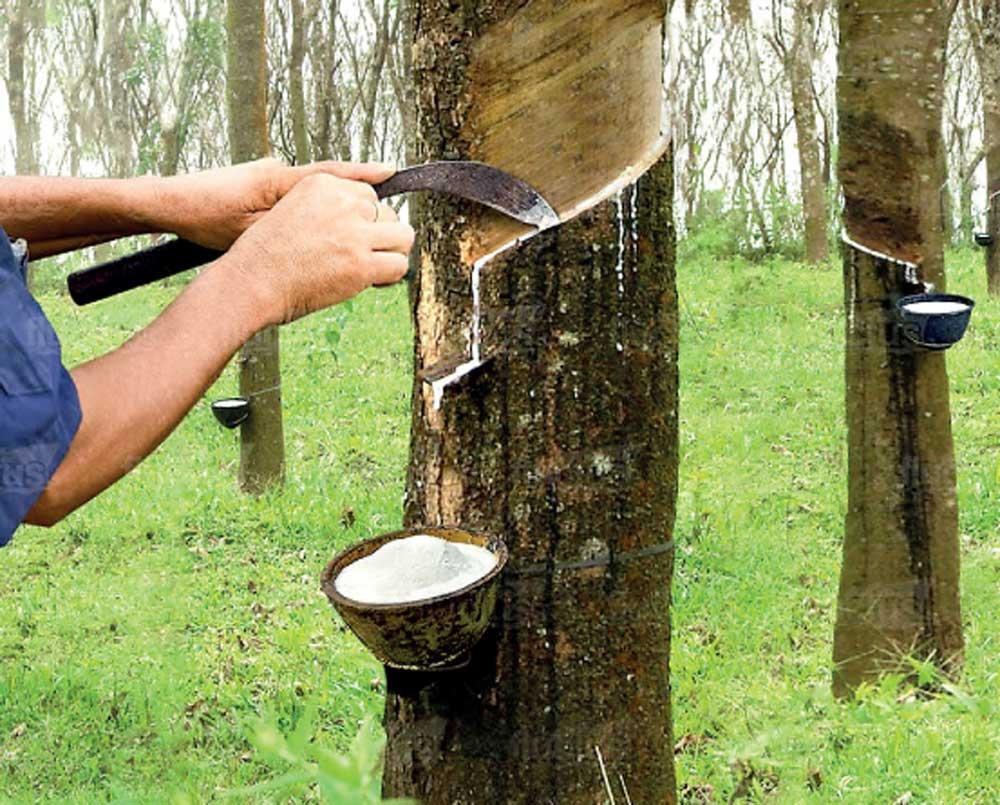
Sri Lanka’s rubber industry is confronting the deepening structural stress, as production has nearly halved over the past two decades, despite the country retaining a niche position in the global market for high-quality crepe rubber latex, according to Forbes and Walker
Commodity Brokers.
The industry, which marks 150 years since rubber was first introduced to Sri Lanka in 1876, is increasingly facing pressure from ageing plantations, weak investment signals, policy gaps and rising import dependence, the commodity broker said in its latest market review.
“Production has seen a significant long-term contraction, falling from 130,000 metric tonnes in 2002 to around 70,000 metric tonnes today, underscoring the scale of the decline,”
the report said.
The broker noted that the decline comes despite Sri Lanka continuing to hold a unique global position as a producer of premium crepe rubber latex used in specialised niche applications.
“Despite being a producer of high-quality crepe rubber latex, that positions Sri Lanka as the world’s sole supplier for select niche applications, the country paradoxically imports lower cost raw materials to meet the domestic tyre manufacture demand,” the report added.
The industry experts cited in the report warned that the sector is approaching a critical juncture, as the structural weaknesses continue to intensify.
“The industry experts warn that this imbalance, combined with weak investment signals, places the sector in a critical condition, with the growing concerns that it is approaching a tipping point, despite its historical contribution to the foreign exchange earnings,” the report said.
The concerns emerge even as the rubber prices at the Colombo auction maintained a firm trend during the period under review, supported by limited supply and sustained buying interest.
Latex Crepe 1X traded at a monthly average of Rs.920 per kilogramme while the No.1 grade averaged Rs.900. the other grades also recorded gains, reflecting continued demand across the segment. Meanwhile, the availability of ribbed smoked sheet (RSS) rubber remained limited, forcing the end-product manufacturers to increasingly rely on imports, particularly the lower-grade varieties.
The report also flagged the growing external risks stemming from the geopolitical tensions in the Middle East, particularly around the Red Sea and Persian Gulf, which have sharply increased operational and freight costs for the exporters.
“War risk insurance premiums surged even up to 50 percent, with the extreme cases reaching as high as 3 percent of vessel value per voyage, significantly elevating the logistics costs,”
the report said.
The Planters’ Association of Ceylon has also called for a comprehensive review of plantation sector cost structures, amid the mounting external shocks and persistent uncertainty in the global shipping routes.
19 Jul 2026 14 minute ago
19 Jul 2026 2 hours ago
19 Jul 2026 3 hours ago
19 Jul 2026 3 hours ago