13 Sep 2025 - {{hitsCtrl.values.hits}}
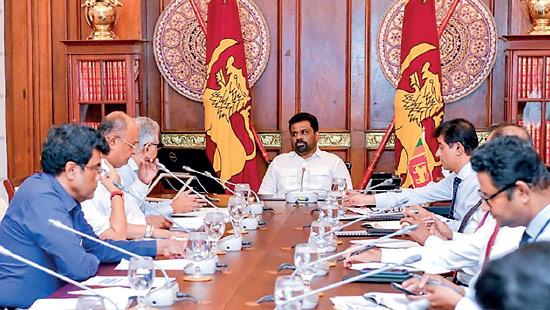 The Free Trade Zone Manufacturers’ Association (FTZMA) has submitted a set of proposals for the 2026 national budget, calling for a sweeping package of tax, trade and export reforms designed to strengthen competitiveness in what it described as a “tariff-heavy world”.
The association noted that the US remains Sri Lanka’s largest single market, accounting for US $ 2.91 billion in exports in 2024. However, it warned that the universal tariffs imposed by Washington in April 2025, later revised to country-specific rates, with Sri Lanka’s reduced from 44 percent to 20 percent in August, highlighted the risks of overreliance on one destination. The ongoing court challenges, coupled with the forecasts of weaker US consumption into 2026, make diversification urgent, the FTZMA said.
The association identified opportunities in the UK, where the DCTS liberalisation from 2026 will favour apparel and light manufacturing, the European Union (EU), where GSP+ has been extended until 2027, India, under the ISFTA, Thailand, with a free trade pact signed in 2024 and the Gulf, particularly the UAE, with scope for both exports and logistics hubs. It also highlighted services such as IT, maritime and tourism as tariff-proof growth areas.
Among its five main proposals, the FTZMA called for introducing a net foreign currency contribution (NFCC)-linked incentive framework, where the corporate tax rates would be tied to companies’ foreign exchange retention. Firms with the NFCC ratios of 50 percent or higher would face a 12 percent rate, those between 30 percent and 49 percent an 18 percent rate and others the standard rate. The exporters would also qualify for earning-linked rebates of 2-5 percent on incremental NFCC, payable quarterly and super-deductions of up to 200 percent for research, certification and sustainability upgrades.
A second proposal is the creation of an export transformation facility (ETF) to provide finance and targeted support for higher value-added exports and stronger small and medium enterprise (SME) linkages. The ETF would extend concessional loans and risk-sharing with banks, offer matching grants of up to 50 percent for design, branding and certification and introduce supplier development programmes with tax credits for exporters integrating local SMEs. It would also provide pre and post-shipment credit and FX hedging facilities.
The third proposal focuses on making Sri Lanka a “reputation-based hub” for speed and certainty in trade. Measures include a ‘BOI-in-a-Week’ statute to guarantee approvals within seven days, green-channel export corridors with 24/7 clearance and advance exporter certification, faster Value Added Tax (VAT) refunds, with interest and a digital single-window platform linking the Board of Investment (BOI), Customs, ports and Inland Revenue Department.
The FTZMA also urged the government to ensure stability and competitiveness for the BOI Section 17 enterprises, including reaffirming the legal framework against the retrospective changes in taxes, customs or exchange rules. It sought continued duty and tax-free access to inputs and capital goods, guaranteed profit repatriation and bonus incentives such as accelerated depreciation and reinvestment allowances.
To support market diversification, the association proposed budget incentives for the exporters leveraging new and existing trade preferences. These include support for early adoption of the UK DCTS liberalisation, maintaining compliance with the EU GSP+ requirements, fast-tracking garment quotas and industrial exports under the ISFTA with India and operationalising the Thailand FTA with roadmaps and distributor linkages. The FTZMA also urged incentives for anchor investments in the GCC logistics and distribution and expanded support for IT-BPM and maritime services.
Cross-cutting reforms proposed include statutory timelines for VAT refunds with automatic interest, predictable energy pricing, logistics upgrades through digitisation, a shift to transparent rules-based incentives with sunset clauses and investment in ‘plug-and-play’ industrial zones with full compliance infrastructure.
The association said these measures would help maximise net foreign currency earnings, strengthen supplier networks, guarantee speed and efficiency in trade facilitation, protect the competitiveness of existing investors and diversify Sri Lanka’s export footprint beyond the US.
20 Jul 2026 20 Jul 2026
20 Jul 2026 20 Jul 2026
20 Jul 2026 20 Jul 2026
20 Jul 2026 20 Jul 2026
20 Jul 2026 20 Jul 2026