05 Aug 2025 - {{hitsCtrl.values.hits}}
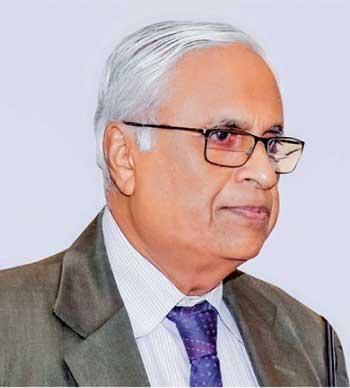 |
| Nissanka N. Wijeratne |
The local construction industry risks widespread collapse if urgent relief is not extended to the struggling firms, the Chamber of Construction Industry of Sri Lanka (CCISL) warned, citing a growing wave of parate executions by the banks on the mortgaged assets.
According to CCISL Secretary General and CEO Eng. Col. Nissanka N. Wijeratne (Retd), the banks are presently moving at an unprecedented pace to auction the properties mortgaged by the construction companies as collaterals.
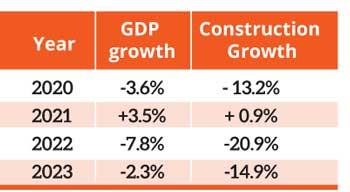
“These were used to raise funds for working capital, to buy equipment, to obtain the required bonds and guarantees and also to meet expenditure when the construction activities were in limbo,” he said. The CCISL shared that the companies are being pushed to the brink, due to the mounting loan obligations, incurred during a period when the sector suffered the steepest contractions in the economy. Referring to the official data, the chamber highlighted that from 2020 to 2023, construction recorded double-digit declines in three out of four years, hitting a low of -20.9 percent in 2022.
The suspension of government capital development projects in early 2023 and over Rs.200 billion in delayed payments further compounded the sector’s woes. While the bulk of dues for completed work was settled by 2024, the chamber noted that the claims for the extended overheads and interest on late payments, amounting to an estimated Rs.100-150 billion, remain unresolved.
 “The need of the hour is for the government to intervene to save the construction companies from the clutches of parate execution and give a breathing space for the companies to recover,” Wijeratne said.
He also pointed out what he described as an imbalance in economic recovery.
“During the period of recession, when most of the companies in other economic sectors were struggling, all the banks and financial institutions declared robust profits.
In most developing economies, it is the tech companies and industries that show the best financial results and not the banks. But in our country, it is the other way around.”
The CCISL cautioned that without timely support such as policy interventions, temporary moratoriums or structured debt relief, many more firms could face asset seizures and insolvency, jeopardising thousands of jobs and halting infrastructure recovery.
21 Jul 2026 2 minute ago
21 Jul 2026 8 minute ago
21 Jul 2026 40 minute ago
21 Jul 2026 44 minute ago
21 Jul 2026 48 minute ago