07 May 2026 - {{hitsCtrl.values.hits}}
By Mangala Pavithrani
Colombo, April 7 (Daily Mirror) - The only sustainable solution to the severe financial and technological crisis faced by Sri Lanka’s private bus industry is a transition to electric buses, Chairman of the Lanka Private Bus Owners’ Association (LPBOA), Gemunu Wijeratne, said.
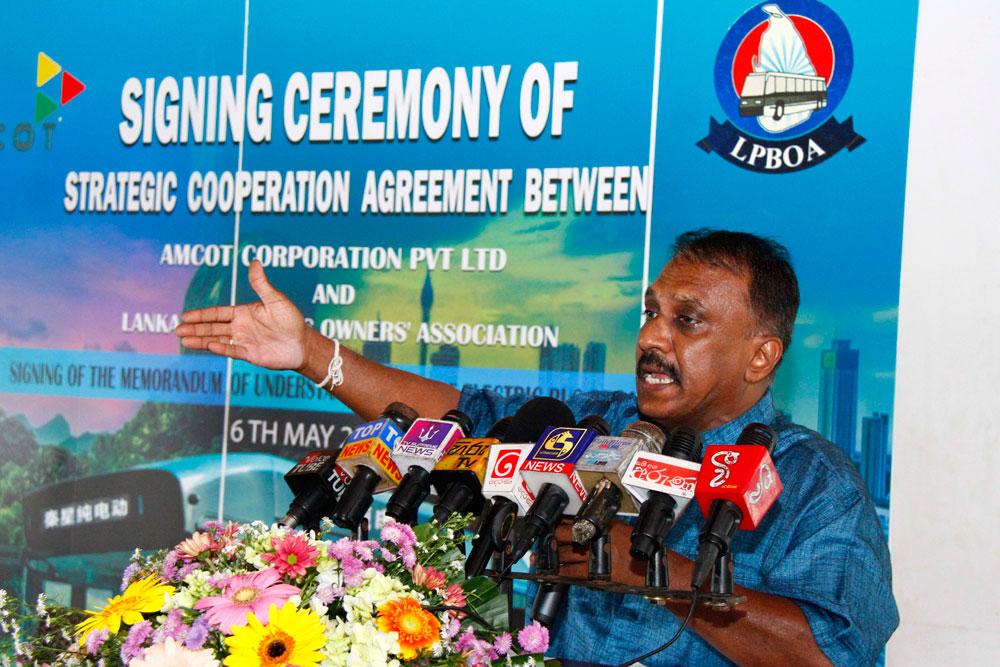
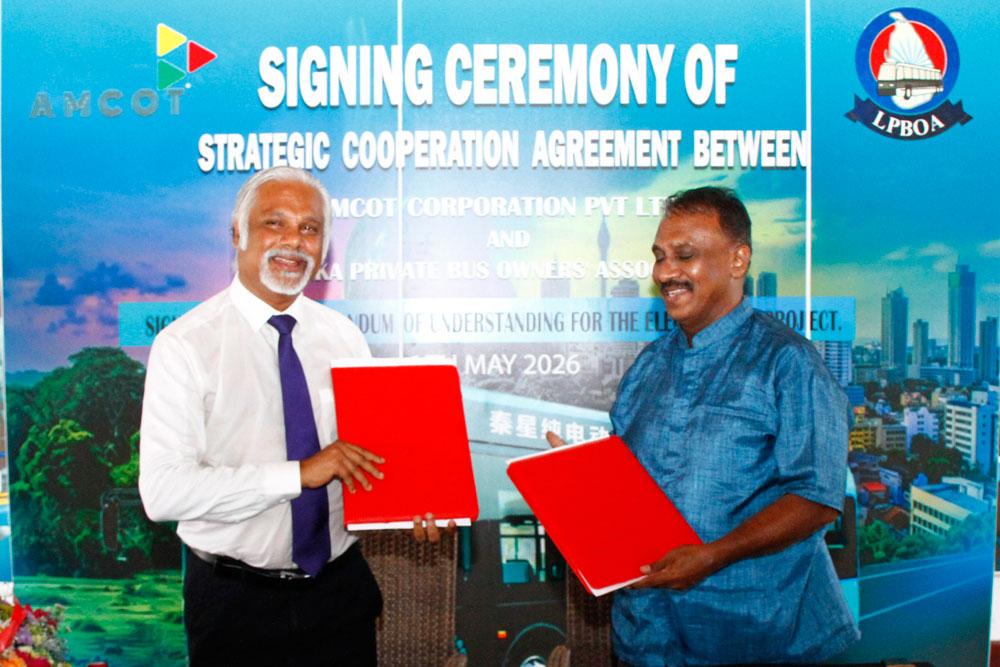
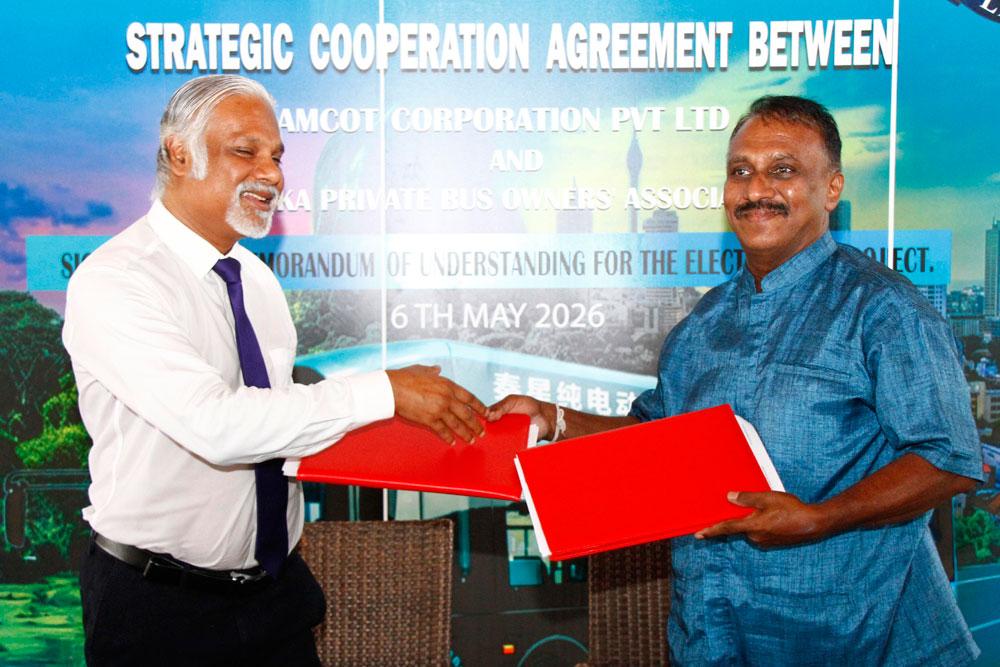
He made these remarks at a ceremony held at the BRC Auditorium today (06), where a Memorandum of Understanding (MoU) was signed between Amcot Corporation and the Lanka Private Bus Owners’ Association to launch an electric bus project.
Wijeratne described the initiative as a potential turning point for the country’s public transport sector, stressing that it is essential to manage rising operating costs.
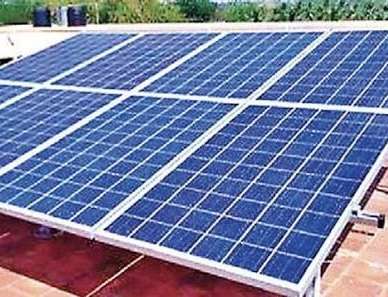
Under the first phase of the project, 100 electric buses are expected to be imported and deployed within the next two months for city transport services. Each bus will be powered by rechargeable batteries charged using solar energy and will carry a seven-year warranty.
“These are luxury buses with 32 seats,” he said.
In the initial stage, the buses will operate along the Horana–Colombo route, with around 200 charging points planned along the corridor. A bus can be fully charged within 45 minutes and travel up to 350 kilometres on a single charge, sufficient for approximately six trips between Horana and Colombo, according to Wijeratne.
He further said that the private bus sector is facing mounting challenges due to the increase in VAT to 20% and a similar rise in tyre prices. Long-distance operators, particularly on routes such as Vavuniya, are under severe strain, with nearly 75% of their income spent on fuel.
Addressing fuel-related concerns, Wijeratne claimed that diesel quality has declined due to technical issues at the Sapugaskanda refinery. He alleged that sulfur levels in diesel have risen to around 3,000 PPM, far exceeding the legal limit of 500 PPM.
“This leads to the formation of sulfuric acid inside engines, causing corrosion. This is especially harmful to modern buses such as Euro 6 models,” he said.
Wijeratne also claimed that despite the country consuming nearly one crore litres of fuel daily, efficiency remains at around 50%, resulting in significant wastage. He noted that poor fuel management has contributed to losses, with approximately 5,000 metric tons of diesel used each day.
Meanwhile, Chairman of Amcot Corporation, Herby Silva, said the long-term goal is to commence local production at a factory in Horana within one year, with plans to meet 30% of Sri Lanka’s bus requirements domestically.
He added that 50% of the required components will be sourced from local manufacturers and small and medium-scale enterprises (SMEs), while there are also plans to export electric buses, cars and SUVs to markets in Europe and the Middle East.
Silva said the project is built on eco-friendly solar energy and is designed to offer maximum convenience to both bus owners and passengers. He added that the company will provide full support for batteries, spare parts and maintenance, along with modern safety systems and advanced payment technologies.
06 Jun 2026 7 hours ago
06 Jun 2026 7 hours ago
06 Jun 2026 7 hours ago
06 Jun 2026 06 Jun 2026
06 Jun 2026 06 Jun 2026