Reply To:
Name - Reply Comment
By Mangala Pavithrani
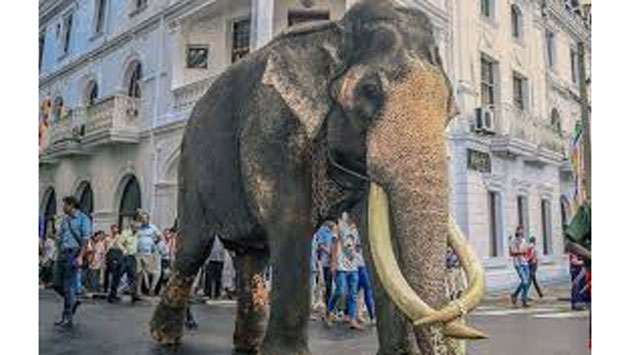
Colombo, March 9 (Daily Mirror) - The preserved body of the famed elephant Nedungamuwe Raja will be opened for public viewing from March 11 and could remain intact for nearly 500 years if properly maintained, officials said.
Speaking at a media briefing held at the Government Information Department today, retired leather craftsman of the National Museums Department, Chamalka Kothalawala, said preserving and reconstructing an animal’s hide is a complex process that requires both scientific knowledge and artistic skill.
She said that after conducting a detailed study of the elephant’s exact size and shape, the restoration work was carried out using standardised conservation methods.
“If properly maintained under suitable conditions, the preserved structure could remain undamaged for centuries,” she said, noting that it could potentially last for nearly 500 years.
National Museums Department Director General Sanoja Kasthuriarachchi, said the preserved body of the renowned elephant will be opened for public viewing from March 11.
She added that all work to reconstruct the elephant’s body, which died in 2022 and was later declared a national treasure, has been completed using safe conservation techniques under a heritage preservation programme.
Kasthuriarachchi said that following a request by the Diyawadana Nilame of the Temple of the Sacred Tooth Relic, and with the consent of Dr. Harsha Dharmawijaya who had custody of the elephant, the body of Nedungamuwe Vijayaraja was handed over to the Museums Department on the day of its death for conservation.
She noted that the elephant, which participated in the annual Esala Perahera for decades, was widely admired by the public.
As many people were familiar with the elephant’s appearance and posture, recreating it in a lifelike form posed a significant challenge, she said.
However, skilled craftsmen of the department successfully recreated the elephant using a combination of scientific methods and artistic techniques to preserve its natural form.
Zoology Division Deputy Director, Lankani Somaratne, said approximately Rs. 7 million had been spent on preserving the elephant’s body.
She added that about Rs. 16 million was used to construct a specially designed glass chamber equipped with humidity control and air-conditioning systems to ensure long-term preservation, bringing the total cost of the project to between Rs. 25 million and Rs. 27 million.
Meanwhile, officials also revealed plans to modernise the national museum system in the future, stating that several programmes using new technologies will be introduced to present museum exhibits in a more engaging manner and to promote museum culture among school students.