Editorial
Financial literacy among undergraduates – Research findings of concern
20 Oct 2020
 0
0
1013
The proud Sri Lankan history has been nurtured by the scriptures and other systems since the visit of Arahat Mahinda and the literacy rate of Sri Lankans has been aptly proved by their ability to grasp modern technology in relation to main fields such as engineering, accounting, management and other disciplines.
Sri Lanka economy caught between a rock and a hard place: Yet a stitch in time could save nine
20 Oct 2020
0
416
Like many countries, Sri Lanka continues to face a daunting economic landscape. The World Bank projects economic contraction of -6.7 percent, ADB -5 percent and IMF -4.6 percent for 2020. Even the most pessimistic of these projections is not unfavourable when compared with other countries in the region and beyond.
Adstudio.Cloud organises Programmatic Colombo 2020
16 Oct 2020
0
396
Programmatic Colombo, the first event of its kind, was successfully held in Sri Lanka recently, organised by Adstudio.Cloud, at The Kingsbury Hotel, Colombo.

Urgent need to raise foreign currency funding
12 Oct 2020
0
421
It was reported that the trade deficit to end-August 2020 was US $ 3.8 billion, compared with US $ 4.8 billion to end-August 2019. There is no doubt that the current reforms will provide solutions to some of the structural issues in the economy. Yet, there is a need to address the country’s emerging macroeconomic vulnerabilities.
Maternity benefits are not a ‘cost’ and a ‘burden’ on employer
12 Oct 2020
0
2869
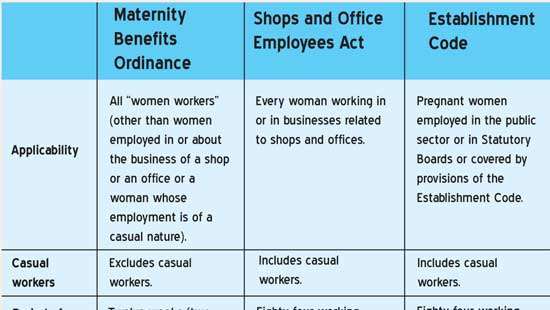
Following is a response to the article titled ‘The case for state-supported maternity leave benefits in Sri Lanka’, published on September 24, 2020, in Mirror Business, by Verité Research.
Lankan capital markets prove resilient to new COVID-19 cluster fears, says Asia Securities Research
12 Oct 2020
0
367
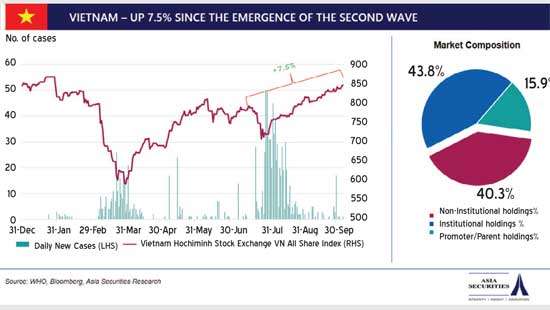
Investors must not react impulsively to the news of the emergence of the new COVID-19 cluster in Sri Lanka. In a special report, leading stockbroking firm Asia Securities (Pvt.) Ltd, exploring the impact of COVID-19 resurgence in several regional emerging economies as well as developed economies, notes that equity markets have remained stable through the second waves of COVID-19.
Sri Lanka has gas resources sufficient for 30 years: Energy Minister
08 Oct 2020
0
730
Cabinet approves gas and oil policy An agency to be established before calling for bids Talks are underway to acquire oil tanks leased out to India Energy Minister Udaya Gammanpila spoke to Daily Mirror about the oil and gas policy of Sri Lanka and the potential for offshore gas extraction. The minister is confident that Sri Lanka will become an oil and gas-producing nation. Experts from the interview: What are your plans for the development of t
Weathering disasters: Why it pays to be prepared
06 Oct 2020
0
529
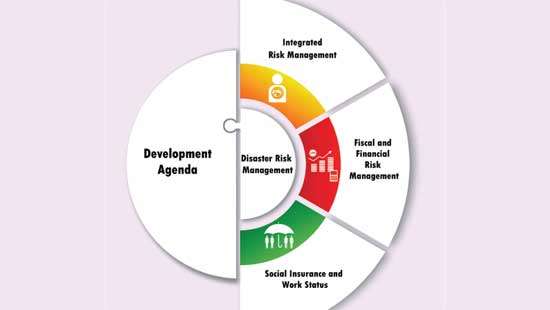
The world economy is predicted to contract by -4.9 percent in 2020 (International Monetary Fund, 2020). The performance of individual countries during the COVID-19 pandemic varies widely.
Stax helps corporates through uncertain times using data analytics
06 Oct 2020
0
332
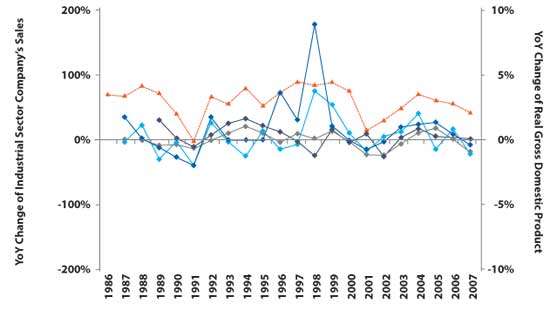
During these unprecedented times, businesses need data to forecast potential outcomes and navigate market turbulence and project ‘the bottom’. If it’s a corporate or a credit situation, companies are trying to figure out how bad things will be and modelling out the data is critical.
Reform of international debt architecture is urgently needed
05 Oct 2020
0
481
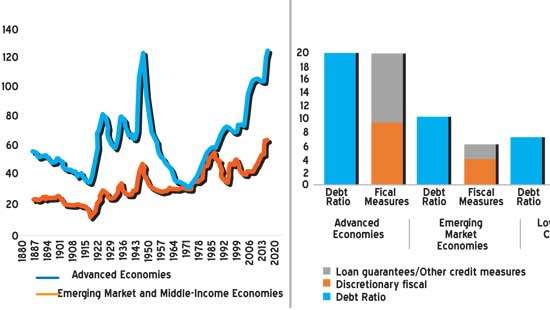
The COVID-19 pandemic has pushed debt levels to new heights. Compared to end-2019, average 2021 debt ratios are projected to rise by 20 percent of GDP in advanced economies, 10 percent of GDP in emerging market economies and about 7 percent in low-income-countries.
Why sale of single stick cigarettes must be banned
05 Oct 2020
0
724
The National Authority on Tobacco and Alcohol (NATA) has announced the drafting of legislation to ban the sale of single cigarettes this month. It is a welcome move, given that Sri Lanka lags behind 107 countries that have banned the sale of single stick cigarettes
Breaking boundaries: The Hemas way
02 Oct 2020
0
1330
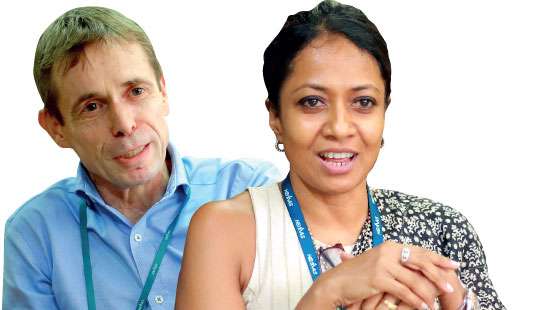
Diversified conglomerate Hemas Holdings PLC is a business entity that stood out for making some bold decisions over the years. One such decision that caught attention was in 2013, when the family-managed company offered the Group CEO position to Steven Enderby, a complete outsider and the latest is the appointment of Kasturi Wilson to the driving seat, making her the first female Group CEO of a public quoted conglomerate in the country.
Proactive policies to combat malnutrition in Sri Lanka
30 Sep 2020
0
1414
Child malnutrition is still a prevalent challenge in Sri Lanka. More than one in five children (under five years old) are underweight and one in six babies are born underweight.
Role of special economic zones in Sri Lanka’s development
30 Sep 2020
0
706
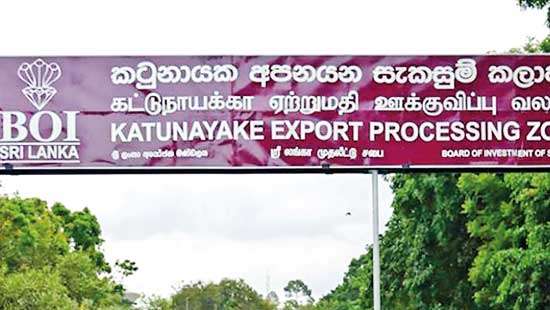
Special Economic Zones (SEZs) can be defined as ‘geographically delimited areas within which governments facilitate industrial activity through fiscal and regulatory incentives and infrastructure support’ (UNCTAD 2019, p. 128).
Understanding Indo-Lanka economic relationship
29 Sep 2020
0
529
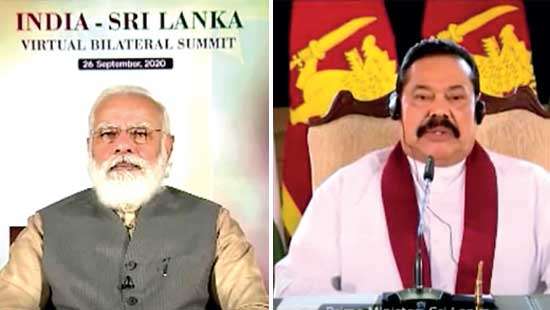
Sri Lanka-India relations are multifaceted and are characterised by strong civilisational links that span many millennia. Currently, trade and economic relations are structured around an institutional and legal architecture, which includes regional platforms such as SAARC and BIMSTEC, as well as bilateral agreements such as the Indo-Sri Lanka Free Trade Agreement (ISLFTA), the bilateral investment promotion and protection agreement, the double ta
The case for State supported maternity leave benefits in Sri Lanka
24 Sep 2020
0
1380
In Sri Lanka, employers are required to bear the full cost of providing maternity leave benefits (MLBs) to their employees for 12 weeks.

Regional collaboration can help SA nations rebuild and strengthen tourism industry
24 Sep 2020
0
356
After months of empty beaches and deserted hotels in Maldives, tourism operator Ahmed Waheed says he is eager to help affluent travellers trade their COVID-19 masks for snorkeling or scuba gear.

Proposed ban on cigarette stick sales needs rethinking
24 Sep 2020
0
298
Recent media reports cites the Tobacco Regulatory Authority making an overture to a ban on single sticks of cigarettes, stating it is a gateway to other narcotic drugs and continuous smoking. The proposal adds that retailers would only be allowed to sell cigarette packs containing 20 sticks to customers.
A foray into HR of mid-2020s and beyond
17 Sep 2020
0
453
It has been nearly 70 years since Peter Drucker coined the phrase ‘human resource’. Human resources management or HR was a significant innovation over the more ancient practice of personnel management, which was essentially about job definitions, hiring and employment record-keeping.

Why tourism industry will be the last to recover from pandemic
16 Sep 2020
0
946
The tourism industry was one of the World’s largest and fastest growing industries just 9 months ago. Today, amidst the throes of the COVID crisis, it is all but devastated and gasping for breath.
Micro credit (finance): Facts and fallacies
16 Sep 2020
0
319
Perhaps, micro credit to some and micro finance to others is the term used, misused and abused in many recent discourses on economic recovery following the COVID-19 pandemic.
Protecting Sri Lankan MSMEs during pandemic: Need for innovative solutions
15 Sep 2020
0
647
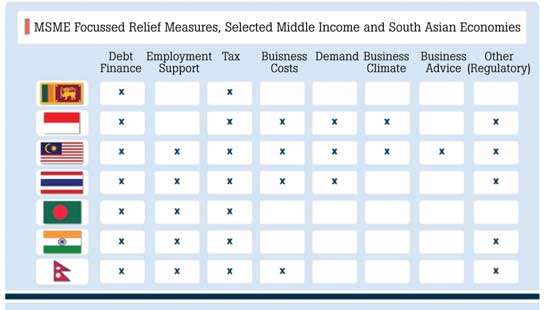
The micro, small, and medium enterprise (MSME) sector in Sri Lanka accounts for 90 percent of all businesses in the country, provides 45 percent of employment, and contributes 52 percent to the nation’s GDP.
Digital transformation -a reality
15 Sep 2020
0
572
Digital Transformation has become the talk of the town after the coronavirus pandemic and most private and public sector companies have had to adapt overnight to the new norm.
Controlling NCDs in Sri Lanka in age of a pandemic
14 Sep 2020
0
1328
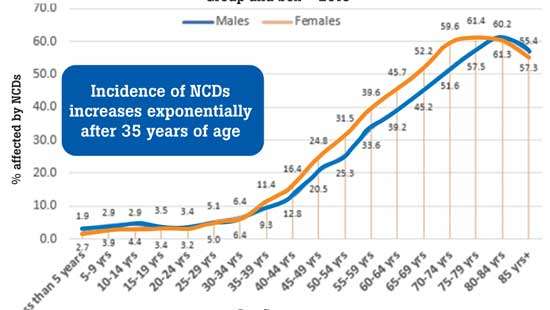
According to the World Health Organisation (WHO), non-communicable diseases (NCDs) accounted for 83 percent of all deaths in Sri Lanka in 2016. Even more concerningly, the WHO states that those with pre-existing NCDs, such as cardiovascular diseases, chronic respiratory diseases, diabetes or cancers, are at a higher risk of becoming severely ill with COVID-19.
Banning cattle slaughter: Need to look at all facets of matter
14 Sep 2020
0
917
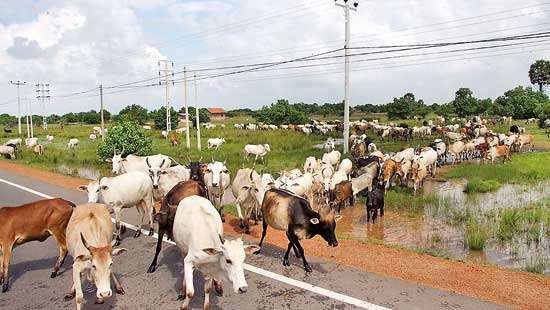
The media reported some days ago of a proposal by the prime minister, to bring legislation to stop cattle slaughter and apparently majority of the government MPs are supportive of his proposal. Many Buddhist monks have also risen vehemently supporting the proposal. Have the proponents and the supporters looked wisely into all facts of the matter before rushing into this decision?
Gunaruwan’s questionable MCC report hampers Sri Lanka’s economic and investment prospects
14 Sep 2020
1
688
The future of MCC remains bleak. Last year, the government appointed an experts panel to review the content of the agreement and the panel report was presented to the members of the Cabinet for their recommendations before the last parliamentary election. The government now has a two-thirds majority in Parliament and is in a position to make a final decision on the signing of the agreement.
Challenges in catalysing SMEs: Bridging missing link?
10 Sep 2020
0
721
Developing small and medium enterprises (SMEs) has always been a priority for the government and there is a renewed push to catalyse SMEs to aid post-COVID-19 recovery. From directed credit to technical assistance programmes, successive governments and development agencies have tried many methods to develop SMEs.
COVID-19 and Sri Lanka’s labour market gaps: Permanent protection for temporary employees
10 Sep 2020
0
412
The COVID-19 pandemic emerged as a public health crisis and morphed into a global economic crisis, with severe impacts on commercial activity, employment and trade. The International Labour Organisation (ILO) describes COVID-19 as the “worst global crisis since the Second World War”.
Cooperative movement can be used to give MSMEs new lease of life
27 Aug 2020
0
356
COVID-19 has made an adverse impact to our economy, where many businesses fall into the micro small and medium enterprises (MSME) category and some in the small and medium enterprise (SME) category. A majority of Sri Lanka’s businesses fall into both the MSME and SME category.
Key economic sectors’ resurgence to bring fresh challenges to banks
27 Aug 2020
0
378
This is part of an interview series titled ‘Mirror Business S&P SL2 - Insights’ conducted in collaboration with the Colombo Stock Exchange (CSE). The interview features Hatton National Bank PLC Managing Director/CEO Jonathan Alles. Following are excerpts from the interview.