Reply To:
Name - Reply Comment
 “In July 2025, China’s monthly electricity consumption exceeded 1 trillion kilowatt-hours for the first time, a volume equivalent to the annual consumption of Japan or the combined total of all ASEAN countries.”
“Even during peak summer periods, no power shortages occurred — ensuring the comfort of “air-conditioning freedom” for households nationwide. China’s average electricity price has remained stable at around 0.6 Yuan per kilowatt-hour, ranking among the lowest in the world.”
“Despite the headwinds of trade protectionism, China’s total goods trade in the first eight months of 2025 still increased by 3.5% year-on-year, highlighting the resilience and strong foundation of China’s manufacturing sector.”
“Since 2010, China’s large-scale manufacturing has driven down the cost of clean energy by 60–90%, making more than 90% of wind and solar projects globally cheaper than the lowest-cost fossil fuel alternatives.”
“The Jiquan Ultra-High Voltage (UHV) DC transmission project—currently the world’s most advanced power transmission system—delivers clean electricity to millions of households in Anhui Province within just 0.01 seconds.”
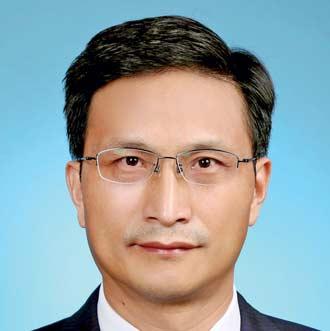
By Qi Zhenhong,
Ambassador of China in Sri Lanka
|
Qi Zhenhong, Ambassador of |
A tectonic shift in global energy has been confirmed as China’s power consumption shattered all records in July 2025, exceeding one trillion kilowatt-hours for the first time. This staggering figure—equivalent to Japan’s entire annual usage—signals the sheer scale of the nation’s economic engine and its digital transformation. Beijing’s strategy of affordable, stable, and increasingly green electricity is now the bedrock for its technological dominance and its quest for “air-conditioning freedom” for 1.4 billion people.
In July 2025, China’s monthly electricity consumption exceeded 1 trillion kilowatt-hours for the first time, a volume equivalent to the annual consumption of Japan or the combined total of all ASEAN countries. In recent years, through forward-looking strategic planning, China has strengthened infrastructure development, advanced the transformation of its energy structure, and accelerated innovation in power technologies. As a result, the country has maintained a globally leading position in terms of electricity consumption scale, affordability, energy mix diversity, and supply stability, achieving universal and uninterrupted electricity access for its population of over 1.4 billion people.
1. “Fully Energied” Power Supply Underpins China’s Steady Economic Progress
Electricity consumption serves as a key barometer of economic performance. In 2024, China’s total electricity consumption reached 9.85 trillion kilowatt-hours, accounting for one-third of the global total—approximately 2.5 times that of the United States, 3.7 times that of the European Union, and 5 times that of India. In July this year, industrial electricity consumption approached nearly 600 billion kilowatt-hours, making up over half of the national total. Meanwhile, electricity usage in the wholesale and retail sector and the accommodation and catering sector grew by nearly 12% and 6% respectively, reflecting the vast consumption potential of China’s super-sized domestic market.
Despite the headwinds of trade protectionism, China’s total goods trade in the first eight months of 2025 still increased by 3.5% year-on-year, reaching 29.57 trillion Yuan ($4.14 trillion). Trade with Belt and Road partner countries grew by 5.4%, highlighting the resilience and strong foundation of China’s manufacturing sector.
2. Affordable Excellence: China’s Development Enhances Public Well-being
China’s average electricity price has remained stable at around 0.6 Yuan per kilowatt-hour, ranking among the lowest in the world. In July alone, residential electricity consumption in both urban and rural areas exceeded 200 billion kilowatt-hours, an increase of 18% year-on-year. Even during peak summer periods, no power shortages occurred — ensuring the comfort of “air-conditioning freedom” for households nationwide. The surge in electricity consumption has also been driven by the rapid adoption of electric products such as Electric Vehicles(EVs) and smart home appliances. China is now home to approximately 37 million New Energy Vehicles(NEVs), with 3.28 million new charging facilities installed in the first half of the year alone, forming the world’s largest charging network. The report indicates that shipments in China’s smart home market are projected to reach 281 million units in 2025.
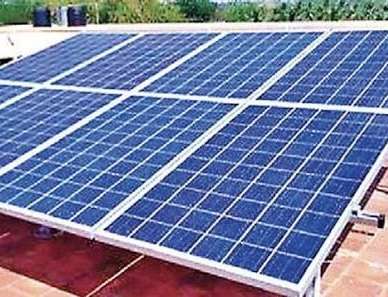
During the 14th Five-Year Plan period, China invested more than 800 billion Yuan in upgrading and strengthening rural power grids, raising the power supply reliability rate to 99.9%. The country is also actively promoting distributed new energy development with a people-centered approach. The installed capacity of household photovoltaic systems has already reached 180 million kilowatts, generating an additional annual income of approximately 14 billion Yuan for rural residents. In July, electricity consumption in the primary industry reached 17 billion kilowatt-hours, a year-on-year increase of over 20%. Emerging technologies such as smart irrigation, intelligent greenhouses, and drone-assisted crop protection are transforming traditional agricultural practices.
Guided by the vision of “bringing prosperity and sharing benefits with neighbors,” China transmitted more than 120 billion kilowatt-hours of electricity to Vietnam, Mongolia, and other neighboring countries in 2024, demonstrating its commitment to regional energy cooperation and shared development.
3. Digital-Energy Synergy: China’s Innovation Gains Momentum
China is undergoing an accelerated transformation in its growth drivers. From 2018 to 2024, electricity consumption in the internet and data services sector grew at an average annual rate of 19.2%. Between 2024 and 2030, power demand from data centers is projected to increase at a compound annual growth rate of 10.4% to 27.1%. In July this year, electricity use in high-tech manufacturing rose by over 10% year-on-year, while the internet and data services sector saw nearly 30% growth.
China is steadily advancing the deep integration of green power and computing resources, coordinating the integrated development of new energy, and increasing the adoption of green electricity in data centers. By the end of this year, over 80% of the electricity consumed by newly built data centers in national computing network hubs is expected to come from green sources.
Reliable and affordable power supply has become a cornerstone for the stable growth and enhanced competitiveness of high-tech enterprises, providing strong support for China’s pursuit of high-level self-reliance and strength in science and technology.
4. Green and Low-Carbon: China’s Transition Benefits the Globe
At the recent UN Climate Summit, President Xi Jinping announced that by 2035, non-fossil fuels are projected to account for over 30% of China’s total energy consumption, with installed wind and solar power capacity reaching six times the level of 2020. China is taking concrete steps to implement the vision that “lucid waters and lush mountains are invaluable assets” and to fulfill its dual carbon goals. As a major economy, China is advancing economic growth alongside green transformation, injecting greater certainty into global climate governance. In the first half of 2025, renewable energy sources contributed close to 40% of China’s total power generation, while CO₂ emissions decreased by 1% year-on-year.
Through the export of green products and new energy technologies, China is delivering tangible benefits worldwide. During the 14th Five-Year Plan period, China’s exports of wind and solar power products collectively enabled other countries to reduce carbon emissions by 4.1 billion tonnes — equivalent to four months of global carbon absorption by forest ecosystems. Since 2010, China’s large-scale manufacturing has driven down the cost of clean energy by 60–90%, making more than 90% of wind and solar projects globally cheaper than the lowest-cost fossil fuel alternatives. International media have recognised China as the undisputed global leader in climate action.
5. Forward-Looking and Pragmatic: China’s Solutions Pave the Way Forward
China’s success in power development stems from its strategic foresight, technological innovation, policy stability and coordinated governance.
First, through forward-looking planning and innovation, China has proactively optimised its power structure with new energy as the core. Aligning with global green transition trends and leveraging its unique resource endowments, the country has tackled key challenges in power transmission and energy storage through technological breakthroughs. The Jiquan Ultra-High Voltage(UHV) DC transmission project—currently the world’s most advanced power transmission system with the highest voltage, largest capacity, and longest distance—delivers clean electricity to millions of households in Anhui Province within just 0.01 seconds, maintaining safe and stable operation for over six years.
Second, through systematic governance and nationwide coordination, China has established a unified national power grid. By implementing the “west-to-east and north-to-south” power transmission programme, the country has optimised resource allocation nationwide, achieving a remarkable 95% utilisation rate of power resources. Furthermore, China is building a comprehensive national emergency power support system to ensure stable electricity supply for all citizens.
Third, through steady and pragmatic policy-making, China maintains consistent long-term planning while avoiding policy volatility and unrealistic extremes. With firm commitment and phased implementation, the country continues to advance steadily toward its carbon peaking and neutrality goals along a predetermined development path.
These surging currents of electricity represent both the warm flow of shared prosperity and the powerful tide of technological progress. They illuminate China’s economic vitality and energise the promise of ecological harmony. As development reaches every corner and innovation shines ever brighter, China’s contributions extend beyond its own prosperity and stability—they demonstrate the firm commitment of a responsible major country to global sustainable development. This light, born in China, continues to illuminate the shared path of progress for all humanity.