 Kamanthi Wickramasinghe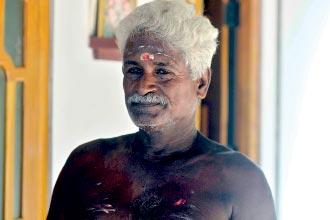
Reply To:
Name - Reply Comment
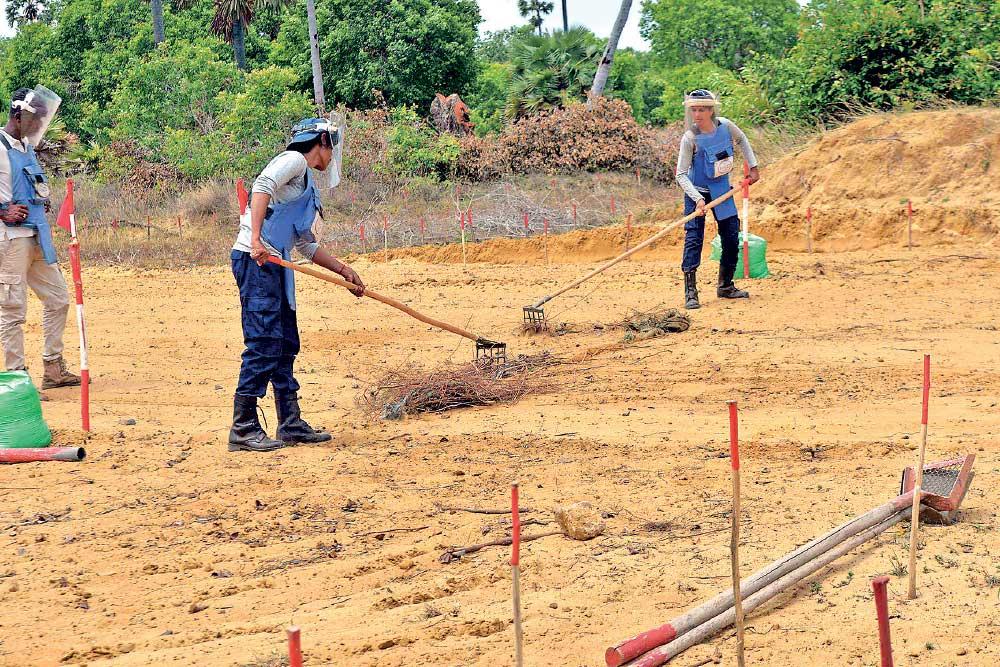
Female deminers at work
Rasadurai Rasendram (64) from Intherapuram, Muhamalai, was displaced with his family of 9 on multiple occasions, once in 1996 and then again in 2000 as a result of the protracted civil war. Due to heavy contamination of the area with shrapnel, land mines and unexploded ordnances (UXOs), Rasendram and his family couldn’t return to their original homelands immediately after the war. But as a result of painstaking efforts by deminers engaged in landmine clearance operations, expedited by The HALO Trust in the Northern Muhamalai area, Rasendram, along with his family, was able to return to their original home in 2021, after a hiatus of 21 years.
Muhamalai Forward Defence Line
During the final stages of the civil war, Muhamalai made up the Forward Defence Line between the Sri Lankan Army and the LTTE forces. After the tactical withdrawal from Elephant Pass in 2000, the Security Forces established a defence line along Kilali, Muhamalai and Nagar Kovil in the south of Kodikamam to protect the Jaffna peninsula. In fact, one of the main intentions of the terrorists was to capture the Jaffna Peninsula.
During the Ceasefire, movements began on the A-9 road from the South to the North and back, while Muhamalai became the entry-exit point to the controlled and uncontrolled areas. Therefore, food and other logistics were channelled via the Muhamalai entry-exit point. As such, Muhamalai became a very strategic point for the south and for over 400,000 civilians living in the Peninsula at that time.
During this period, tens of thousands of landmines were laid by both sides on this frontline that had barely moved for years. The size of the minefield was estimated to be three times the size of New York’s Central Park. The Muhamalai minefield was the largest and most densely mined area in Sri Lanka, presenting a risk to the lives of local communities, preventing development and IDPs returning to their land. Like Rasendram, tens of thousands of civilians were displaced from time to time until the war ended in 2009.
|
Rasadurai Rasendram
|
Land mine clearance activities
Since before the end of the war in 2009, the HALO Trust, the largest landmine clearance operator in the country, has been clearing remnants of the conflict, including the former front lines of Elephant Pass and Muhamalai Jaffna as well as the city’s old railway station. From 2012 onwards, the HALO Trust began land mine clearance activities in Northern Muhamalai, with the intention of returning lands to displaced families. From manual clearance of land mines where deminers walked square by square, on their hands and knees, carefully raking off the soil and extracting all explosives from a few feet below them, the HALO Trust quickly adopted mechanical methods of mine clearance to minimise danger to deminers as well as to expedite operations rapidly.
According to the HALO Trust’s Programme Manager Peter Hugh Scott Baker, even though new methods of manual clearance were adopted, including rapid excavation techniques and detectors, these techniques were challenged by the amount of shrapnel and metal contamination from the fighting that littered the area. From remote-controlled flails to armoured front-loaders and an amphibious excavator provided by the US last year to clear submerged mine lines, the HALO Trust recently marked the milestone in clearing its 300,000th land mine. With that, over the past two decades, a total of 120 square kilometres of land have been returned to the communities. Baker further said that following 12 years of painstaking efforts, the entire northern region of Muhamalai has been cleared and prepared for the return of displaced people.
A firsthand experience
During our recent visit to Muhamalai, the Daily Mirror was able to experience firsthand how deminers engage in these operations under the scorching Jaffna heat. Clad in visors and protective gear, the HALO Trust officers debriefed us about the ground rules when walking on a minefield. The areas with white sticks indicated safe areas, and those with red colour markings indicated contaminated soil. Every deminer has to adhere to strict Standard Operating Procedures to minimise accidents.
As we moved towards the lagoon, the Daily Mirror caught a glimpse of remnants of the war, including an abandoned LTTE bunker and an abandoned kovil that was scarred with heavy firing and shelling during the battle. Many houses have already been built on land that had been cleared, while operations are underway to clear the remaining areas.
The highlight of the visit was to observe demining operations taking place at the lagoon, which is a first in the world. The red sign with skull and bones indicating minefields was installed on either side of the makeshift road we travelled on. The HALO Trust deminers conducted demonstrations on how various mechanical devices extract and sift soil before being inspected for contamination.
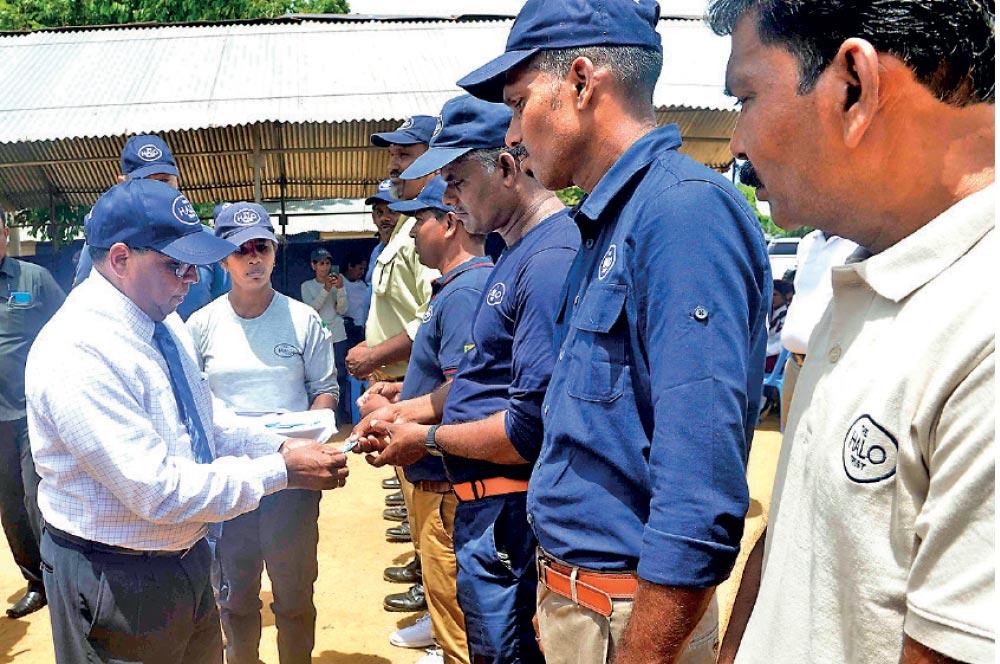
Northern province governor presenting long service awards to deminers
A majority of deminers are women, and they are the sole breadwinners of their families. They start their day as early as 4.00 am, cook two meals and get ready to board the common transport that would take them to their site. During the day, they work in two shifts.
While some have worked their way up the ladder and are now in leadership positions, their determination to clear off the remaining land is evident in the way they work. While the staff is proud about clearing 300,000 land mines in the area, they also haven’t forgotten the sacrifices made by their fellow colleagues along their journey to achieve this milestone.
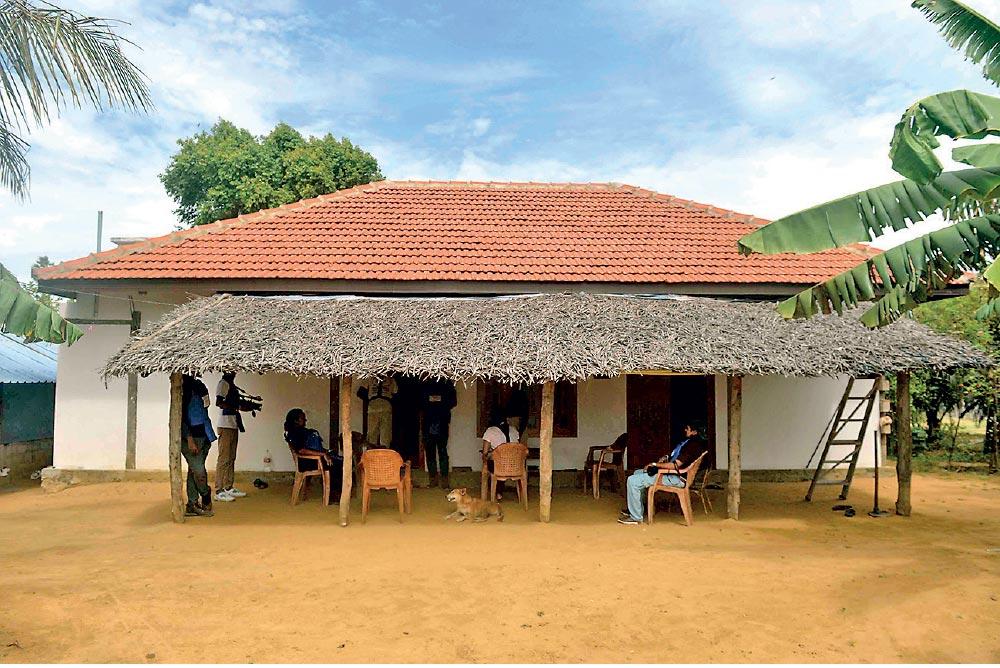
Rasendram's newly built house in Intherapuram - Pix by Pradeep Pathirana
Voices from the community
Rasendram further recalled how his homeland appeared to be a bare terrain upon his return in 2021. “It looked like a playground. On many occasions, we tried coming back but officials at The HALO Trust warned us about land mines,” he said, speaking to the Daily Mirror.
When Rasendram and his family were displaced, they shifted their home base to Velvetiturai. Rasendram engaged in a masonry job for a living. Today, he is engaged in agriculture and is happy to see his children doing well in their studies. “I have four boys and four girls, five of them are married,” he said with pride.
Back in 1979, there would have been about 137 families living in Intherapuram. They were the original inhabitants, like Rasendram. But following resettlement programmes, around 200 families live in this area at present.
Nathan, also a resident of Muhamalai, was displaced in 1996 and then again in 2002. “Since our homelands were littered with land mines, we had to shift our home base to Vanni. Even though we returned after the war, we were living in fear. Upon our return, the HALO Trust commenced operations to remove land mines from our lands. They taught us how to avoid dangerous minefields. There were those who lost their lives and even faced severe injuries during demining operations. I pray for all of them,” he said.
More families await resettlement
Speaking at the recently concluded event by The HALO Trust, Government Agent of Kilinochchi Subramaniam Muralitharan thanked The HALO Trust for clearing the land and making it safe for civilians and livelihood development. “It can now be utilised for agriculture and infrastructure development. Resettlement has been successfully concluded in 99% of the land area. However, nearly 100 more families are awaiting resettlement,” he added.
Transition of livelihoods
Sri Lanka acceded to the Mine Ban Treaty (also known as the Ottawa Treaty or the Anti-Personnel Mine Ban Convention) on December 13, 2017, becoming the 163rd nation to join. The treaty prohibits the use, stockpiling, production, and transfer of anti-personnel mines. Sri Lanka is obligated to destroy all anti-personnel mines in areas under its jurisdiction or control as soon as possible, but no later than June 1, 2028.
The HALO Trust has begun a major employee transition project that will prepare staff for a successful working future once Sri Lanka is mine-free. All staff, from deminers and medics to drivers and mechanics, have the opportunity to acquire transferable skills and qualifications.