Reply To:
Name - Reply Comment
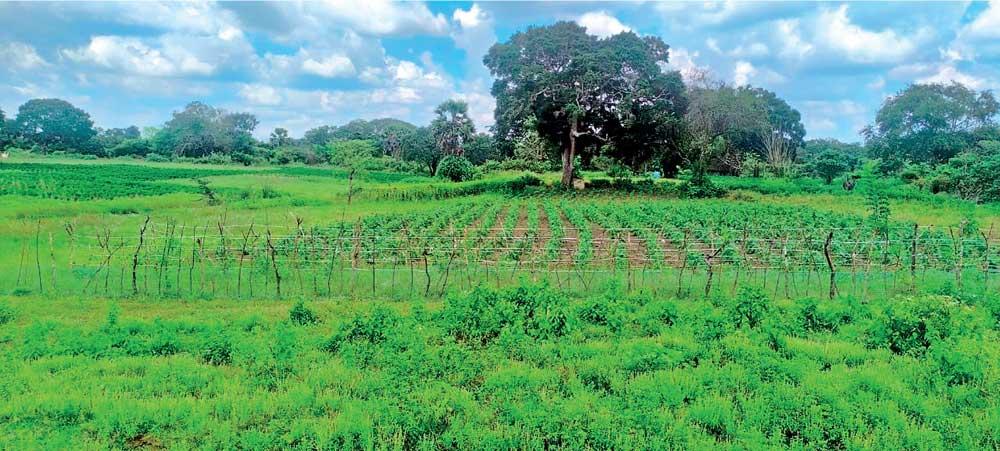
Farmers in Kayanagar and Sithivinayagar Kulam used to grow onions, brinjals, tomatoes, lady’s fingers, nuts, and green chilies on higher ground to mitigate the impact of sudden floods caused by heavy rains due to climate change
 Now, the seasons are no longer predictable. Rainfall is irregular, and extreme weather makes it difficult to decide when to start farming. This has led to frequent crop failures
When there is no rain, water shortages make it hard to grow anything. Around 100 families in the village are directly affected
Climate change is not the only issue. Illegal sand mining and illegal felling of trees have also damaged the environment

Mannar is a region where most people depend on farming for their livelihood in one of Sri Lanka’s ‘dry zones.’ But in recent times, climate change has made farming here very difficult. Weather patterns have become unpredictable, temperatures are rising, and extreme weather conditions are happening more often. These changes are making it hard for farmers to grow crops, causing economic problems and food shortages. Microsoft founder Bill Gates and many climatologists warned a few years ago that 2025 would the year of climate chaos. And that is what’s exactly happening.
For many years, farmers in Mannar followed traditional farming cycles down the ages.
They planted and harvested crops in harmony with Yala and Maha seasons. The monsoons were predictable, as well as inter-monsoonal rains. This system helped ensure a steady food supply.
But now, the seasons are no longer predictable. Rainfall is irregular, and extreme weather makes it difficult to decide when to start farming. This has led to frequent crop failures.
In villages like Kayanagar and SithivinayagarKulam, farming is the main source of income.
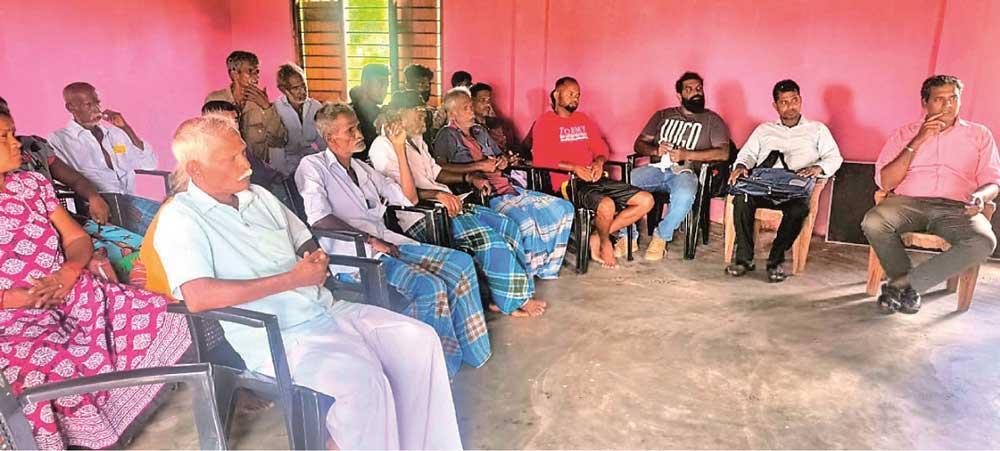
The members of the Kayanagar village society were seen explaining the issues they face with their cultivations due to the effects of climate change
In Kayanagar, most farmers grow crops on higher ground because there are no paddy fields and not enough water. On the other hand, when there is heavy rain, floods destroy crops, damage houses, and make roads unusable.
When there is no rain, water shortages make it hard to grow anything. Around 100 families in the village are directly affected, making everyday life a struggle.
Seeing the serious effects of climate change, the Centre for Justice (CEJ) and a media team started educating farmers better coping methods and farming under these chaotic climate conditions.
These include:
 |
| Ramesh Vasundaradevi |
However, these solutions require training, resources, and careful planning, which many villagers lack, Ramesh Vasundaradevi, Secretary of the Village Development Society, said.
“Over the past 20 years, we have seen big changes in the climate. We used to grow onions, brinjals, tomatoes, lady’s fingers, nuts, and green chilies,” she said.
“The soil in Kayanagar is very fertile and good for farming. Normally, we plant crops in April and harvest before November, before the heavy rains start. Now, to adjust, we are growing crops in bags on higher ground.”
Climate change is not the only issue. Illegal sand mining and illegal felling of trees have also damaged the environment. These activities have changed the local weather and reduced the quality of the soil, making farming even harder.On top of that, farmers face economic struggles.
Middlemen buy their crops at very low prices and sell them at much higher rates. This unfair system leaves farmers with very little profit, making them question whether they should continue farming at all.
Another challenge for farmers is protecting their crops from wild animals.
Monkeys, giant squirrels, elephants, porcupines, wild boars, peacocks and deer often destroy crops. Farmers who live near the forests face problems with elephants, while those in other areas deal with smaller animals that still cause damage.
Recently, villagers helped with a government animal survey to track these problems. However, wild animals continue to be a major threat to farmers and their crops.
Even with all these challenges, farmers in Mannar are determined to keep farming.
They believe that with the right support, training, and resources, they can adapt to climate change. Organizations like CEJ play a key role in helping them learn new techniques to improve their farming.
To secure a better future, action must be taken now.
Climate-smart farming methods, fair market policies, and environmental protection efforts need to be put in place. Only then would Mannar’s farming communities be able to survive and grow in a world where the climate is constantly changing.