Reply To:
Name - Reply Comment
They were compelled into their present plight
" Since our return from the IDP camps, this house was the one thing that brought solace to our life crippled by hardships. But a few months ago another family claimed ownership to this land and we were forced to go to courts to claim our right to the land. We have not received the samurdhi allowance or any other welfare provision from the government "
By Lakna Paranamanna in Kilinochchi
The ill-fated day
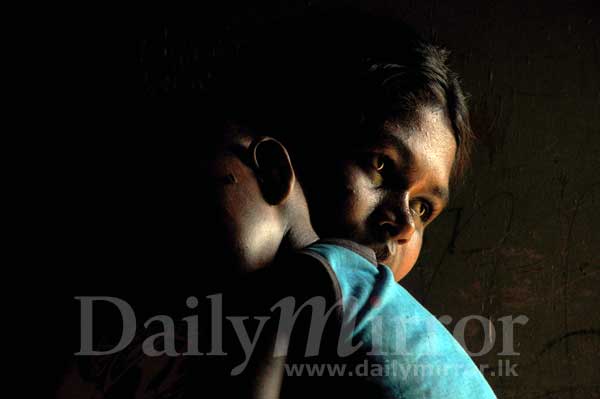
“By the time I was 15, my fate was decided and sealed,” says 19 year-old Parameshwari*, as she walks up to the cloth cradle inside her shack to pick up her three year-old son. The little one cries feverishly, tugging at her bosom. Holding the child with one hand, she bends down to pour a cup of water from a clay pot, which she holds up to the weeping boy. He seems consoled for the moment.
Four years ago, Parameshwari was compelled to agree to a marriage arranged by her mother to avoid being recruited to the LTTE. “I was returning home from school one afternoon when a tractor driven by female LTTE cadres stopped before me. They asked whether any of my family members were part of the movement and I said no. They then ordered me to get into the truck,” Parameshwari says as she relates the events that led to her abrupt marriage.
A choice for life
In the heavy rain, Parameshwari and several other young girls had been transported to an LTTE training centre deep in the wilderness. They had been made to assemble outside a little hut where their family details were listed. “We were informed we would undergo training the next day onwards . . . There was never much hope in our lives, having lived amidst a battlefield. But that was the day I realised that my days to live were numbered,” she says. Her wearied face suddenly lit up with a smile. “About five days later, I seized the chance to escape one afternoon while a group of us were making our way to another training centre, a few miles away.”
" I was taken to my grandmother’s house in case they came in search of me. My mother left, promising a solution and returned two days later with a relative, informing me that I should marry him "
Home was not meant for her
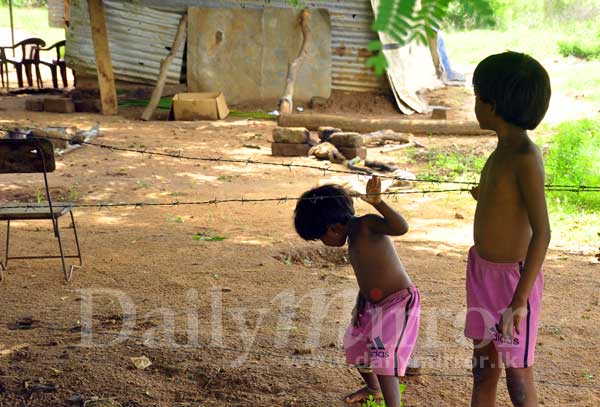
When she finally found her way through the wilderness and reached home, her mother had refused to keep her. “I was taken to my grandmother’s house in case they came in search of me. My mother left, promising a solution and returned two days later with a relative, informing me that I should marry him. I realised I couldn’t object and left my grandmother’s house to live with him. About a year later my son was born,” she says smiling and draws her son close to her, stroking his head.
The age gap between Parameshwari and her husband is 27 years and although four years have passed since their marriage, the couple is still not legally married. “It never occurred to us that we should register our marriage. . . We have a child together also, so we don’t see a purpose in registering the marriage now,” she says, laughing. “He has been good to me and I am among the few lucky women in this area who don’t get beaten by a drunkard husband. He brings home all his earnings because we can’t afford to waste even a rupee.”
Their effort to keep the home fires burning
Parameshwari’s husband is disabled, having suffered serious injuries in a crossfire during the conflict. He had been working as a farmer, but now works as a labourer. As he has no permanent income, Parameshwari says the task of assuring a daily meal has been tough. “My mother and two younger sisters are also dependent on us. He earns only about Rs. 700 per day which is hardly sufficient for all of us..” she says.
Life was burdened with hardships and having moved from one IDP camp to another during the conflict and also a few months afterwards, Parameshwari and her family are now settled in the backwoods of Kilinochchi. Their little mud hut is sheltered by roofing sheets. Tin cans were kept in corners on the mud floor for rainwater to collect. “The roof is leaking so the house has been damp because it has been raining for the past few days,” she says coyly.
Tears and hardships were not unusual
“Since our return from the IDP camps, this house was the one thing that brought solace to our life crippled by hardships. But a few months ago another family claimed ownership to this land and we were forced to go to courts to claim our right to the land. We have not received the samurdhi allowance or any other welfare provision from the government. So apart from my husband’s salary, there is no other income that supports us,” she says adding the transportation costs to the courts and lawyers’ charges have imposed an unfeasible financial weight on them.
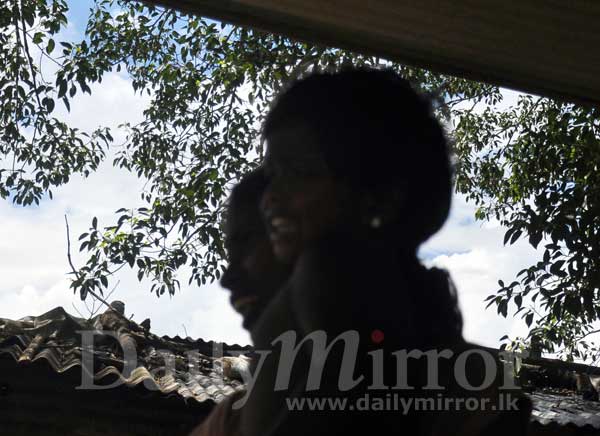
Her face clouded with the reminder of their hardships but she has hardly any time for her thoughts as her son starts crying once more. She carries him and hums a tune in an attempt to console the child. “I was pregnant with my second child but suffered from complications due to lack of nutrients . . . the baby was still born,” she said, striving to hide her tears. But the tears of unspoken grief roll down her dark cheeks. “Tears are nothing new to me - we were all destined to live in misery throughout our lives,” she adds as she wipes the tears away.
Parameshwari is not alone in this plight - the Northern Province is home to hundreds of young mothers who lead lives crippled by hardships due to poor economic conditions and abusive households. It is said that motherhood is the greatest boon to a woman and brings joy and humanising effects but the lives of these young girls seemed to have been otherwise - their future and innocence lost, having paid prices with their lives, for a spar they played no role in . . .
Parameshwari has little plans for her future but her concerns are for her son. “I had plans for my future when I was a kid, to become a teacher, to bring better times to my family . . . Things have changed but I don’t blame anybody because this marriage at least kept me alive. . .”
Underage marriages cause school dropouts – Northern Province education official
A top official of the Northern Province education department who wished to remain anonymous said underage marriages are still a persistent issue that has resulted in school drop-outs among adolescents in the Northern Province.
“Many think it was only prevalent during the conflict but it continues even at present. The main issue that encourages young adults into early marriages and sexual activity has been identified as poverty,” the official added.
Drawing examples from education zones in the Northern Province, the official said that in the Mankulam education zone, 25 teenagers have dropped out of school in 2009 followed by 11 in 2010, 28 in 2011 and 17 this year.
" The main issue that encourages young adults into early marriages and sexual activity has been identified as poverty "
Rebuilding their lives and futures - Child Development and Women’s Affairs Ministry
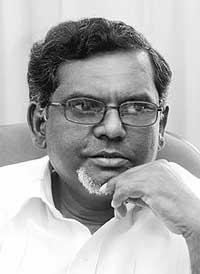 The Secretary of Child Development and Women’s Affairs Ministry, Eric Ileyappaarachchi commenting on the issue of underage mothers in the conflict affected areas said, “Since Sri Lanka has ratified the United Nations Security Council resolution 1325 that has called for the adoption of a gender perspective including the special needs of women and girls during repatriation and resettlement, rehabilitation, reintegration and post-conflict reconstruction, we have taken measures to assure the wellbeing of female adolescents who are mothers and also those who have turned widows.”
He said the process has been tough due to the lack of an accurate and updated information database.
Speaking of measures implemented so far, Mr. Ileyappaarachchi said, “Special focus has been placed on registering marriages of those who are not legally married, once the girl reaches 18 years. In collaboration with the Registrar General’s office these programmes have been initiated on a district secretariat level and several awareness campaigns have been carried out to encourage young girls to legalise their marriages.”
He said economic empowerment programmes have been initiated to enable self employment among the young girls, where equipment and monetary facilities are provided through the women’s development organisations in each area.
The Northern Province education department official said informal education programmes were held after school hours for adolescents who wished to enroll in an education course. “The classes are held currently for Information Technology, sewing and motor mechanism for which there is a high attendance at present,” the official added.
" we have taken measures to assure the well being of female adolescents who are mothers and also those who have turned widows "
“Underage pregnancies - grave impacts on the next generation as well” - FHB
Family Health Bureau (FHB) - School and Adolescent Health Unit Consultant Community Physician, Dr. Manjula Danansuriya commenting on the health costs of underage pregnancies said, “Teenage pregnancies especially below 16/17 years is considered high-risk because of their physical and psychosocial immaturity. They are more likely to have maternal anemia, pregnancy induced hypertension, spontaneous miscarriage, high maternal mortality and pre and post natal depression,” she said adding that underage marriages that prompt female adolescents to engage in sexual activities early, expose the females to unwanted or unplanned pregnancies, unsafe abortions, sexually transmitted infections (STIs) as well as unsatisfactory or coerced early sexual relationships.
Commenting on the impacts of underage pregnancies on the offspring, Dr. Danansuriya said, “Low birth weight is observed primarily due to pre-term delivery and also leads to high prenatal and post neonatal morbidity and mortality.”
She also said, the mothers’ physical and psychological immaturity results in difficulties to establish a secure and sensitive attachment with the baby. “This will result in problems with breast feeding and attachment problems that could manifest in the child years later, as behavioural problems in childhood, behavioural disorders in adolescence and violent behaviour as adults, causing a long lasting impact over the next generation.”
" Teenage pregnancies especially below 16/17 years is considered high-risk because of their physical and psychosocial immaturity. They are more likely to have maternal anemia, pregnancy induced hypertension... "
“Raising awareness among parents, essential” – Sumitra Rahubadda
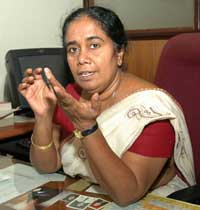 Former Secretary to the Ministry of Child Development and Women’s Affairs, Sumitra Rahubadda says it is vital to raise awareness among parents, to minimise the number of underage marriages and pregnancies.
“In most areas, the marriages had happened with the blessings of parents. However this issue is not prevalent in the North alone, but throughout the country – there is a high prevalence in Anuradhapura, Kurunegala and Ratnapura. It was revealed that the main reason for early marriages and sexual activity among adolescents was poverty, familial instability caused mainly due to the migration of mothers and lack of education and awareness. Unstable family units had led the teenagers to view marriage as a way out of their problems. However, prohibiting the migration of parents alone will not be affective and creating awareness among parents and enlightening them on the social cost of migration is vital,” she added.
Ms. Rahubadda also said that encouraging young girls to legally marry is another important step to be taken by authorities as most were living with their partners without legally registering the marriage. “It is important to encourage constructive dialogue on sex education as lack of knowledge has also resulted in unwanted pregnancies among teenagers.”
" In most areas, the marriages had happened with the blessings of parents. However this issue is not prevalent in the North alone, but throughout the country – there is a high prevalence in Anuradhapura, Kurunegala and Ratnapura "
*Name has been changed to protect the identity