Reply To:
Name - Reply Comment
By A.M. Gunawardhana
An event of great cultural and historical significance takes place annually in the hill capital of Sri Lanka in the month of Esala, followed by several such events throughout the country - one of which is the historic Sri Dalada Perahera of Sri Jayawardenapura Kotte Rajamaha Viharaya held to pay obeisance to the Sacred Tooth Relic, as the kingdom of Kotte was once the abode of the Sacred Tooth Relic.
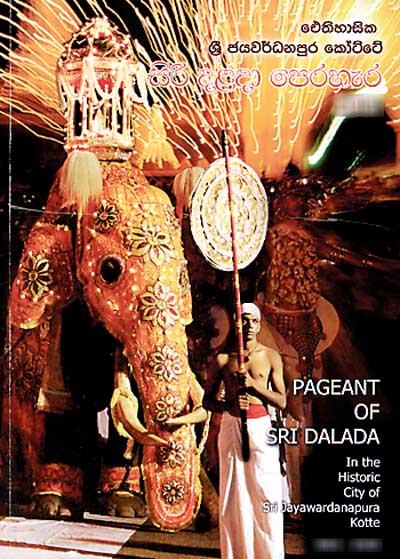 The Dalada Perahera has a long history which dates back to the time it was brought to Sri Lanka during the reign of king Kithsiri Mewan also known as Kirthi Sri Maghawanna (303-331). He is the grandson of Gotabhaya and Son of Mahasen the builder of the Minneriya tank, who is worshipped as “Minneriya Deiyo’
The Dalada was brought to Sri Lanka concealed in the tresses of princess Hemamala daughter of King Guhaseeva of Kalinga who was accompanied by her husband prince Dantha whose father was the king of Udeni. The prince and his party were disguised as Brahmins and disembarked at the Illangathurai Harbour in the Kottiar Pattu of Trincomalee. It was then known as Lanka Patuna and the oldest temple was Samudragiri Viharaya, the fate of which is worth examining. This was destroyed by the terrorists and a Kovil was built at this site. Now the SL Army has built a Dagaba at the site which is open for public worship.
The Sacred Tooth Relic was taken to the capital, Anuradhapura and deposited in a casket made of precious stones and placed in an elaborately constructed Dalada Maligawa which was close to his own palace for protection. The king held a festival to honour the Sacred Tooth Relic and ordered that similar festivals should be held annually. The possession of the Sacred Tooth Relic was transferred from Megagiri to Abhayagiri for obeisance which was the beginning of the Dalada Perahera.
These annual festivals were followed by all the kings and it became part of their duty to do so. The People believed that the person who possessed the Sacred Tooth Relic was the king of the country, and as such it became a symbol of royalty.
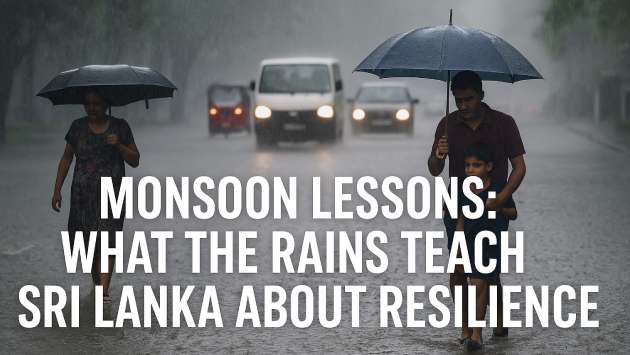
The Sacred Tooth Relic is intimately woven with the history of Sri Lanka. It is said that when there was a drought during King Upatissa’s reign in 370 A.D, he led a procession with a gold image of Lord Buddha, the bowl relics and the Sacred Tooth Relic and that it brought down rain ending a severe drought. During the rule of the British invaders when the country experienced a severe drought, the reason for this was said to be the failure to hold the annual Perahera, as the British rulers ordered our people not to hold the Perahera. After great persuasion permission had been given mockingly, on condition that if no rains came, permission will not be granted again. However after the Perahera there had been torrential rain, which led to severe floods, after which the Britishers never refused permission to hold the Perahera. The water which poured from the heavens for weeks was known as “Dalada Wathura”
During his reign the Sacred Tooth Relic had performed a miracle as stated in the Maha Wansa. “The Sacred Relic rose to the sky like a ray of the moon from the hand of the king which depicted a lotus exhibiting the true image of the Buddha with several rays of resplendent colours emanating from the Buddha image, lighting the entire vicinity and bringing immense happiness to the king, pleasing him, and came down from the sky and settled on the hand of the king.”
From Dambadeniya the Sacred Tooth Relic was taken to Yapahuwa, from there to Kurunegala, Gampola and then in 1415 it came to Kotte during the reign of king Parakrama Bahu VI (1415-1472). He ruled the entire land from the kingdom of Sri Jayawardenapura Kotte. His era is known as the ‘Golden Era’ of Literature. Several books of great repute were written during his rule as he encouraged scholars to write such books.
The Kotte Perahera was started in 1415 by Perakumba VI under the auspices of Weedagama Thero with the participation of about 500 caparisoned elephants and had paraded on a road constructed on the rampart. The reign of Kotte which began in 1372 with the reign of Buvanekabahu V (1372-1408) ended in the year 1597 during the reign of Don Juan Dharmapala (1550-1597) who was a puppet king under the Portuguese.
The Perahera begins with the chanting of Seth Pirith and then the ‘kap planting’ ceremony is held at an auspicious time. This is a vow made to the gods promising to hold a kumbal perahera, Three Mal peraheras, Pavada perahera, Weedi perahera, Randoli Perahera, Maha Perahera and Diya kepeema perahera. The final perahera to be held today, September 7 is the gem in the crown of the entire pageant where several caparisoned elephants participate. The entire surroundings reverberate to the sounds of low country, upcountry and Sabaragamuwa drums and also the rhythmic beat of kavadi drums.
The Diya Kepeema is performed at Etulkotte on the waters of the Diyawanna Oya and all rituals related to the Perahera is performed by the Chief Kapu Mahattaya D. Rohitha Padma Deva and his followers. Thereafter the kap plant is sent floating down the river.
President Mahinda Rajapaksa has been the President of the Perahera Committee since the time of his office as Prime Minister, to date.