Reply To:
Name - Reply Comment
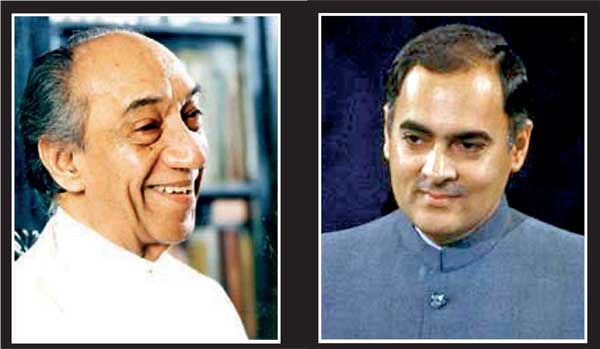
 The then geriatric J. R. Jayewardene, President of Sri Lanka and the then youthful Prime Minister of India, Rajiv Gandhi, [who not long before that date had prevented by force the armed forces of Sri Lanka from defeating the Tigers by military means, thereby preventing the colossal loss of life that took place between 1987 and 2009 and also preventing the occurrence of the ‘refugee problem’ which arose, by over 300,000 ‘human shields’ being held hostage by the Tigers released from bondage by our Armed Forces], signed an agreement known as the “Indo-Lanka Agreement” to establish peace and normalcy in Sri Lanka. That agreement was signed on July 29, 1987.
"Why can’t the Government tell the Indian Government that the Indo-Lanka Accord no longer exists, and that the abolition of Provincial Councils is not a matter that concerns India in any way?"
It is beyond dispute that the said Agreement was signed by Jayewardene with a gun pointed at his head (metaphorically) by Gandhi. It is further beyond dispute that no Government of Sri Lanka whether headed by Jayewardene or any other person would ever have agreed to the humiliating terms therein, but for the threats advanced by India and the prospect of the menace of India intervening militarily. That Accord becomes of great relevance in the present day because there are even now, some who are so downright stupid and/or such confirmed acolytes of foreigners to whom nothing done by a foreigner or a foreign Government of the West or their hangers-on - unlike anything done by our Government - could be wrong, still insist that abrogating the Provincial Councils and/or pruning their powers under the 13th Amendment would be in breach of that Accord.
"How was India in a position to give an undertaking that all the terrorist groups would surrender all arms in their possession by August 3, 1987??"
The question is of whether any act performed by our Government would be in breach of that Accord or not, would be dependent primarily on whether that Accord is now in existence or not.
"It is now a matter of historical fact that the LTTE surrendered but a small stock of out-dated and unserviceable weapons and not the others"
This is a question which every one of those who utter such heretical sayings such as that of the abolition of the Provincial Councils or the pruning of their powers would be in breach of that Accord avoids addressing, in any manner whatsoever. The question of whether all the Provincial Councils should be abolished (a proposition with which I not only agree whole-heartedly but which I have been advocating from the word go) being of grave topical importance today, I set out below my thoughts on whether or not the Indo-Lanka Accord is valid and operative today.
The Indo-Lanka Accord was signed on July 29, 1987 at a time when Sri Lanka was in the throes of an armed conflict with the Tigers (which they need not have) had Gandhi not interfered and prevented our Forces from destroying the Tigers root and branch in Operation Liberation. After that interference, India even invaded our air space by sending transport aircraft escorted by jet fighters to drop food, ostensibly for the allegedly starving people of Jaffna Peninsula.
The essential purpose of the Accord was to ‘establish peace and normalcy in Sri Lanka’. The fact that it established neither peace nor normalcy is beyond dispute. Being designed firstly to establish peace in Sri Lanka, one of the key or THE KEY PROVISIONS thereof, is contained in Clause 2.9 which reads:
“The emergency will be lifted in the Eastern and Northern Provinces by August 15, 1987. A cessation of hostilities will come into effect all over the island within 48 hours of signing of this Agreement (sic). All arms presently held by militant groups (an euphemism used then, and surprisingly, even now, for gangs of separatist terrorists), will be surrendered in accordance with an agreed procedure to authorities designated by the Government of Sri Lanka. Consequent to the cessation of hostilities and the surrender of arms by militant groups, the Army and other security personnel will be confined to barracks as on May 25, 1987. The process of surrendering arms and the confining of security personnel moving back to barracks (sic) shall be completed within 72 hours of the cessation of hostilities coming into effect.”
Thus, the Indo-Lanka Accord provided that all terrorist groups (referred to in the Accord as “militant groups”) will surrender their arms within 72 hours of the cessation of the hostilities which was to come into effect within 48 hours of the signing of the agreement. The agreement was signed on the 29 July, 1987. Thus, 48 hours thereon took one to July 31, 1987 and 72 hours from then to 3 August, 1987. Accordingly it was incumbent upon all terrorist groups including the LTTE, to surrender all their arms on or before August 3, 1987. It is now a matter of historical fact even acknowledged by the former Indian `Viceroy’ to Sri Lanka, designated High Commissioner, Jyothendra Nath Dixit, that the LTTE surrendered but a small stock of out-dated and unserviceable weapons and not the others. Ultimately the LTTE was disarmed only on or about May 18, 2009, 22 years later. Of course they could have been disarmed or rendered wholly ineffective much earlier had not Rajiv Gandhi prevented Sri Lanka from destroying those blackguards once and for all.
How was India in a position to give an undertaking that all the terrorist groups would surrender all arms in their possession by August 3, 1987?? They could have done so only if they had or believed they had, control over what those terrorists were doing. Accordingly India has by this Accord, admitted by necessary implication, that they were complicit in the many murders of civilians by the terrorist groups including the mass murders of Sinhalese pilgrims at the Sacred Bo Tree at Anuradhapura, the murders of unarmed prisoners and their families in the Dollar and Kent farms etc., the indiscriminate murder of Sinhalese, Tamil, Muslim and other office workers etc. at the Pettah bus stand and so on.
Be that as it may the Indian Government has, by Clause 2.14 of that Accord, asserted solemnly and allegedly sincerely that:-
“The Government of India will underwrite and guarantee the resolutions, and co-operate in the implementation of these proposals.”
Thus, India had agreed to ensure that all terrorist groups including the LTTE surrendered all arms in their possession on or before the August 3, 1987. That this was a fundamental term in the contract is one that does not admit of dispute - for how can peace or normalcy be restored while there is/are in Sri Lanka, one or more groups of terrorists possessed of arms and ammunition in a position to fight the State which they had been doing for years ?
Not only did India not discharge this particular all important obligation it had undertaken and owed to the Government of Sri Lanka, but even when the Tigers went on a spree of blood-letting, murdering Sinhalese and Muslim civilians on the Eastern coast between Trincomalee and Chenkaladi from the October 1, 1987 onwards, the Indian Army Of Occupation euphemistically called the Indian Peace Keeping Force, took no steps to prevent them. Indeed not only did the Indian Army Of Occupation (called the IPKF) desist from restraining those terrorists but they even assaulted and bound up the Officer-In-Charge of the China Bay Police Station who sought to go to the aid of the Sinhalese and Moor civilians, and also murdered the chief priest of the Buddhist Temple at China Bay. Thus, India has acted in wholesale breach of a fundamental term in the contract it had with the Government of Sri Lanka called and known as the Indo-Lanka Accord.
In the law of contract, where one party to a contract acts in wholesale breach of a fundamental term therein, that contract is deemed to have been repudiated by such party. Thus, if in a sale of goods contract, one party which had undertaken to purchase any goods for a particular price to be paid on or before a particular date did not pay and refused to pay such price, that contract of sale of goods necessarily had to be said to have been repudiated by that party. By the same token the Government of India had repudiated the Indo-Lanka Accord in 1987 and that so-called Accord has not been operative or in existence ever since.
In these circumstances it is infantile to state or to even suggest that abolishing the regime of white elephants called Provincial Councils which is sapping the economic strength of the Country, would constitute a breach of the Accord and hence of an International Obligation we owe to India.
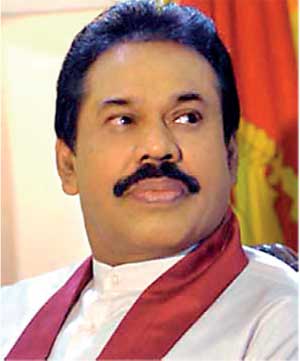
One question that arises for consideration is, why can’t the Government tell the Indian Government that the Indo-Lanka Accord no longer exists, and that the abolition of Provincial Councils is not a matter that concerns India in any way? No doubt the comeback of the Indian Government would be that these were matters regarding which our President Mahinda Rajapaksa has made various commitments to the `International Community’ meaning of course the affluent countries of the West and their puppet Ban Ki-Moon in New York. In my view the breach by Mahinda Rajapaksa of any of the undertakings alleged to have been given by him to India or any of the affluent countries of the West or to their servant Ban Ki-Moon is of no consequence. Not one of them had any right to extract any promise from Rajapaksa relating to the governance and/or administration of this country which are all internal matters for us and us alone. The question of whether to continue with this Provincial Council system which compels the innocent people of this country to maintain at colossal expense, nine white elephants called Provincial Councils, [eight up to now and nine from September onwards] is a matter entirely for us, and the yardstick by which Mahinda Rajapaksa must decide. Whether or not to continue with that ghastly system is not whether or not abolishing Provincial Councils would be in accord with undertakings previously given by him to those Western countries and/or to India, but whether it would be in the best interests of the country to do so. The best interests of the country cannot give way to any promise or any undertaking held out by the Head of State to any foreign Country which had no business to interfere in these matters.
At or about the time it is alleged that such undertakings were given, it must be remembered that Mahinda Rajapaksa was leading a beleaguered country fighting a battle for its own survival with the most ruthless and inhuman band of terrorists the world had ever seen, who would have been nonexistent but for the interference by India in 1987; thereafter, he was leading a country being castigated by the hypocrites of the West and their hangers-on like India for having defeated those terrorists militarily.
In this situation, Mahinda Rajapaksa had every right and even an obligation to the country to utter any falsehood to any country whatsoever, be it India or any affluent country of the West or their servant Ban, to prevent any further interference or encouragement given to the terrorists whom we were then on the verge of defeating root and branch, or their would be successors.
In these circumstances it is for the Government to speak out boldly and state that the Indo-Lanka Accord no longer exists; that it was repudiated by the Indians almost immediately after it was signed and that any promises of whatever nature alleged to have been given by the President to foreign countries regarding the internal governance of this country are wholly irrelevant and that the guiding principle which controls the actions of the government being the welfare of and/or the benefit of the People of Sri Lanka, it is from that standpoint that the Government of Sri Lanka must assess and determine the question of whether or not Provincial Councils should remain or not.