Reply To:
Name - Reply Comment
 By Lakna Paranamanna
The present conviction rate of 4% in the country is a repetitively highlighted fact whenever a debate emerges pertaining to the judicial process. During the year of 2010 alone, Police Department statistics revealed over 91% of homicides and over 96% of rape and incest cases reported to the Police are in limbo due to pending investigations or delays in the judicial process.
The judicial sector experts often attribute the tortoise-paced conviction rates to the laxity in the Attorney General’s Department and flaws in forensic sciences in the country’s crime-scene investigation techniques - particularly the lack of DNA-based evidence.
The trends are about to change as a group of analysts from the Government Analysts’ Department (GAD) promises an escalation in the country’s conviction rate by nearly fifteen-fold. The group of three senior assistant government analysts – D. H. L. W. Jayamanne, R. W. R. K. Rathnayake and V. J. Bandaranayake, following training in the OSU School of Forensic Sciences in Tulsa, Oklahoma, are gearing up to set up Sri Lanka’s very first national DNA analysis laboratory.
.jpg) Scientifically accurate and reliable evidence
Scientifically accurate and reliable evidence
At present, the GDA only produces screening and confirmation reports through careful analysis of evidence samples gathered from the victim, the crime scene and control samples obtained from the suspects.
“We are not yet equipped with the technology or facilities to distinctively point out a suspect’s link to the crime they have been accused of. Hence in most cases, the GAD reports are limited to supportive evidence that would not contribute towards the effective prosecution of the suspects because eye-witness reports can vary over-time,” senior assistant government analyst D. H. L. W. Jayamanne told the Daily Mirror.
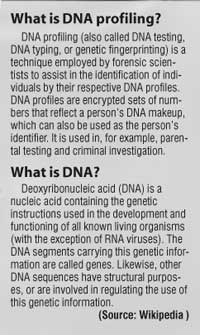
Jayamanne points out it is only through DNA profiling that a suspect can distinctively be proven to be linked to a specific crime that he/she is accused of. He adds it is not only scientific, but vouches that it is the most successful method to produce evidence that would be not be fallible overtime and would not give leeway for benefit of the doubt, during trials. “The scientific edge of DNA profiling can be exploited to pave the way to effective prosecutions,” he says. “Once the DNA sample is obtained from the suspect under his/her consent, it is compared and matched with the DNA patterns of evidence found in the crime scene or the victim. The evidence generated through the comparison of the samples is 99.999 percent accurate and foolproof,” Mr. Jayamanne adds with certainty.
DNA profiling in Sri Lanka
DNA profiling in crime investigations is a relatively new introduction to Sri Lanka’s judicial process by late the Dr. Maya Gunesekera. Initially used in the late 1990s to prosecute perpetrators of the Hokandara murder case, the system later followed into several landmark cases that were solved based on DNA profiling - the murder of Justice Sarath Ambepitiya and the Royal park murder.
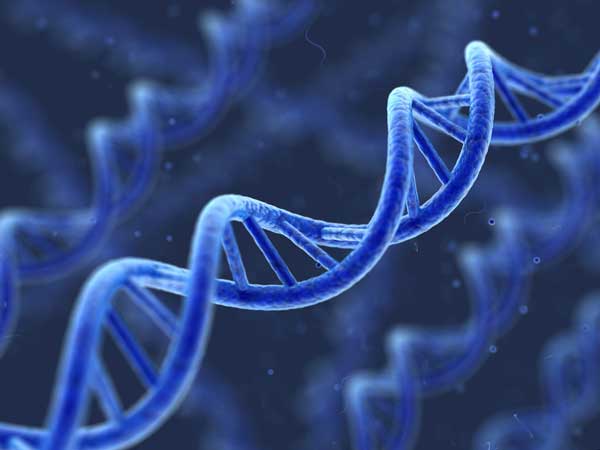
At the moment, DNA based profiling, is ordered upon the Magistrate’s discretion for selective cases. The reports are produced only by two private molecular biology laboratories. However, Mr. Jayamanne says although these two private laboratories have provided an unparalleled service to the judicial services in the country, DNA profiling produced by a molecular biology laboratory alone would not be sufficient in certain cases.
_DM-9-City.jpg)
“There are certain crimes of sophisticated nature, where the perpetrator might have planted evidence in the crime scene to mislead the investigators. Such stimulations can be identified, mostly in murder cases, using blood-pattern analysis through which the difference between natural and stimulated evidence could be discerned. These studies are only conducted in forensic laboratories – therefore, the addition of a DNA profiling laboratory in the GAD is of the utmost importance,” he added.
 Special training in DNA profiling
The group of three analysts from the GAD including Mr. Jayamanne in their three week training had been thoroughly trained and skilled to perform DNA analyses for crime scene investigations.
“We are currently in the process of adjusting our learning to suit the local judicial process and environs. Above all, we require a new laboratory to carry out DNA analyses as contamination-free environments are required with special temperatures and stable electricity. The laboratory structure is in its final stages, in the new GAD complex being constructed in Battaramulla,” he said.
Mr. Jayamanne is certain, within six months from now, the team and the laboratory would be ready to produce reports to courts. “We need that time to validate the methods. This laboratory will be the FBI laboratory equivalent,” he stated.
High costs involved
According to Legal Aid Commission Chairman Mr. S. S. Wijerathne, the involvement of DNA based profiling in a case incurs a substantial cost to the complainant party/parties. “DNA based profiling at present, is acceptable evidence in the local judicial system. However, the limited availability of the service has resulted in the soaring of costs involved, making its access limited to selective cases.” He added that the cost varied, with the lowest being nearly Rs. 15,000, which should be borne by the plaintiff.
However, this dilemma and many others that have cropped up due to the lack of freely accessible DNA profiling systems, are soon to be settled. “We are certain the conviction rate in the country can be increased by over 50% if we get the national DNA profiling system up and running. Once the national DNA profiling system is established, we will be able to provide the service free of charge,” Mr. Jayamanne from the GAD said with certainty.