Reply To:
Name - Reply Comment
.jpg) Rapid proliferation of Social Issues in Sri Lanka in recent years is an unmistakable fact. Crime, sexual abuse, corruption, breakup of family, domestic violence, suicide, mental illness, conflict, violence, poverty, unemployment, alcohol and drug abuse, etc have emerged as major social issues leading to immense human suffering.
Rapid proliferation of Social Issues in Sri Lanka in recent years is an unmistakable fact. Crime, sexual abuse, corruption, breakup of family, domestic violence, suicide, mental illness, conflict, violence, poverty, unemployment, alcohol and drug abuse, etc have emerged as major social issues leading to immense human suffering.
The key factors that have contributed to these issues are a) disruption of social relationships at both interpersonal and societal levels, b) failure of institutions, c) erosion of the normative framework including the legal system and established rules and regulations and d) the rising aspirations and expectations among individuals and groups.
Most people no longer live in stable and closely knit villages or urban communities. Both children and adults are on the move. Not many children walk to their neighbourhood schools anymore. This is particularly true for adolescents and youth attending educational institutions. Working age population has become increasingly mobile. Many adults leave home early in the morning to come to work in urban areas. Others have gone even beyond in search of more lucrative sources of income overseas. The latter include hundreds of thousands of women and men who have gone abroad leaving behind their families. This sort of mobility of labour is unprecedented yet has now been going on for decades. Constant mobility of people destabilises or weakens social relationships within families, neighbourhoods and communities and adversely affects the lives of more vulnerable members of society such as children, the sick and the elderly. Yet, those who are on the move do not see any alternative. 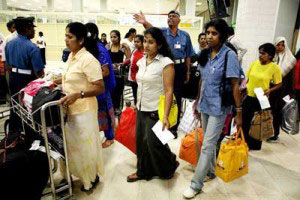 Many young men who migrate to urban areas for casual employment in the construction industry, industrial factories and the informal sector can often be seen at liquor shops after work to purchase alcohol for their evening drinking sessions. These sessions are not always peaceful and uneventful.
Modern societies cannot function unless a whole range of institutions, both formal and informal, perform their vital functions. So professionally oriented institution building has been a major function of the state. These include law enforcement agencies, educational institutions, service and welfare organisations, regulatory authorities, research institutes, etc. States have also extended support to families, neighbourhoods, civil society organisations and professional bodies to facilitate their effective functioning. When the entire institutional fabric of a society is weakened due to endogenous and exogenous factors, it is the wider public that suffers. For instance, dysfunctional educational and child care institutions adversely affect children and youth. Similarly, when welfare institutions become ineffective, those who depend on them for their needs suffer. When law enforcement agencies are not effective, criminals get away without much trouble. When offenders are not properly rehabilitated, once released to the community, they can become worse criminals, etc. So, social issues cannot be managed and contained without effective institutions. Moreover, ineffective institutions have contributed in no small measure to a range of social issues in the country.
Another significant development in the recent past is the multiplication of wants and aspirations in society. Fast spreading consumerism via mass media and mass spectacles has encouraged people to pursue all kinds of material goals. How they achieve their goals has become a secondary issue. Some of the means used by some are bordering on criminality. Corruption and bribery have become endemic in Sri Lankan society. White collar crime is no longer an exception. Those who hold high public office are no longer hesitant to abuse their positions to amass wealth and seek pleasure at public expense. Some of those who are driven around in fuel guzzling Prados and Pajeros often use public money to run these vehicles.
| " It is obvious that economic development leading to higher incomes would not automatically reduce social problems. While it is necessary to socially regulate the process of economic development itself " |