AI SUMMARY GENERATED ONLY FROM THIS ARTICLE'S TEXT.
The arrest of Indian fishermen, found poaching in Sri Lankan waters, and their subsequent release while retaining their vessels to be confiscated has become a common practice despite bilateral initiatives at every level concerned to address the fisheries issue once and for all.
Discussions have taken place at every level, and even a Joint Working Group (JWG) has been appointed to look into the fisheries issue. But a tangible solution is yet to be evolved, probably given the practical difficulties on the ground.
In this context, the External Affairs Ministers of the two countries, during their very first one to one interaction after the newly elected government of India assumed office, decided to work out modalities that would yield results on the ground, rather than trying to find solutions to the problems as and when they arose.
"The absence of a uniform approach among the different states of India in dealing with the fishermen’s issue, has drawn the attention in this respect."
External Affairs Minister Prof. G.L. Peiris and his Indian counterpart Sushma Swaraj had talks in New Delhi last week, and their discussion centred on bilateral trade, fisheries, connectivity, and co-operation in international fora.
The two Ministers, in pursuit of a practical solution to the fisheries issue, decided to look beyond the Joint Working Group, when evolving a new mechanism.
The absence of a uniform approach among the different states of India in dealing with the fishermen’s issue, has drawn the attention in this respect. In Tamil Nadu, the executive can release Sri Lankan fishermen arrested by the Indian Coast Guard for intruding into their waters for fishing. Apart from Tamil Nadu, Sri Lankan fishermen normally get arrested by the authorities of Indian states such as Andhra Pradesh, Karnataka and Orissa. In these states, arrested fishermen are released only through Court procedures, and it has led to the fishermen being held up for long periods.
Against this backdrop, it is reported that the two ministers decided to make more vigorous approaches in dealing with the problem, in a novel perspective. At this meeting, Prof. Peiris noted that Sri Lanka was concerned about the deprivation of livelihood opportunities of northern Fishermen due to poaching by Indian fishermen , and the permanent damage caused to the marine ecosystem by bottom trawling, a proscribed fishing method.
Bandula in a spat with his Cabinet colleagues
Education Minister Bandula Gunawardane often evokes the ire of others including his Cabinet colleagues when he tries to do something radically different to the current practices in whatever subject he handles. In such eventualities, he is subjected to harsh criticism, and even gets vilified.
Soon after his appointment as the Education Minister, he tried to discard the regulation that barred students from doing their advanced level studies unless they have passed Mathematics at the G.C.E. Ordinary Level Examination. The Minister came under severe criticism by his Cabinet colleagues, and eventually, he had to shelve his decision.
He is again in a similar fiasco as he has decided to implement, to the letter, a circular that proscribes government school principals from admitting students from international schools for their advanced level studies, particularly in the English medium.
"He is again in a similar fiasco as he has decided to implement, to the letter, a circular that proscribes government school principals from admitting students from international schools for their advanced level studies, particularly in the English medium"
The Minister is now in a spot because many of his Cabinet colleagues are opposed to this move. Mass Media Minister Keheliya Rambukwella took on Mr. Gunawardane at a recent Cabinet meeting. By this time, a number of Cabinet Ministers have tried to woo the support of President Mahinda Rajapaksa to annul this circular. Among them is Deputy Education Minister Mohan Lal Grero who lobbied the President against the move. Mr. Gunawardane remains indifferent to such internal pressure. However, he has been asked to submit a report on his decision to the next Cabinet meeting scheduled for today.
There are two aspects that warrant attention in this case. The Minister argues that such a restriction is necessary as otherwise a privileged lot, educated in English right from the primary level at international schools, will join national schools to do their advanced level studies. The Minister fears that it will constrict opportunities available to students from the underprivileged schools.
However, this point is countered by those opposed to the Minister’s decision, saying that these students are seeking entry into national schools only for studies in English Medium, and that it will not affect other students as such. Without such students from international schools, principals argue that they cannot even operate Advanced Level English medium sections at their respective schools.
Sri Lanka contended after Indian assurance
The international spotlight is flashed on Sri Lanka, more emphatically, after the appointment of a panel of experts by the Office of the High Commissioner for Human Rights (OHCHR) to conduct an international inquiry into alleged human rights violations and accountability issues during the war time. In this context, Sri Lanka seemed contented after India reiterated its position that it was not supportive of any country specific resolution.
At this meeting, Ms. Swaraj, reportedly, noted that India was not in favour of any international intervention in the domestic affairs of countries, and its attitude was that the international community should work on the basis of co-operation only. Previously, on two occasions under the Congress Government, India voted against Sri Lanka at the United Nations Human Rights Council (UNHRC).
"At this meeting, Ms. Swaraj, reportedly, noted that India was not in favour of any international intervention in the domestic affairs of countries, and its attitude was that the international community should work on the basis of co-operation only."
However, in March, this year, India changed its course and abstained from voting on the resolution calling for an international inquiry by the Office of the High Commissioner for Human Rights. Alongside, India voted against the Operative Paragraph 10, which specially called for this international inquiry.
Now, a new government led by Bharatiya Janatha Party (BJP) is calling the shots in New Delhi, and it has a majority to act independent of the regional parties that shaped India’s policy towards Sri Lanka in a way. It appeared that the new government has consolidated this traditional stand of India on country- specific resolutions.
The External Affairs Minister of this new government has reiterated its stand clear that it would not be supportive of any international inquiry.
Prof. Peiris, in response, thanked Ms. Swaraj for India’s stand, and also for, not being part of a larger grouping of countries in taking its decisions regarding Sri Lanka. Sri Lanka, in its comments on the UNHRC resolution adopted in March, was perturbed that the countries that co-sponsored and supported it, were largely the allies of European Union and the United States.
Harin- Dayasiri exchange fisticuffs
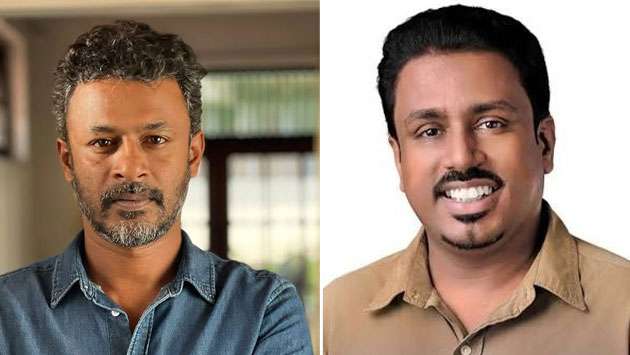
United National Party (UNP) MP Harin Fernando and North Western Chief Minister Dayasiri Jayasekara dominated the news during the last few days because they were involved in a brawl during a TV debate. The two members traded blows during the commercial break of the debate, and Mr. Fernando started bleeding from a wound sustained during the fracas.
When Mr. Fernando arrived in the chamber of Parliament for the first time after the melee, he was approached by two government MPs namely Thenuka Vidanagamage and Uditha Chandana Lokubandara. They inquired about the incident, and Mr. Fernando opened up his shirt a bit to show his scratches sustained in the clash.
"The incident embarrassed both of them in the public eye."
Then, UNP leader Ranil Wickremesinghe too stopped for a while near Mr. Fernando’s seat and asked what happened.
In the meantime, both President Mahinda Rajapaksa and his son MP Namal Rajapaksa rang up Mr. Jayasekara to inquire about the incident. The incident embarrassed both of them in the public eye. Therefore, Mr. Jayasekara, as the chief minister elected on a record number of preferential votes, even tendered a public apology over the incident.
Sashindra vows war on Harin
Uva Province Chief Minister Sashindra Rajapaksa, at a public rally, said he too would have hammered MP Harin Fernando if he participated in that TV debate.
“I was to participate in it. However, I was busy with the Kataragama Esala Perehera. Otherwise, Harin would have got hammered by me,” he said.
"I was busy with the Kataragama Esala Perehera"
MP Fernando is tipped to be the rival candidate of Sasindra Rajapaksa for the chief ministerial post at the Uva election.
Rajitha hears disturbing news
During a recent function at a temple in Wadduwa, Fisheries Minister Dr. Rajitha Senaratne received disturbing news, and it was from Minister Navin Dissanayake.
“I heard that Bodu Bala Sena (BBS) was planning to lay siege to your house,” he told the Minister.
Alarmed by the news, Dr. Senaratne dialled the number of Law and Order Ministry Secretary Nanda Mallawarachchi and contacted him. The Ministry Secretary confirmed that there was no such threat to the Minister’s house as per the latest intelligence reports. Meanwhile, the top police officers, based in Beruwala where communal riots broke out, put Dr. Senaratne into contact with BBS stalwart Ven. Vitarandeniye Nanda Thera.
“We are now mired in controversy over what happened in Beruwala. We try to absolve ourselves of any role in the complicity of such attacks. Therefore, we will not get into yet another controversy. This may be an attempt to create a rift between BBS and the Minister,” Ven. Nanda Thera told Dr. Senaratne, allaying his fear.
Non-tariff barriers stagnates Indo- Lanka trade
Non- tariff barriers, in the promotion of trade between the two countries, were discussed by the two Ministers. Given the potential for further growth of the volume of bilateral trade, the two sides agreed to work closely to strengthen the existing mechanisms such as the Free Trade Agreement.
The bilateral trade volume stood at US $ 4.8 billion in 2011, but since then, it has declined due to such barriers. One such barrier was the restrictions imposed on Indian businessmen importing spice items such as Pepper from Sri Lanka. For that, they have to obtain a licence that is valid for six months.
"Connectivity was another area that drew the attention of the two leaders at this meeting. Both countries are contended that 75 flights operate between Colombo and major cities in India in a week"
After the lapse of these six months, they have to apply for fresh licences to carry out their businesses. It affects the smooth flow of import and export trade because of the additional time and energy involved in renewing licences.
However, as a result of last week’s bilateral talks, India agreed to extend the validity of such licences to one year, and it is seen as a fillip to the bilateral trade. Likewise, there was agreement to relax quarantine restrictions imposed on Sri Lanka’s exports of items such as fruit to the vast Indian market.
Connectivity was another area that drew the attention of the two leaders at this meeting. Both countries are contended that 75 flights operate between Colombo and major cities in India in a week. However, attention was paid on the need for routine flight operations between Colombo and Hyderabad in India, particularly for tourism.
Ms. Swaraj is scheduled to visit Sri Lanka this year. During her visit, India- Sri Lanka Joint Commission will meet to review the entire gamut of bilateral relations. It was held for the last time in New Delhi. It is now planned to be held in Colombo. The two External Affairs Ministers will co-chair it.
Galle Mayor to humiliate Southern CM
Galle Mayor Methsiri de Silva won a legal battle against Southern Province Chief Minister Shan Wijeyalal Silva. The mayor was cleared of all allegations made against him by the Chief Minister. Elated by this legal triumph, the Mayor is now planning to print a booklet and distribute its copies among citizens in the Galle municipal area, countering allegations made against him. This is done to humiliate the Chief Minister over his defeat in the legal battle with the Mayor.
Comments - 0
Comments - Novel strategies to address fisheries issue
222
Add comment
Comments will be edited (grammar, spelling and slang) and authorized at the discretion of Daily Mirror online. The website also has the right not to publish selected comments.



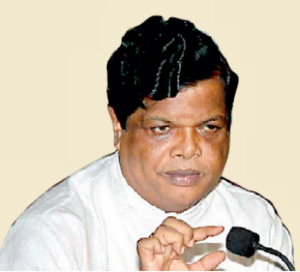 Education Minister Bandula Gunawardane often evokes the ire of others including his Cabinet colleagues when he tries to do something radically different to the current practices in whatever subject he handles. In such eventualities, he is subjected to harsh criticism, and even gets vilified.
.jpg) United National Party (UNP) MP Harin Fernando and North Western Chief Minister Dayasiri Jayasekara dominated the news during the last few days because they were involved in a brawl during a TV debate. The two members traded blows during the commercial break of the debate, and Mr. Fernando started bleeding from a wound sustained during the fracas.
United National Party (UNP) MP Harin Fernando and North Western Chief Minister Dayasiri Jayasekara dominated the news during the last few days because they were involved in a brawl during a TV debate. The two members traded blows during the commercial break of the debate, and Mr. Fernando started bleeding from a wound sustained during the fracas.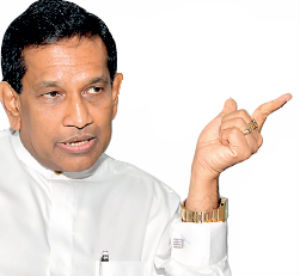 During a recent function at a temple in Wadduwa, Fisheries Minister Dr. Rajitha Senaratne received disturbing news, and it was from Minister Navin Dissanayake.
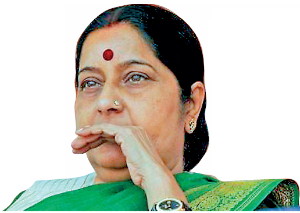 Non- tariff barriers, in the promotion of trade between the two countries, were discussed by the two Ministers. Given the potential for further growth of the volume of bilateral trade, the two sides agreed to work closely to strengthen the existing mechanisms such as the Free Trade Agreement.
.jpg)
 The arrest of Indian fishermen, found poaching in Sri Lankan waters, and their subsequent release while retaining their vessels to be confiscated has become a common practice despite bilateral initiatives at every level concerned to address the fisheries issue once and for all.
.jpg)
.jpg)