AI SUMMARY GENERATED ONLY FROM THIS ARTICLE'S TEXT.
iscussions have begun about setting up a Post 2015 Development Agenda. Year 2015 is important, since the Millium Development Goals (MDGs) were to be achieved by 2015. We have almost completed this period now. The results of MDGs efforts are visible. It is clear that the most important of the MDGs, namely that of reducing world hunger by half and poverty by half by 2015 have not been achieved. Instead world hunger has increased compared to the level at which this commitment was made. It was 840 million then in 2,000 and now it has reached 1.2 billion. The disparities have increased too.
In working out a Post 2015 development agenda, it is important to asses why the earlier agenda failed. If those who were responsible for fulfilling the previous agenda failed can they work out a new agenda that is likely to succeed? Isn’t it too risky to give them this responsibility too? At least one has to understand why they failed to know if they could overcome the reasons for these failures.
They failed because they were more interested in increasing and accumulating profits rather than reducing hunger and poverty. They were the causes of the problems, thus they could not be the solutions. This situation will continue in the future too.
Therefore, it is necessary that someone else should take the responsibility of setting up the agenda. If the present powers agree to follow such an agenda it is good. If they don’t it has to be carried out without them. It may even have to be carried out amidst their opposition.
Who should formulate a Post 2015 Agenda?
Therefore, people who are worst affected by the present systems have to work out an agenda which can be carried out on their own and may be another agenda in which they could expect the cooperation of others who are not victimized by the present systems.
They must put greater emphasis on their own agenda. This agenda would be one that did not emphasize profit making and accumulation. It cannot count on the use of capital, since capital by nature gives priority to profit making and profit increasing. How do we carry out an agenda of development without depending on capital or with minimum dependence on capital? We have to depend more on what nature gives us free of charge and on the contribution of human efforts that does not depend on capital. Such an approach that depends on what nature gives cannot exploit nature destructively. In fact it has to remedy the damage that has already been done to nature through destructive exploitation.
The decaying organic matter is converted to soil fertility by microbes retaining the natural fertility of the soil. But we allow and accelerate so much soil erosion and destroy microorganisms by using weedicides that this process of maintaining soil fertility is obstructed. Similarly we obstruct the role played by insects killing them, using pesticides and also help the evolution of more resistant pests
Nature regenerates itself; if unobstructed it has the ability to regenerate the resources utilised by humans and other living beings. This ability to regenerate nature is essential for its proper functioning and survival of life. Human activity has already destroyed nature’s ability of regeneration to a great extent. Therefore nature has begun to react adversely. We see this in the climate change disasters that are becoming worse every day. Unless we remedy these mistakes fast enough the very survival of life is threatened. Development therefore has to be regenerative rather than aiming at growth through excessive exploitation.
Trees absorb sunlight and Co-2 in the atmosphere and moisture through its roots and transform them into food prepared in the leaves through photosynthesis, fruits, seeds, timber and other forms of energy. Therefore, the presence of as many trees as possible helps this process. Biodiversity is essential. But we cut down forests so much that this process of transforming the sun’s energy into other useful forms is obstructed.
The decaying organic matter is converted to soil fertility by microbes retaining the natural fertility of the soil. But we allow and accelerate so much soil erosion and destroy microorganisms by using weedicides that this process of maintaining soil fertility is obstructed. Similarly we obstruct the role played by insects killing them, using pesticides and also help the evolution of more resistant pests. Another damage we do is in using heavy machinery that makes the soil more compact and allow the top soil to erode by wind and rainfall rapidly. Monoculture plantations lead to spreading of diseases and make heavy use of pesticides necessary. If all these obstacles are avoided agriculture can be made regenerative. Using fossil fuel, which is a nonrenewable resource, is dangerous since we are running out of this resource rapidly. We increase global warming by burning fossil fuel and make climatic changes worse. Thus remedying the mistakes of the past must be given high priority. This is difficult for those who are making profit out of these mistakes. The agenda must therefore be made by those who are not profiting by these mistakes. There are worldwide forces that have opposed these mistakes.
For instance,
1.“La via Campasena” is a worldwide movement of small and marginal farmers who have fought against exploitative agriculture and for food sovereignty. It has many millions of members in a very large number of countries.
2. IFOAM (International Federation of Organic Agriculture Movements) is a worldwide network of organic farmer federations fighting against destructive forms of chemical agriculture, promoting nature farming
3. MST in Brazil is a movement of landless farmers with millions of members capturing land for landless farmers and promoting ecological agriculture.
4. Zero Budget Natural Farming (ZBNF) is a movement in India promoting ecological mixed farming systems with no external chemical inputs. There are 4 million farmers in India who are adopting the principles of ZBNF.
5. In many countries even in the West there are efforts that are promoting Eco-friendly Agriculture. Farmers who adopt these methods are given incentives.
6. Dr. Olivier De Schutter, the special rapporteur of UN on the Right to Food, has presented a paper to the UN Human Rights Council titled “Agro Ecology and the Right to Food” showing that it is Agro Ecology that can solve hunger in the world.
7. Agenda 21, the statement of the earth summit gave importance to sustainable agriculture in the 21st Century.
8. IAASTD ( International Assessment of Agricultural Knowledge, Science and Technology for Development ), an international study done by 400 prominent scientists in a very large number of countries over a period of four years has said the same thing. It says that although there has been much advancement in agriculture it has made two serious errors,one of ignoring the social aspects and the other of ignoring the environmental aspects. These mistakes have to be corrected.The final IAASTD report was approved by over 60 countries and only USA and a few other countries disagreed.
9. PAN AP (Pesticide Action Network- Asia and Pacific) has done much research to show that chemical input dependent agriculture was wrong.
10. Asian Peasants Coalition is an Asian network working on the same lines.
11. Foundation for Science, Technology and Ecology led by Dr. Vandana Shiva in India has done much work on these lines and has written many books.
12. World Social Forum is an initiative with a very large backing that opposes Globalization.
These movements must get together and work out a post 2015 Development agenda. Such an agenda has to mobilise millions of people worldwide for it to be effective.
Susan George was once asked if she had any faith in the future of the world. She said “yes”. She explained that the present system cannot admit 2/3rds of the world population into it. The system expects them to disappear, since they are not needed. But this 2/3rds of “excluded people” were not going to quietly disappear, they were creating a world where they would be wanted and would be admitted. This was her hope for the future.
Therefore it is necessary to develop a strategy of engaging this 2/3rds of the world population in creating a new world. If human beings engage themselves in the task of remedying the mistakes of destroying the ability of regeneration of nature they would be engaged in this task of saving the world and saving themselves simultaneously.
The poor people, who go hungry since they cannot find money to buy food, have to get nature to give them free food.
This can be done by planting trees and allowing nature to grow them free of cost. Sun light is free, CO-2 absorbed from atmosphere is free, water given by nature is free, nature also gives free natural seeds and microbes make the soil fertile free of charge, if they are allowed to survive, erosion of top soil can be prevented at very little cost, insects pollinate flowers and friendly insects control unfriendly insects free of charge if they are allowed to do so. Mixed cropping instead of monocropping reduces the spread of pest damages and saves expenditure on pest control.
What is necessary is to make land available to those farmers who do regenerative agriculture. This can be done by preventing land plunder by profit makers. This is morally correct since land has to be restored back to natural fertility. Land should be able to absorb more water and retain it, thereby reducing drought losses and flood losses. This can be enhanced by reducing erosion and improving the humus content of the soil by recycling all organic matter.
Present patterns of landownership are often unhelpful. Large extents of land are owned by big land owners who utilise land for commercial monocrop farming. Heavy machinery is employed. Such use destroys land and agriculture as a whole.
Use of agrochemicals and heavy machinery run with fossil fuel becomes necessary. This type of agriculture is now recognised as unsustainable. Therefore there is a political necessity to change the present policies on form of land ownership. Land should be brought under the control of farmers who use it regeneratively.
In countries such as Sri Lanka land was not privately owned initially. Private ownership of land was introduced by British rulers in 1830s, since they wanted to plunder land for commercial crops such as tea and rubber. Domestic land lords profited by this and they plundered much land. This happened in Africa and many other third world countries too. This has resulted in disadvantageous land use and lots of people have become landless. Many poor people are driven out of villages into cities looking for other livelihoods.Now they are pushed out of cities too to beautify cities and facilitate foreign investors.This needs to be corrected and overall land use should be scientifically and ecologically planned. The best way to do this would be to give land to small scale farmers in small plots with guidance and assistance to do ecological agriculture.
In the Western countries large land holdings are utilised for large scale mechanised farming of monocrop. This is done with large agricultural subsidies given to such large farmers, allowing them to sell their products in other countries below actual cost of production. In the early stage of industrialisation this was necessary since industries needed cheap labour. This made a large population of small scale family farmers give up agriculture and move into cities. Now it is not so and urbanisation has become a problem. This has also contributed to increase in food prices.
This has created a tremendous problem in international trade too. It is useful to study if it would not be better even in the Western countries to go back to smaller scale family farming using more ecological methods. In Latin America large populations live in urban slums.
A Post 2015 Development Agenda should therefore look for ways of mobilising millions of people to do these changes in the way they deal with nature. This can be named “ healing the earth ”.
Nature thus treated is able to give free food to all. Food should not be a commodity for earning profits. It should be a gift of nature to feed the hungry.
In Sri Lanka when the world food prices increased around 2007, the Government declared a programme titled “ Api Wawamu Rata Nagamu” ( “Let’s grow and build the nation”). The declared objective was to promote 4 million home gardens; this meant that each family had to grow its home garden.
This was a feasible programme, if it was attempted seriously, but it was not attempted seriously, it was only an election promise with no serious effort to implement it. At a subsequent election another programme of similar type was declared. This was titled “Divineguma” (livelihood improvement) this time the aim was to assist 1 million home gardens. With Rs. 10,000 spent on one home garden. Again the strategy was not sound. Thus proper results have not been obtained.
Need to look at the macro-ecological aspects
We have to look at the ecological aspects holistically. In Sri Lanka the centre of the country is hilly. Maximum rainfall is obtained in the hills. There are a large number of rivers that start in the hills and flow down to the plains. When the hill country was covered with forest it retained much of the top soil and rainwater was absorbed into the soil, this water flowed down the rivers and streams throughout the year and provided water for irrigation and other needs year round.
Agriculture was done in the plains utilising this water and diverting them through canals where necessary. Reservoirs were built in the plains to store this water. In each of these reservoirs there was a catchment area that collected water feeding into the reservoir, these catchments were kept forested. Irrigation systems were then planned ecologically. Seasons of cultivation were decided in accordance with the weather patterns. One way of meeting the changes in climate was by growing a diversity of crops.
In dryer areas such as the lower Uva Province, diversified crop farming was adopted by the traditional farmers. In the “chena”( dry land farm) they grew at least ten food crops simultaneously ( “dasabhogawagawa” ) This enabled them to face climatic changes since some crops remained even when some died due to lack of rain. Some crops such as millet required less water. Presently the farmers have shifted to mono crops such as maize and sugar cane and they do not cultivate during part of the year since there is not enough water.
Trees absorb sunlight and Co-2 in the atmosphere and moisture through its roots and transform them into food prepared in the leaves through photosynthesis, fruits, seeds, timber and other forms of energy. Therefore, the presence of as many trees as possible helps this process. Biodiversity is essential. But we cut down forests so much that this process of transforming sun’s energy into other useful forms is obstructed.
In irrigated agricultural areas such as Anuradhapura and Polonnaruwa, Kurunegala and so on, traditional farmers cultivated both paddy and millet. Now this practice has been largely given up. Thus we see the necessity to change the attitudes and approaches of agriculture entirely. To do this it is necessary to introduce these changes in the education system as a whole. Private companies should not be allowed to influence and distort education to suit their profit interests.
Another important aspect is to deal with the food patterns. In most traditional countries there has been tremendous knowledge of natural food and nutritious and medicinal qualities of herbs. Much knowledge and use of uncultivated food existed.
In Sri Lanka, India and other countries there have been systems of medicine such as the Ayurveda that had tremendous knowledge of the food, nutritious and medicinal values of plants.
In the Ayurveda system the approach to health is very different from that in the Western system of medicine. In Ayurveda it says that the body comprises of three systems ( thridosha )namely the “Va” ( nervous system ), “Pith” ( digestive system) and “Sem” ( respiratory system ). If these systems function in proper balance the body can resist germs that enter it preventing illness even when germs enter. If these systems go out of balance ( “dos kipeema” ), the body goes ill. The way to cure is to bring back the balance of the systems ( “dos samanaya” ). This is done using various preparations made out of herbs and also by adjusting the food pattern and the habits of life. This is an entirely natural approach. The patient is advised to change the pattern of life to suit the requirements, such as avoiding breaking of rest certain types of food and so on. There were other types of treatment for other illnesses such as bone fractures, eye diseases, snake bites, mental illnesses and so on. Even ordinary people had some understanding of these health and food practices.
Religions can play a big role in formulating the thinking of people to suit the future. For instance Buddhism trains people to understand impermanence( “anithya” ) of all things . Since nothing is permanent, attachment or greed( “thanha” ) leads to suffering since what is accumulated is lost. To cultivate non-attachment people are encouraged to share ( Dana ). Accumulation therefore is foolish. This is a principle that should guide the modern world. How do we reorganise the economic system based on principles of non-accumulation and sharing. This is a contradiction that the present economic system has to overcome.
Karl Marx showed that the contradiction in the capitalist system is that while production is done socially, ownership remains in the hands of individuals. Therefore ownership has to be made social too. This can be done only by transforming the means of production to social ownership. This transformation should finally lead to a situation where each makes the full contribution to society according to his/her ability while obtaining only what she/he needs individually. Society looks after most of the needs so that individual earning becomes less necessary.
The contradictions between what we preach in religion and what we do in practice have to be overcome. It is by bringing about such changes that the present contradictions and crises in society could be overcome.
The financial crisis is due to the fact that money is allowed to circulate freely and it flows from places of less profit to places of higher profits.
It cannot balance between the money available with the goods and services that are available. This crisis is solved only when such a balance is established. Earning more money has become the guiding principle.Trade Crisis is due to the trade regulations being formulated for the interests of the biggest traders. What is needed is a fair exchange and not trade for profits of the more powerful.
Environmental crisis is due to nature being exploited too aggressively and destructively. It can be solved only by limiting production to the essentials and by preventing exploitation of nature in a manner that destroys the ability of nature to function properly in a regenerative manner. Consumption has to be reduced. It is presently expanded for trade needs. Such limited production will also reduce waste and pollution.
Another crisis is due to a very large proportion of the human population being made redundant. Human beings if allowed and encouraged to contribute to the recovery of nature and harmony in human society, any increase in human population will also increase the wellbeing of nature and society as a whole.
Hunger is not due to lack of food production to feed all. It is due to the fact that food does not get justly distributed and shared.
This can be overcome by people being enabled to produce the food they need and sharing them as needed, without making it a profit making commodity. On the whole a post 2015 Development agenda must give priority to recovery and conservation, producing and sharing as needed and not for profit making. It has therefore to be led not by profit makers but by those who are victimized in the process of profit making and by those who are genuinely concerned about the dangers.
Sarath Fernando, a widely respected agriculture expert is the founder of Movement for Land and Agriculture Reforms (MONLAR) which has been actively campaigning for a national agriculture policy for the past few decades.
Comments - 0
Comments - MDGs not achievable by 2015
222
Add comment
Comments will be edited (grammar, spelling and slang) and authorized at the discretion of Daily Mirror online. The website also has the right not to publish selected comments.



.jpg)
.jpg) iscussions have begun about setting up a Post 2015 Development Agenda. Year 2015 is important, since the Millium Development Goals (MDGs) were to be achieved by 2015. We have almost completed this period now. The results of MDGs efforts are visible. It is clear that the most important of the MDGs, namely that of reducing world hunger by half and poverty by half by 2015 have not been achieved. Instead world hunger has increased compared to the level at which this commitment was made. It was 840 million then in 2,000 and now it has reached 1.2 billion. The disparities have increased too.
iscussions have begun about setting up a Post 2015 Development Agenda. Year 2015 is important, since the Millium Development Goals (MDGs) were to be achieved by 2015. We have almost completed this period now. The results of MDGs efforts are visible. It is clear that the most important of the MDGs, namely that of reducing world hunger by half and poverty by half by 2015 have not been achieved. Instead world hunger has increased compared to the level at which this commitment was made. It was 840 million then in 2,000 and now it has reached 1.2 billion. The disparities have increased too.(1)(52).jpg)
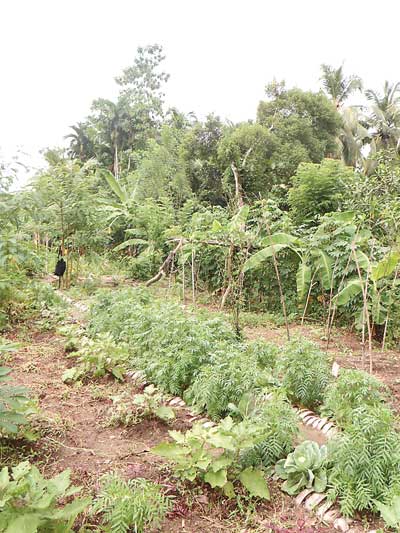 Nature regenerates itself; if unobstructed it has the ability to regenerate the resources utilised by humans and other living beings. This ability to regenerate nature is essential for its proper functioning and survival of life. Human activity has already destroyed nature’s ability of regeneration to a great extent. Therefore nature has begun to react adversely. We see this in the climate change disasters that are becoming worse every day. Unless we remedy these mistakes fast enough the very survival of life is threatened. Development therefore has to be regenerative rather than aiming at growth through excessive exploitation.
.jpg) not by profit makers but by those who are victimized in the process of profit making and by those who are genuinely concerned about the dangers.
not by profit makers but by those who are victimized in the process of profit making and by those who are genuinely concerned about the dangers.