Reply To:
Name - Reply Comment
.jpg) By Salma Yusuf
By Salma Yusuf
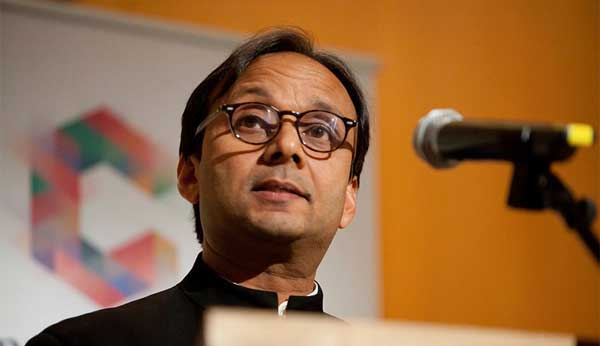
Salma Yusuf in conversation with Vijay Krishnarayan, Director, Commonwealth Foundation on the upcoming Commonwealth People's Forum to be held at the Commonwealth Heads of Government Summit
Q. Could you share with us the objectives of your visit to the country?
Delegates of the Commonwealth Foundation arrived in Sri Lanka for three specific reasons. Firstly, to work with Sri Lankan counterparts to review logistical and technical arrangements for the Commonwealth People's Forum which is scheduled to be held in Hikkaduwa from 10 through 14 November 2013.
Secondly, to raise the profile of preparations and activities undertaken in preparation of the summit among Sri Lankan civil society organisations and other partners including government departments. Thirdly, and perhaps most importantly, we have used the visit to develop a programme for the Commonwealth People's Forum that is relevant to issues raised by civil society organisations across the Commonwealth and highlights those raised by Sri Lankan civil society organisations as well.
Q. What is the Commonwealth People's Forum?
It is the largest gathering of civil society organisations on the calendar of the Commonwealth. The Commonwealth Foundation has a mandate to bring civic voice to the Commonwealth Ministerial processes.
Q. What would that mean in practice?
In practice, it means the organising of civil society input in such a manner that it can be fed into a meeting with ministers. For example, Commonwealth Education Ministers met in Mauritius last year and the Women's Affairs Ministers met in Bangladesh last month. The Commonwealth People's Forum has been bringing civil society together in the wings of CHOGM since it was first held in Harare and now the process is a part of the CHOGM summit.
Q. What is the Commonwealth Foundation and how would you describe its role in the Commonwealth?
The Commonwealth Foundation is an inter-governmental agency, established by Commonwealth Heads of Government in 1965 and is funded by and reports to Commonwealth Member States. It is essentially the Commonwealth agency for civil society. The Foundation recognises the importance that the Commonwealth attaches to civic voice and people-to-people linkages. It also recognises that the Commonwealth is as much an association of people as it is an association of governments.
Q. In the context of the Commonwealth Heads of Government Summit and the Commonwealth People's Forum, how is the concept of ‘civil society’ defined?
This is a central part of the Commonwealth’s world view which is expressed in the Commonwealth Charter which was adopted and signed by the Commonwealth Secretary General in December 2012.
Q. What are your impressions of civil society engagement in Sri Lanka, particularly in the backdrop of the upcoming summit in November?
It is clear from our interaction with civil society in Sri Lanka that the CHOGM and associated gatherings are keenly anticipated. As the host country, Sri Lanka determines the theme of CHOGM. As a result of the several rounds of discussions with Sri Lankan partners, we have arrived at the subject of development and inclusion as the topic for the Commonwealth People's Forum.
Undoubtedly, these are extremely topical for civil society organisations both in Sri Lanka and across the Commonwealth.
Q. Are there specific benefits accrued to Sri Lanka as host of the Commonwealth People's Forum in the wings of CHOGM?
The Commonwealth People's Forum provides an opportunity to connect Sri Lanka with the global conversation currently taking place on the future of development and ways by which it can be made more inclusive.
We envisage the majority of delegates to the Commonwealth People's Forum as being from Sri Lanka and therefore the agenda will need to speak, in part at least, to the Sri Lankan experience.
Q. You mentioned the broad themes for the Commonwealth People’s Forum as being development and inclusion. Would these subjects be explored from a Sri Lankan perspective, a Commonwealth perspective or an international perspective?
Themes suggested by Sri Lankan civil society organisations for discussion at the Commonwealth People’s Forum include reconciliation, reconstruction, inclusive and participatory governance for development, and women’s empowerment and gender equality. We will of course be exploring these themes and others in a Commonwealth context. In practice, this will mean bringing experiences from other Commonwealth countries and experiences to Sri Lanka so that Sri Lankan colleagues can exchange and learn as well as share their own experiences with counterparts.
Important to mention is that the Commonwealth People's Forum will also feature what we call ‘learning journeys’ which will be opportunities for civil society organisations outside Colombo to showcase their work at the event. For example, civil society organisations in the North can exhibit their work in relation to reconciliation and reconstruction and those in the South can exhibit itheir work in relation to women’s economic empowerment.
Although the event will be based in Hikkaduwa on 11th, 12th and 13th November, provision has been made for these ‘learning journeys’ to take place on the 14th of November as a platform for mutual learning and exchange.
" civil society is defined as the interaction and relationships between organisations outside the family, outside of government and outside of business. It now encompasses a wide spectrum of entities including community based organisation, faith-based groups, trade unions, media organisations, development agencies, and policy advocates "
Q. In the light of the United Nations review to be held in September 2013, how significant do you envisage the Commonwealth People’s Forum to be?
The Commonwealth People’s Forum in 2013 provides one of the first opportunities for civil societies across the Commonwealth to discuss the outcomes of the United Nations General Assembly meeting which will be held in September 2013. It will be one of the first opportunities where civil societies across the Commonwealth are able to determine their own contributions to the design, implementation and monitoring of those goals.
The Commonwealth Foundation has taken soundings from civil society organisations in 18 Commonwealth countries including Sri Lanka to gauge their aspirations for the future of development. The aim is to bring the conclusion of that work to share with civil societies that will gather at the Commonwealth People’s Forum.
Q. Are there specific outputs envisaged from the Commonwealth People's Forum or are they expected to evolve organically?
We have a planned output in mind, namely, the Commonwealth Civil Society Position on post-2015 Development Architecture. We hope that this document will act as a resource for civil society organisations across the Commonwealth as they organise to participate in their own countries, regions and internationally.
[email protected]