Reply To:
Name - Reply Comment
.jpg) During the second commemoration of the International Day of the Girl Child in Sri Lanka, Ragama Medical Faculty Professor Aswini Fernando revealed that according to the latest research statistics in year 2012 alone, 3779 child abuse cases had been reported in the country. Here it must be noted that this is only the number of reported cases, which highlights the invisible question regarding the number of cases not reported or go unnoticed (cases which are usually swept under the carpet). However, it is sad that from the reported 3779 figure, 60% are sexual abuse cases, 38% physical abuse cases, 18% neglect cases, 5% child labour cases and 8% emotional abuse cases. Most recently, Sri Lankans were forced to hear about an unfortunate incident where a father burned his son with an iron rod because the son failed the Grade V scholarship examination. Sadly, this is the country we are living in today which is also considered as the ‘Miracle of Asia’.
During the second commemoration of the International Day of the Girl Child in Sri Lanka, Ragama Medical Faculty Professor Aswini Fernando revealed that according to the latest research statistics in year 2012 alone, 3779 child abuse cases had been reported in the country. Here it must be noted that this is only the number of reported cases, which highlights the invisible question regarding the number of cases not reported or go unnoticed (cases which are usually swept under the carpet). However, it is sad that from the reported 3779 figure, 60% are sexual abuse cases, 38% physical abuse cases, 18% neglect cases, 5% child labour cases and 8% emotional abuse cases. Most recently, Sri Lankans were forced to hear about an unfortunate incident where a father burned his son with an iron rod because the son failed the Grade V scholarship examination. Sadly, this is the country we are living in today which is also considered as the ‘Miracle of Asia’.
At the celebration of the Day of the Girl Child in Sri Lanka held last week at the Bandaranaike Memorial International Conference Hall (BMICH), the Attorney General of Sri Lanka Palitha Fernando said that there were enough laws in Sri Lanka concerning the protection of girl children and said what was needed in the country was law enforcement. However if we consider the whole picture concerning child abuse instead of just focusing on ‘girl children’ the shocking reality remains that though our people visit temples, churches, mosques and kovils in the present day more than it was ever reported or seen in this country’s history, the crime rate (which includes child abuse cases) have not decreased, but instead, increased.
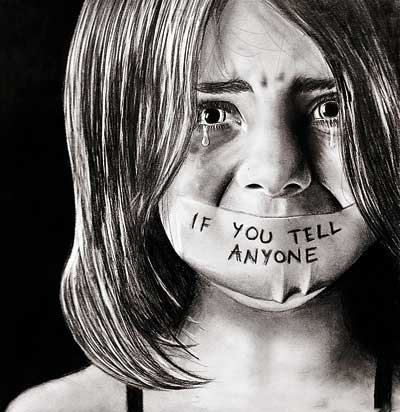 “The Attorney General’s Department alone cannot prevent child abuse. The cooperation and support of all other related organisations and officials are needed to protect the rights of children. Nevertheless although one is born a girl, it has not been an obstacle for Sri Lankan girl-children to go ahead in education or health. One of the major issues behind a child being prevented from continuing his/her education is poverty. So we ask the Minister and the relevant authorities to draw their attention to this situation. However, there have been instances that have stood as exceptions, which have resulted in creating darker shadows in our society concerning the security of children,” Fernando said.
So according to the Attorney General, are we to consider the reported 3779 cases as ‘exceptions’? The truth is that child abuse takes place in Sri Lanka regardless, and those children suffer tremendously. Whether it be child labour, sexual abuse, physical abuse, emotional abuse or any other form of abuse, the lives of these young children are darkened as a result of this ‘exception’.
Speaking about this situation the Child Development and Women's Affairs Minister Tissa Karaliyadda said strict laws were needed to curb child abuse in this country.
“In earlier days people did not visit religious sites so often as today, but neither was the crime rate in the country so high. So strict laws are needed to curb this country,” he said. Referring to the recent tragic incident where a father ended up burning his son because he failed the Grade V scholarship examination, Minister Karaliyadda said the whole education system needed to be revamped while also noting that responsibility lay with the Education Ministry.
Meanwhile Professor Yassanjali Jayatilaka speaking at the Day of the Girl Child revealed that from the number of child abuse cases 84% were on women under 18 years of age.
“Sexual abuse is largely taking place in today’s society and the number of ‘child-mothers’ are increasing. However, during investigations it was shockingly revealed that almost 20% of the 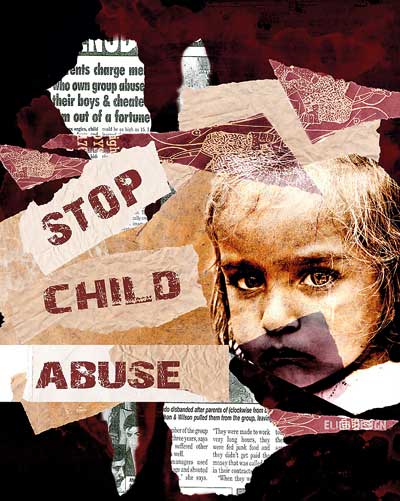 perpetrators had performed these acts of crime for fun, and the number of perpetrators arrested were a mere 3.2%. So this is a very critical situation. Today the fact that a person can abuse a child and get away with it without any lawful repercussions has been societal,” Professor Jayatilaka said.
Last week the United Nations (UN) also called on the Sri Lankan authorities to implement a zero tolerance principal to issues faced by girl-children in the country. At a separate commemoration of the International Day of the Girl Child in Colombo organised by the UN, UN Resident Coordinator for Sri Lanka Subinay Nandy speaking about child labour in the country said according to the Child Activity Survey conducted by the Department of Census and Statistics in 2008-2009 it was estimated that the total number of working children between the ages of 5-15 years in the country (excluding the Northern Province) was 557,599-107,259.
“ Almost 2.5% of these children are engaged in child labour and 63,916 (1.5%) in hazardous forms of child labour, while over 3000 children between the ages of 5-17 years are child domestic workers, out of which 55% are girls. We see many issues affecting the girl-child today, which affects their wellbeing and prevents them from making use of other opportunities. The 2011 the UNESCO figure of children who were not able to stay in school and complete their primary education is 125,347 out of which 58,995 are girls. Evidence suggests that children with physical and/or intellectual disabilities, children living in socio-economically disadvantaged circumstances either in isolated rural areas (including plantation communities) or in low income urban neighborhoods, street children and children in war affected areas are particularly vulnerable to being deprived of an education,” Nandy said.
Apart from this Nandy also emphasised the need to protect girls from violence, ensuring that girls stay in secondary education while preventing early marriages and teenage pregnancies and ending child labour as some of the major steps that should be initiated to ensure the rights of children in Sri Lanka. The need to advocate for girls’ rights related to child labour (particularly the worst forms of child labour including the challenges surrounding child domestic work) was also highlighted by Nandy.
Through the discussion which followed at this occasion it was also revealed that the conditions which paved the way for children to takeup employment were largely due to the inability of their families to break out of the cycle of poverty, inequality and limited opportunities.
Child abuse has been taking place in the Sri Lankan society for many years now, and it is tragic that the authorities have yet failed to implement proper law enforcement regarding child abuse cases. Most child abuse case hearings in court take years to conclude, which sometimes leaves the perpetrators in the ‘dead’ category and the child victims in the ‘adult’ category, with their days occupied by the dreams and realities of love, matrimony, children of their own and employment.
The failure of the authorities to implement law enforcement without delay leaves perpetrators with the impression that they could easily get away with committing such horrendous crimes, which destroy not only the present but also the future of our children.