Reply To:
Name - Reply Comment

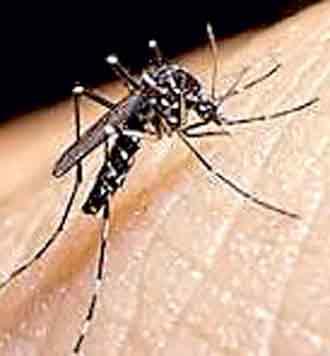 Sri Lanka is at a critical point with regards to dengue eradication. Despite various mitigation efforts, over 68,000 cases have been reported in addition to 47 deaths. The government continues to launch dengue prevention week in dengue hotspots but none of these steps seem to be working. It has been noted that fumigation too has become an ineffective method of dengue eradication as the dengue vector has become resistant towards the chemicals being used.
Research studies indicate that due to the lack of evidence-based applications, fumigation kills pollinators and other important insects excluding mosquitoes. According to academics, due to climate change and rapid urbanization, the dengue vector is evolving. The government has instructed children to wear protective clothes to reduce frequency of mosquito bites, but whether this is practical given the prevailing heat remains a doubt. Without proper forecasting models, it would be a challenge for the government and authorities to eradicate the dengue vector going forward. Therefore controlled eradication of the dengue vector by getting rid of breeding sites and mosquito larvae is essential at this point. But whether the government has enough resources to initiate such proactive measures remains a doubt.
A concerned citizen