Reply To:
Name - Reply Comment
Water scarcity is causing conflicts over water resources, reduced agricultural productivity, increased healthcare costs and a negative impact on livelihoods
 The theme for Water Day this year is ‘Glacier Preservation’
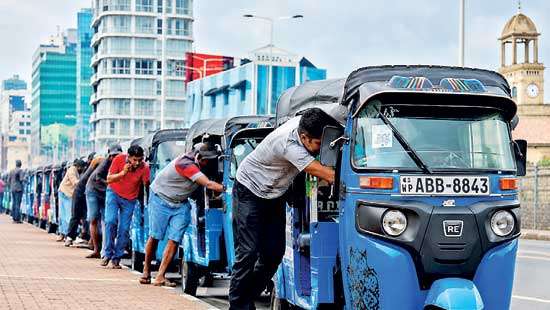
Colombo is rapidly urbanising, hence it puts a strain on existing water resources
World Water Day is celebrated on March 22, every year. It is an initiative of the United Nations, started in 1993. The theme for UN World Water Day 2025 is ‘Glacier Preservation’, highlighting the critical role of glaciers in sustaining life and the water cycle, and the challenges posed by their melting due to climate change. The theme is aligned with the 2025 International Year of Glaciers and aims to raise awareness about the vital role of glaciers in providing water for drinking, agriculture, energy and healthy ecosystems and the impact of their melting due to climate change
 The World Water Day 2025 calls for accelerated carbon emission reductions and the implementation of local strategies to adapt to shrinking glaciers and changing water flows. A core focus of the day is to support the achievement of Sustainable Development Goal 6, i.e., water and sanitation for all by 2030.
On this occasion, this article explores the links and opportunities between water and youth development work in Sri Lanka.
As per the website of World Water Day 2025, glaciers are melting faster than ever. As the planet gets hotter, our frozen world is shrinking, making the water cycle more unpredictable. For billions of people, meltwater flows are changing, causing floods, droughts, landslides and sea level rise. Countless communities and ecosystems are at risk of devastation. As we work together to mitigate and adapt to climate change, glacier preservation is a top priority. We must reduce greenhouse gas emissions to slow down glacial retreat. And, we must manage meltwater more sustainably. Saving our glaciers is a survival strategy for people and the planet.
The UN World Water Day 2025 suggests protecting frozen water resources for the future as glaciers are critical to life—their meltwater is essential for drinking water, agriculture, industry, clean energy production and healthy ecosystems. Rapidly melting glaciers are causing uncertainty in water flows, with profound impacts on people and the planet.
This World Water Day, therefore, we must take a resolution and work together to put glacier preservation at the core of our plans to tackle climate change and the global water crisis. This can be done more effectively on a sustained basis by incorporating some of the developmental strategies of the country in that direction.
Youth Development for Water
A significant contribution to the global campaign on ‘Glacier Preservation’ could be made by everyone—from individuals and families to companies and governments—through their actions to reduce global warming. In this work, the youth of the country can play a significant role. However, the youth development strategies of the country need to be aligned with the requirements for glacier preservation and many such initiatives around climate change, which offer sustained long-term economic opportunities for the youth.
Key features of youth development in any country include, among other things, promoting them for greater civic engagement and ensuring their economic empowerment. Encouraging youth to participate in their communities and become active citizens is essential for a healthy democracy. Similarly, supporting youth entrepreneurship and innovation can create new economic opportunities and drive economic growth in the country.
Along with this, island nations like Sri Lanka need to reimagine the composition of their mass employment strategy. The country can think like the UK, where there is full employment but with several precarious jobs. Most of the young employees in the UK are at the risk of being fired within a week or month of notice. Or, Sri Lanka can push for a manufacturing-heavy employment strategy like Germany, which is focussed on key geographic clusters and MSMEs that offer more secure employment. Even if one goes into the service sector—it needs to be based on long-term and sustained future needs for such services, which are offered by climate-linked services.
If Germany’s kind of employment strategy is adopted along with foresight of emerging challenges related to climate change, environmental degradation and forced out-migration of people, thinking about green enterprises and green jobs offers a very good prospect for the youth of the country and many other island nations like Sri Lanka.
Bigger cities of Sri Lanka, particularly Colombo and Jaffna, are facing water scarcity issues due to rapid urbanisation, overexploitation of groundwater and climate change, leading to water quality deterioration and reduced availability of water. Colombo is facing rapid urbanisation and exponential growth in demand for water has outstripped existing resources. On the other hand, cities like Jaffna have over-reliance on groundwater, coupled with poor water management practices and pollution from fertilisers and pesticides, which has resulted in the depletion and contamination of aquifers in the Jaffna peninsula. On the other hand, people in the Thirukkovil region (Ampara district) face huge difficulties in getting safe drinking water, especially during drought season. Water scarcity is causing conflicts over water resources, reduced agricultural productivity, increased healthcare costs and a negative impact on livelihoods. While larger cities like Colombo can make do with importing water tankers and having water delivered through other sources, smaller cities and towns are often left to fend for themselves. It is in this context that a country like Sri Lanka needs to address the water crisis by developing an effective development strategy. The key efforts need to made to make the youth aware of it, building their capacities for various green jobs and green enterprises and preparing them to enter into services that were traditionally been under the remit of public services, such as water conservation, water management and waste management. A typical town with a small municipality could easily create around 650 green jobs and a city municipal council can create around 1800 green jobs. Sri Lanka, with 24 Municipal Councils and 41 Urban Councils has, therefore, an immediate potential of creating around 70,000 green jobs for the youth of the county.
To tackle the water crisis and its underlying causes like climate change, which is also impacting glaciers, Sri Lanka needs to implement integrated water resource management strategies, including water conservation measures, improved water infrastructure and management, addressing pollution and promoting sustainable water use practices, and investing in climate resilience measures. And, the youth of the country can play an active role in all these areas through green entrepreneurship and green jobs.
The writers are public policy experts and Directors of iLEAD International Academy, Sri Lanka, which is working on the issues of sustained youth engagement in the area of environmental conservation and climate resilience building at the local level.