Reply To:
Name - Reply Comment
 It seems the present NPP regime has placed investigation into Human Rights abuses at the top of its agenda. This is good and needs be appreciated It seems the present NPP regime has placed investigation into Human Rights abuses at the top of its agenda. This is good and needs be appreciated |
In less than a month, we will be celebrating the Sinhala and Tamil New Year. It will be the the first under the National People’s Power (NPP) government. It is also the first time that a national political party was able to gather the regional political parties in the Jaffna District.
During its first few months in power, the NPP has come in for considerable criticism from all other national political parties for not being able to fulfil most of the pledges it made during the election campaign. Of course these political parties have forgotten that during their lengthy terms in office, they were not able to do so either. This is despite holding power for considerably longer periods than the present NPP regime.
This is however not to make excuses for the present government. It promised big before elections, but is yet to deliver on many of its promises. The NPP spoke of changing clauses of the IMF package deal signed between former President Ranil Wickremesinghe’s government and the IMF. Fortunately common sense prevailed and government is sticking to the deal.
Regarding its promises to bring down the cost of living, the government has failed. The price of rice (our staple food), is still beyond the reach of ordinary folk. Today the cost of a kg of Nadu rice stands at Rs. 230/-. The average salary a worker receives is Rs. 1,500/- per day or around Rs. 45,000/- per month.
Yet it costs over Rs. 100,000/- for a family of four to have two square meals a day.
Unsurprisingly, the report of the ‘Select Committee of Parliament to look into whether the child malnutrition issue in Sri Lanka is aggravating’, shows that the proportion of children affected by poverty in Sri Lanka is 10%. It states that 1.2% of all children under the age of 5 are affected by severe acute malnutrition and numerically, nearly 16,000 children suffer from such acute malnutrition.
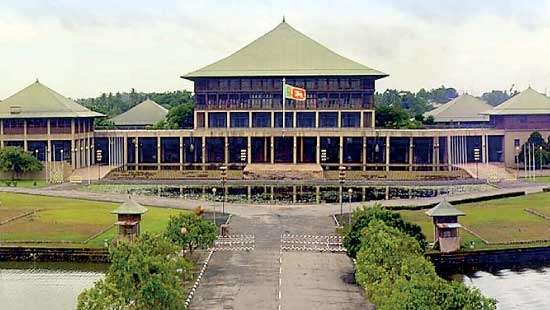
However, on one count however government seems to be making progress. A few days ago government tabled in parliament the Batalanda Commission Report. An investigation into allegations of unlawful detention, torture, and extrajudicial killings at the Batalanda Housing Scheme in Sri Lanka between 1988 and 1990, during the JVP insurgency has been launched.
It seems the present NPP regime has placed investigation into Human Rights abuses at the top of its agenda. This is good and needs be appreciated. However, the use of torture, state-sponsored killings and large-scale forced disappearance of civilians were not isolated incidents committed during the 1988 -1980 period of the JVP insurgency.
During the near three-decade-long LTTE insurgency, according to conservative estimates, over 70,000 Tamil civilians lost their lives. Thousands of others were brutally tortured and/or were forcibly disappeared. Women and girls were raped and murdered.
Many local organisations documented the atrocities committed during this period.
The police too investigated many of the terrible events which occurred during that era. The blatant murder of a number of students near the sea shore in Trincomalee town, was one among the numerous crimes that cry to the heavens for justice.
Former UN Secretary-General Ban Ki-moon commissioned a panel of experts, whose report found credible evidence of violations by both the government and the LTTE. It recommended an international investigation.
Does this government, which received a majority of votes in the Jaffna District, have the political will or desire to delve into the crimes committed on minority communities by its security forces and bring to closure the trauma suffered by the Tamils of this country?
Or, is it simply political vengeance government seeks through the tabling of the ‘Batalanda Commission report?
Since government has now tabled the Batalanda Commission Report in parliament, it is only just, that it inquires to recommence investigations into various injustices faced by minority communities in this country. It is hoped the NPP government investigates these crimes too and brings to book the perpetrators of those deeds.
If this is done, hate speech and anti-minority attacks can be brought to an end once and for all. The problem is one of political will. The other is a desire to stand up for minority concerns.