Reply To:
Name - Reply Comment
 Sri Lanka stands at a critical juncture in its post-independence history. The echoes of past upheavals, particularly the Janatha Vimukthi Peramuna (JVP) insurgencies of 1971 and 1987-89, resonate with chilling clarity in the contemporary socio-economic landscape. These past rebellions, often attributed to the explosive combination of unbearable cost of living and the widespread unemployment among educated youth, serve as stark reminders of how economic distress can swiftly transmute into a profound threat to national security and stability. Fast forward to 2022, the “Aragalaya” (the Struggle) – a spontaneous, nationwide protest movement – once again brought to the fore the deep-seated economic hardship faced by a significant majority of Sri Lankans, especially its youth. Despite the apparent calm that has descended since the immediate aftermath of the protests, the fundamental problems of persistent high cost of living, rampant youth unemployment, and a nascent, often unsupported, entrepreneurial ecosystem continue to fester, posing an existential challenge to the nation’s future.
 |
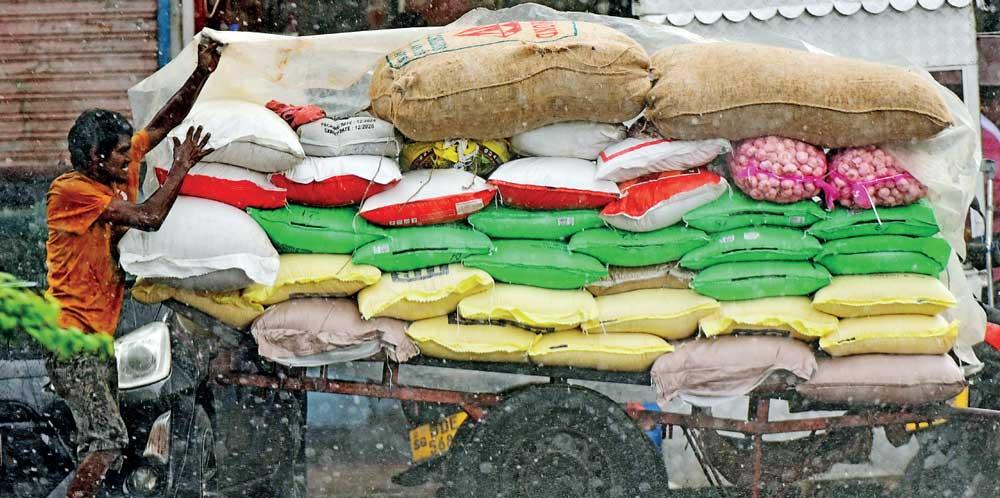
| Improvised Entrepreneurship: due to a lack of systematic measures to incentivise entrepreneurship and innovation, these individuals have been compelled to earn their incomes through informal means. pix by Kushan pathiraja |
The economic anxieties gripping Sri Lanka are multi-faceted and deeply interwoven. The cost of living remains prohibitively high for the average household, even with recent fluctuations in inflation. While the National Consumer Price Index (NCPI) in May 2024 showed a month-on-month decrease, offering some marginal relief in overall prices, the cumulative effect of years of surging inflation has eroded purchasing power significantly. World Bank reports from April 2024 indicate a projected moderate economic growth of 2.2% in 2024, suggesting a degree of stabilisation after the severe downturn of 2022. However, this growth has not translated into widespread relief for the populace, with an estimated 25.9% of Sri Lankans living below the poverty line in 2023 – a troubling fourth consecutive year of increase. Households continue to grapple with elevated prices, income losses, and underemployment, often resorting to debt to meet even basic needs such as food, medicine, and education. This persistent economic vulnerability directly impacts the social fabric, contributing to widespread discontent and a sense of hopelessness among large segments of the population.
Compounding the crisis of affordability is the intractable problem of unemployment, particularly among the youth and graduates. Macrotrends data reveals a youth unemployment rate of 22.33% in 2024, a slight decline from 2023, but still alarmingly high. This figure masks an even more critical issue: the significant number of educated individuals who find themselves without meaningful employment. Research from 2023 indicated over 50,000 unemployed graduates, with a disproportionate number stemming from Arts and Social Sciences disciplines. Ironically, individuals with the highest educational qualifications often experience the longest wait times for securing employment. The traditional avenue of state sector jobs, once a primary aspiration for many graduates, is no longer a viable solution given the sheer volume of graduates entering the workforce annually and the government’s fiscal limitations. This mismatch between educational output and market demand fuels frustration, disillusionment, and a sense of betrayal among the youth who have invested heavily in their education. As history has repeatedly demonstrated in Sri Lanka, a large cohort of educated, unemployed youth is a volatile ingredient in the national security calculus.
Lack of Robust Entrepreneurial Culture
The underlying issue, and indeed the most promising solution, lies in fostering a robust entrepreneurial culture. The observation that “No Government can provide state jobs to all the youth and graduates. The Answer lies in entrepreneurship, which no government in Sri Lanka has understood, including the present government” hits at the core of the problem. While recent government efforts, as highlighted in the Ministry of Industry and Entrepreneurship Development’s 2024 progress report and the Economic Transformation Act of 2024, indicate a recognition of entrepreneurship’s importance (with a goal to increase its GDP contribution to 10% by 2030), the tangible impact on the ground remains limited. The allocation of Rs. 2700 Mn for a revolving fund credit scheme and entrepreneurship training for 367 university students is a positive step. Still, they barely scratch the surface of the problem when faced with thousands of unemployed graduates.
To truly ignite an entrepreneurial revolution, Sri Lanka needs a paradigm shift in its approach. The current climate discourages innovation and risk-taking, largely due to systemic impediments and a lack of a comprehensive, supportive ecosystem. Comparing Sri Lanka to a nation like China, which graduates over 7 million students annually – nearly one-third of Sri Lanka’s entire population – reveals a stark contrast. China manages its massive labour force through a dynamic and multifaceted approach, with entrepreneurship playing a pivotal role. The Chinese government actively cultivates an environment conducive to startups, offering a range of incentives, streamlined regulatory processes, access to capital, mentorship programs, and a massive domestic market. While direct replication may not be feasible, the core principle of government-led facilitation and encouragement of entrepreneurship is a lesson Sri Lanka must internalise.
The Effect of Increased Taxation and
Rising Electricity Costs
The current economic policies, regarding taxation and essential services, actively work against the establishment of a thriving entrepreneurial ecosystem and the broader business community. The recent significant increases in electricity tariffs, for instance, have placed immense pressure on businesses, particularly the industrial and hotel sectors. As noted by the Ceylon Electricity Board (CEB) Chairman himself, a 15% hike has a disproportionate impact on large and medium-scale enterprises, significantly increasing their production costs. When input costs rise sharply, businesses face an agonising dilemma: absorb the costs and erode profit margins, or pass them on to consumers. Given the already diminished purchasing power of the majority of the local population, increasing prices further is often not a viable option for local sales. This leaves businesses struggling to compete both domestically and internationally, as their products become uncompetitive. The “distorted tariffs” and “cross-subsidies” within the electricity pricing structure, as critiqued by the Advocata Institute, further exacerbate this problem, misallocating capital and disincentivising innovation.
Furthermore, the government’s drive to increase revenue through higher taxation on the business community, while understandable given the need to service state expenses and maintain a large public sector, risks becoming counterproductive. PublicFinance.lk highlights a substantial 65% increase in government revenue between 2021 and 2024, largely fuelled by tax reforms, especially the Value Added Tax (VAT). While this signals a recovery in the state’s coffers, an excessively burdensome tax regime can stifle growth, discourage investment, and ultimately lead to a contraction of the tax base itself. Businesses, facing increased production costs from high electricity tariffs and a weakened domestic market due to diminished consumer purchasing power, are less likely to expand or even sustain operations under punitive tax conditions.
This creates a dangerous feedback loop: high costs and taxes lead to reduced profitability, which in turn discourages investment and job creation. The ultimate consequence is a “brain drain” and capital flight. Evidence suggests a substantial escalation in the migration of skilled professionals from Sri Lanka since 2020, directly linked to the economic crisis. Attractive salary packages and better opportunities abroad, often tax-free, act as powerful “pull factors” that drain the country of its most valuable human capital. While the focus is often on professionals, the business community is also susceptible to this phenomenon. If the operating environment becomes untenable, local entrepreneurs and established businesses may choose to close down or relocate overseas, seeking more favourable conditions for growth and profitability. This would leave future governments facing a truly disastrous scenario: a shrunken private sector, an inability to collect sufficient tax revenue, and a further exacerbation of unemployment.
A Strong Economy is Indispensable for Safeguarding National Security
The solution is not simple, but it is clear. Sri Lanka’s national security, broadly defined to include economic stability and social cohesion, hinges on a fundamental reorientation of economic policy towards nurturing entrepreneurship. The Government of Sri Lanka needs to understand the need for a strong economy to ensure National security. Neither national security nor national economy can be isolated. This requires a balanced approach that understands the delicate interplay between revenue generation, cost of living, and business viability. Firstly, the government must prioritise creating a genuinely enabling environment for entrepreneurs. This goes beyond mere rhetorical support or small-scale training programs. It necessitates:
Secondly, addressing the cost of living requires a multi-pronged strategy that goes beyond short-term fixes. This involves:
Finally, the connection between economic hardship and national security must be explicitly acknowledged and addressed at the highest levels of governance. The JVP insurgencies and the Aragalaya are not isolated incidents but symptoms of deep-seated economic grievances. Ignoring the widespread frustration of an educated, unemployed youth and a struggling populace is a recipe for instability. Entrepreneurship offers not just economic opportunities but also a sense of agency, purpose, and hope, which are crucial ingredients for social stability and national resilience. By empowering its citizens to create their own livelihoods and contribute to the national economy, Sri Lanka can transform its demographic challenge into a demographic dividend.
The Time for Reactive Measures is Over
Sri Lanka’s path to enduring national security is inextricably linked to its ability to foster an environment where entrepreneurship flourishes. The government must move beyond superficial gestures and implement a holistic, visionary strategy that addresses the root causes of economic hardship. This means striking a delicate balance between fiscal responsibility and economic growth, ensuring that policies designed to generate revenue do not inadvertently stifle the very businesses that create wealth and jobs. The lessons from past insurgencies and the recent Aragalaya are clear: a frustrated and economically disenfranchised populace is a threat to national security. The time for reactive measures is over; a proactive, bold embrace of entrepreneurship is the only sustainable path to a secure and prosperous Sri Lanka.
The writer is an Infantry officer who served the Sri Lanka Army for over 36 years, a former Security Forces Commander of the Wanni Region and Eastern Province, and he holds a PhD in economics. He can be reached at: [email protected]