Reply To:
Name - Reply Comment
Sri Lanka Army
 The contributions of the Sri Lankan soldier to society extend beyond wartime defense. They play a vital role in national development, disaster relief, infrastructure projects, and maintaining stability. Their sacrifices ensure the continuity of the state and the protection of civil liberties. In the aftermath of the conflict, the military has been actively involved in demining, rehabilitation, and reintegration programs, contributing to healing and rebuilding the nation. Their efforts aim to create a safe and prosperous society for all
The LTTE’s legacy is one of immense destruction. They caused immeasurable loss of life, destroyed infrastructure, displaced millions, and fostered deep divisions within society. Their actions crippled the economy, diverted national resources to war, and instilled a pervasive climate of fear
The scars of conflict run deep in Sri Lanka, a nation that endured decades of brutal civil war. As we reflect upon this tumultuous period, it is imperative to clearly distinguish between the forces that sought to uphold the integrity of the state and those that aimed to dismantle it through violence and terror.
 From a military expert’s perspective, this article seeks to illuminate the fundamental, indeed irreconcilable, differences between the Sri Lankan soldier and the Liberation Tigers of Tamil Eelam (LTTE) terrorist, dissecting their purpose, authority, roles, legal standing, societal impact, ultimate acceptance on both national and international stages, and the controversial statement made by a government deputy minister equating soldiers with LTTE terrorists which underpins the state and security apparatus.
Sri Lankan Soldier and LTTE Terrorist: A Categorical Distinction
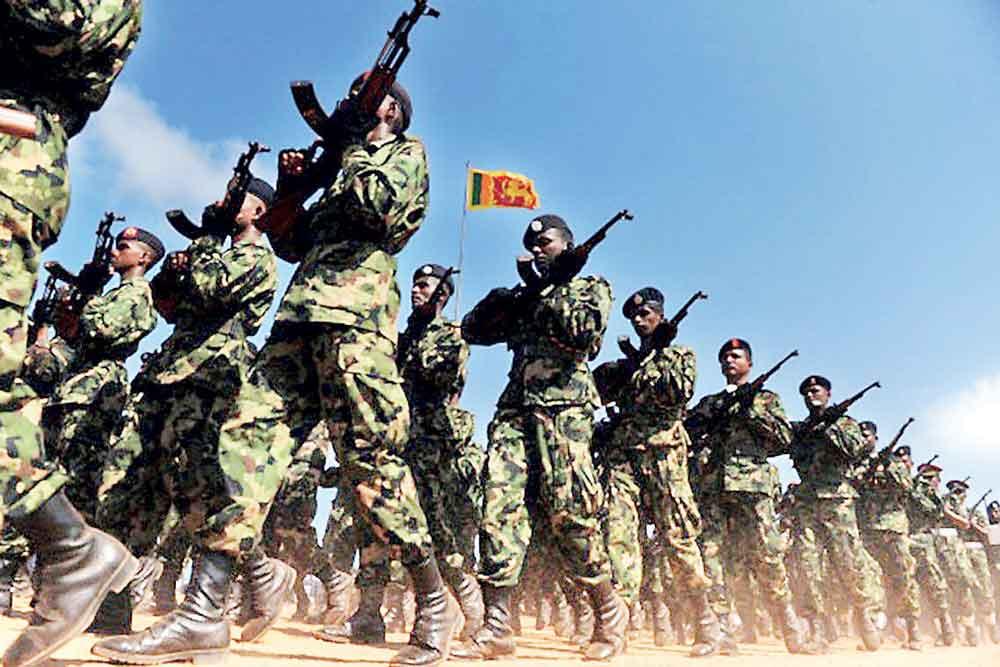
At the outset, the distinction must be absolute. A Sri Lankan soldier is a member of the official armed forces of a sovereign nation, operating under a democratically elected government and bound by national and international laws. They are part of a recognized state apparatus, entrusted with the defense of the nation’s borders, its constitution, and its citizens. Their recruitment, training, deployment, and actions are governed by a hierarchical command structure, military regulations, and the principles of legitimate warfare.
In stark contrast, an LTTE terrorist was a combatant of a non-state armed group that sought to establish a separate state through armed insurgency. The LTTE was proscribed as a terrorist organization by numerous countries and international bodies due to its indiscriminate violence, suicide bombings, assassinations, and recruitment of child soldiers.
Their operations were clandestine, their methods often barbaric, and their allegiance was to a self-proclaimed leader rather than a recognised state. The very definition of terrorism hinges on the use of violence against civilians for political ends, a hallmark of the LTTE’s modus operandi.
Purpose and Aim: State Protection vs. State Destruction
The fundamental purpose of the Sri Lankan soldier is to protect the nation-state, its territorial integrity, and the well-being of all its citizens, irrespective of their ethnicity or religion. Their aim is to uphold the rule of law, maintain peace and order, and defend against both internal and external threats. This mission is rooted in the social contract between the state and its people, where the state provides security in exchange for allegiance. During the conflict, the Sri Lankan Armed Forces were engaged in a defensive war, aiming to defeat a terrorist organisation that threatened the very fabric of the nation.
The LTTE’s purpose, conversely, was the violent secession of a part of Sri Lanka to create an independent Tamil state. Their aim was to achieve this objective through sustained armed struggle, targeting state infrastructure, military personnel, and often, critically, civilians who did not align with their agenda. Their violence was not a means to uphold existing order but to shatter it and impose a new, ethnically exclusive one. This fundamental difference in purpose – protection versus destruction of the state – defines their disparate identities.
Authority to Kill: Legitimate Force vs. Unlawful Violence
The authority to use lethal force is perhaps the most significant differentiator. A Sri Lankan soldier’s authority to kill is derived from the legitimate mandate of the state, exercised within the confines of national and international law, specifically the laws of armed conflict (also known as international humanitarian law – IHL).
This authority is not absolute; it is subject to strict rules of engagement, principles of proportionality, distinction, and military necessity. Soldiers are trained to use minimum force necessary to achieve their objectives and are accountable for their actions under military law and, where applicable, civilian law. Their actions, even in combat, are intended to neutralise a threat to the state or its citizens.
An LTTE terrorist possessed no such legitimate authority. Their acts of violence, including killings, were acts of unlawful aggression against the state and its people. There was no legal framework governing their actions, no accountability beyond their internal command, and often, their killings were indiscriminate, targeting civilians, political opponents, and those perceived as collaborators. The premeditated targeting of non-combatants, a common LTTE tactic, unequivocally constitutes a war crime. Their “authority” to kill was self-proclaimed and inherently illegal.
Role and Task: Defenders of the Realm vs. Agents of Chaos
The role of the Sri Lankan soldier is multifaceted: to defend the sovereignty and territorial integrity of Sri Lanka, conduct counter-terrorism operations, provide humanitarian assistance during disasters, and contribute to nation-building efforts. Their tasks involve maintaining security, intelligence gathering, combat operations within legal parameters, and often, post-conflict reconstruction and reconciliation efforts. They operate within a structured hierarchy, adhering to professional military standards and ethical guidelines.
The LTTE’s role was primarily to engage in armed insurgency, employing guerrilla warfare tactics, assassinations, suicide bombings, and extortion. Their tasks revolved around destabilising the state, terrorising the population, and enforcing their will through violence. They operated outside any recognised legal or ethical framework, often coercing individuals into their ranks and exploiting vulnerable populations. Their actions were designed to create chaos, fear, and division, not to uphold order or protect citizens.
Protection of Country and Citizens: The Sacred Oath vs. Self-Serving Agenda
The Sri Lankan soldier takes an oath to protect the country and all its citizens. This commitment is enshrined in their duty and is paramount to their service. They stand as the last line of defense against threats to national security and the lives of ordinary people. This protection extends to all communities within Sri Lanka, regardless of their background. The war effort, from the perspective of the state, was fundamentally about liberating all citizens, including Tamils, from the oppressive grip of the LTTE.
The LTTE, despite claiming to represent the Tamil people, often acted as an oppressive force within Tamil society itself. They extorted money, forcibly recruited children, assassinated Tamil political leaders who opposed them, and used civilians as human shields. Their actions, far from protecting the country or all its citizens, actively undermined the state and brought immense suffering upon the very communities they claimed to represent. Their agenda was self-serving, aimed at establishing their own power structure, even at the cost of immense civilian casualties.
Legal Aspects: Adherence to Law vs. Flagrant Disregard
The Sri Lankan Armed Forces, as an organ of the state, are bound by both national laws (such as the Constitution of Sri Lanka, military law) and international law, including International Humanitarian Law (IHL) and International Human Rights Law (IHRL). While allegations of misconduct may arise in any conflict, the fundamental framework for accountability exists, with mechanisms for investigation and prosecution. The government has consistently affirmed its commitment to upholding these legal obligations.
The LTTE, being a non-state armed group, deliberately operated outside the purview of national and international law. Their actions were characterised by flagrant disregard for IHL, including the targeting of civilians, the use of child soldiers, and the perpetration of acts universally recognised as war crimes and crimes against humanity. They had no legal standing, and their actions were inherently illegal, making them subject to prosecution under national and international criminal law. The absence of internal legal mechanisms or accountability for their actions further solidifies their status as an unlawful entity.
Acceptance at National and International Level: Legitimate Force vs. Proscribed Terrorist Group
The Sri Lankan Armed Forces are the legitimate military of a recognised sovereign state and are accepted as such by the international community. They participate in UN peacekeeping missions, engage in bilateral defense cooperation, and uphold diplomatic relations with other nations. Their existence and operations are viewed through the lens of state sovereignty and the right to self-defense.
The LTTE, in contrast, was widely proscribed as a terrorist organisation by major global powers including the United States, the European Union, Canada, and India. Their methods, which included suicide bombings and targeting of civilians, rendered them unacceptable to the international community. Their political wing’s attempts at legitimacy were undermined by their continued reliance on violence and disregard for human rights. This international condemnation further underscores the distinction between a legitimate state actor and an unlawful terrorist entity.
Contributions and Destructions to Society: Builders vs. Demolishers
The contributions of the Sri Lankan soldier to society extend beyond wartime defense. They play a vital role in national development, disaster relief, infrastructure projects, and maintaining stability. Their sacrifices ensure the continuity of the state and the protection of civil liberties. In the aftermath of the conflict, the military has been actively involved in demining, rehabilitation, and reintegration programmes, contributing to healing and rebuilding the nation. Their efforts aim to create a safe and prosperous society for all.
The LTTE’s legacy is one of immense destruction. They caused immeasurable loss of life, destroyed infrastructure, displaced millions, and fostered deep divisions within society. Their actions crippled the economy, diverted national resources to war, and instilled a pervasive climate of fear. Their “contributions” were limited to the perpetuation of violence and the imposition of their will, leaving behind a trail of devastation and hindering societal progress for decades. Their focus was on tearing down, not building up.
Who is Acceptable to the Public and Society: Protectors vs. Oppressors
The Sri Lankan soldier, despite the challenges and controversies inherent in any conflict, is broadly accepted by the public and society as protectors of the nation. They are seen as fulfilling a vital role in ensuring security and stability. Their sacrifices are recognised, and their presence is often a source of reassurance. While critical scrutiny is essential in a democracy, the fundamental acceptance of their role as the legitimate defence force remains strong.
The LTTE, even among sections of the Tamil community, often operated through fear and coercion. While some may have sympathised with their stated political objectives, their brutal methods, forced conscription, and disregard for civilian lives eroded their legitimacy and acceptance among the wider public. Their actions were characterised by oppression rather than protection, leading to widespread public rejection of their ideology and tactics. Ultimately, a society yearns for peace and stability, not perpetual conflict and terror.
FUNDAMENTAL DIFFERENCES BETWEEN A SOLDIER AND A TERRORIST
The justification for dissecting this topic is paramount for a post-conflict nation like Sri Lanka. Understanding the fundamental differences between state armed forces and terrorist organisations is crucial for national healing, reconciliation, and preventing the resurgence of violence. It allows for a clear understanding of the sacrifices made by those who defended the state and the destructive nature of those who sought to dismantle it. This clarity is essential for upholding the rule of law, fostering national unity, and educating future generations about the perils of terrorism and the importance of a legitimate, accountable state. It is about distinguishing between those who served the nation and those who sought to destroy it.
THE GOVERNMENT MINISTER EQUATING GOVERNMENT SOLDIERS WITH LTTE TERRORISTS IS FACTUALLY AND LEGALLY INACCURATE
From a military expert perspective, the recent statement made in the Sri Lankan parliament by a government minister, equating government soldiers with LTTE terrorists, is not only deeply concerning but also factually and legally inaccurate. Such a statement undermines the immense sacrifices made by the armed forces, distorts the historical narrative of the conflict, and risks jeopardising national reconciliation efforts and Sri Lanka’s standing on the international stage.
Here’s a logical and factual disproof of that statement, along with clear instructions for the government.
Disproving the Statement: Logical and Factual Arguments
The minister’s statement is a dangerous false equivalency that ignores fundamental principles of international law, the nature of state sovereignty, and the characteristics of legitimate armed forces versus terrorist organisations.
1. Legal Mandate and Authority:
2. Purpose and Objective:
3. Accountability and Structure:
4. Targeting and Methods:
5. International Recognition and Stature:
Instructions to the Government (from a Military Expert Point of View)
The government must immediately rectify this damaging statement and ensure that such mischaracterisations are not repeated. Failure to do so carries significant risks for Sri Lanka.
1. Immediate and Unequivocal Clarification:
2. Education and Awareness Campaign:
This should include:
Public information programs: Utilizing media, educational institutions, and public forums to explain the legal and ethical frameworks governing armed conflict and terrorism.
3. Upholding the Dignity of the Armed Forces:
4. Reaffirming Commitment to International Law:
5. Protecting National Reconciliation:
6. Strengthening Counter-Terrorism Frameworks:
THE MINISTER’S STATEMENT UNDERPINS THE STATE AND ITS SECURITY APPARATUS
The minister’s statement is not merely a verbal misstep; it represents a dangerous erosion of foundational principles that underpin the state and its security apparatus. From a military expert’s viewpoint, such an equivalence is logically untenable, factually incorrect, and legally indefensible under international humanitarian law.
The Sri Lankan soldier is a protector of the state and its people, operating under a legitimate mandate.
The LTTE terrorist was an agent of destruction, operating outside all legal and moral norms. To equate them is to deny the inherent justice of a sovereign state defending itself against a proscribed terrorist organization. The government has a solemn duty to correct this narrative, uphold the honour of its armed forces, and reinforce the clear distinctions that are vital for national security, justice, and lasting peace.
Conclusion: A Legacy of Statehood vs. A Scourge of Terrorism
In conclusion, the distinction between the Sri Lankan soldier and the LTTE terrorist is not merely academic; it is fundamental to understanding the nature of the conflict and the path forward for a peaceful Sri Lanka. The Sri Lankan soldier, as a representative of the legitimate state, acted within the framework of law and with the ultimate purpose of protecting the nation and its citizens. Their legacy, though marked by the harsh realities of war, is ultimately one of preserving statehood and ensuring the continuity of a unified Sri Lanka.
The LTTE terrorist, by contrast, operated outside the bounds of law, engaged in wanton violence, and sought to destroy the very fabric of the nation. Their legacy is one of terror, destruction, and immense human suffering. Recognising this indelible divide is not about condoning every action in war, but about acknowledging the profound moral and legal difference between defending a nation and seeking to tear it apart through indiscriminate violence. For Sri Lanka to truly heal and prosper, this fundamental distinction must remain clear, serving as a powerful reminder of the sacrifices made for peace and the enduring cost of terror.
The writer, Major General Dr. Boniface Perera is a distinguished individual with a multifaceted career. He is a battle-hardened Infantry officer who served the Sri Lanka Army for over 36 years, dedicating 20 of those years to active combat. Dr. Perera is a former Security Forces Commander of the Wanni Region and Eastern Province, and he also served as the Competent Authority responsible for resettling 300,000 displaced people in the North.
In addition to his military service, Dr. Perera is a respected international researcher and writer, having authored more than 200 research articles and 16 scientific books. He holds a PhD in economics and is an entrepreneur and international analyst specialising in national security, economics, and politics.
Email: [email protected]