AI SUMMARY GENERATED ONLY FROM THIS ARTICLE'S TEXT.
Article 40 of the Constitution of Sri Lanka states that “Any person so succeeding to the office of President shall hold office only for the unexpired period of the term of office of the President vacating office”
The Sri Lankan economic crisis is an ongoing crisis in Sri Lanka that started in 2019. It is the country’s worst economic crisis since its independence in 1948
The mandatory retirement age for politicians should be 75 years. Age can have an impact on work performance. Older workers may experience natural age-related decline that can impede their performance
Abolish powers to select and award tenders from ministers, deputy ministers and state ministers including secretaries of ministries
“POLITICS IS TOO SERIOUS A MATTER TO BE LEFT TO THE POLITICIANS “(Charles de Gaulle)
“That government is best which governs least.”
“The people cannot delegate to government the power to do anything which would be unlawful for them to do themselves.”
“Power tends to corrupt, and absolute power corrupts absolutely.”
“Violence is the last resort of the incompetent.”
The Presidential elections are scheduled to be held in Sri Lanka any time between September 17 and October 16, 2024, according to the Constitution of Sri Lanka. Voters will elect a president for a term of five years. As per www. Daily mirror 8.4.2024, the incumbent President Ranil Wickremesinghe is eligible to run for re-election.
The Electoral System in Sri Lanka
As per the Presidential Act, no 15 of 1981, the President of Sri Lanka is elected via limited ranked voting. Voters can express up to three preferences for President. If no candidate receives over 50% of valid votes on the first count, all candidates except for the two candidates receiving the highest number of votes are eliminated. The second and third preferences of the eliminated candidates are distributed until one of the remaining two candidates receives an outright majority.
According to the “2019 Sri Lankan Presidential Election: Election Observation Report”, in practice, this system has seen little use, as each direct election going back to the first in 1981 has resulted in a candidate from one of the two major parties or alliances at the time winning in the first count. For this reason, many citizens opt to mark only one candidate, and many are wholly unaware that multiple candidates can be ranked at all.
Background
The last direct presidential elections held in Sri Lanka were in 2019, where SLPP candidate Gotabaya Rajapaksa won the election in a landslide victory, defeating his main opponent Sajith Premadasa. Rajapaksa had to eventually resign on July 14, 2022 amidst the 2022 protests. (Lanka News - News first. 15 July 2022.) This triggered an indirect presidential election via Parliament a week later, to elect a successor according to Article 40 of the Constitution. Then-incumbent Prime Minister Ranil Wickremesinghe, who was appointed by Rajapaksa just two months earlier, received the most votes and was sworn in as the 9th President of Sri Lanka on July 21, 2022.
Article 40 of the Constitution of Sri Lanka states that “Any person so succeeding to the office of President shall hold office only for the unexpired period of the term of office of the President vacating office.” Accordingly, the next presidential election must be held no later than November 2024.
The President
The president of Sri Lanka is the head of state and head of government of the Democratic Socialist Republic of Sri Lanka. The president is the chief executive of the union government and the commander-in-chief of the Sri Lanka Armed Forces.
History
Under the Soulbury Constitution which consisted of the Ceylon Independence Act, 1947 and The Ceylon (Constitution and Independence) Orders in Council 1947, Ceylon (as Sri Lanka was known then) became a constitutional monarchy with a parliamentary form of government. The monarch of Ceylon served as the head of state, represented by the governor-general with the prime minister serving as the head of government. The governor-general replaced the position of the Governor of British Ceylon, who had previously exercised executive control over the entire island since 1815.
In 1972, the new Republican Constitution declared Sri Lanka a republic, and Sri Lanka was no longer a constitutional monarchy. The governor-general was replaced by the office of President of Sri Lanka. The president was a mostly ceremonial head of state, with real power vested in the prime minister.
In 1978, the second amendment to the Constitution moved from a Westminster system to a more semi-presidential system. The presidency became an executive post modeled closely on the French presidency, and was now both head of state and head of government, with a longer term and independence from Parliament. The president was the commander-in-chief of the armed forces, head of the Cabinet of ministers, and could dissolve Parliament (after one year had passed since the convening of Parliament after a parliamentary election). The prime minister would serve as an assistant and the deputy to the president and also the president’s successor.
The 17th Constitutional Amendment introduced in 2001 reduced certain powers of the president, in particular in regard to the appointment of the upper judiciary and independent commissions such as the election commission or the bribery and corruption commission.
In 2010, the highly controversial 18th Amendment to the Constitution was introduced to remove the two-term limit for the presidency. The 18th Amendment allowed the incumbent president to serve multiple terms as well as increase their power by replacing the broader constitutional council with a limited parliamentary council. This amendment was introduced by President Mahinda Rajapaksa and he later went on to run for a third term of presidency in 2015, wherein he was defeated by Maithripala Sirisena.
The 19th Constitutional Amendment undid much of the changes done by the 18th Amendment. The two-term limit was restored by President Maithripala Sirisena. The amendment required the president to consult the prime minister on ministerial appointments. It curtailed any president’s immunity by making them liable to fundamental rights litigation on any official act.
In 2022, the country caved into a severe economic crisis, and as a result, mass anti-government protests erupted across Sri Lanka. The protesters demanded for then-incumbent president Gotabaya Rajapaksa and his government to step down. The protestors also demanded amendments to the Constitution and to reduce the powers of the President. After Gotabaya Rajapaksa’s resignation, Prime Minister Ranil Wickremesinghe was elected President by the Parliament.
In October 2022, the 21st Constitutional Amendment was introduced as a plan to empower the Parliament over the executive president and curb some of the powers of the president. Under the 21st Amendment, the President, Cabinet of Ministers and National Council are all held accountable to the Parliament. Fifteen Committees and Oversight Committees are also accountable to Parliament. One of the key provisions in the 21st Amendment is disqualifying dual-citizens from contesting in elections in Sri Lanka.
Selection Process -Eligibility
Article 31 of the Constitution sets the following qualifications for holding the presidency: “The person is a citizen having been nominated as a candidate for such office by a recognised political party or elected member of the legislature.””No person who has been twice elected to the office of president by the People, shall be qualified thereafter to be elected to such office by the People.”The person can only hold the citizenship of Sri Lanka.
Election
The president is elected to office in a presidential election held nationwide for a five-year term. An elected president can serve for a maximum of two terms, with each term taking effect from the date of taking a public oath of office for the elected term. Article 31 (3A) (a)(i) of the Constitution of Sri Lanka, states that, the “President may, at any time after the expiration of four years from the commencement of his first term of office, by Proclamation, declare his intention of appealing to the People for a mandate to hold office, by election, for a second term.” But “A person succeeding to the office of the President under the provisions of article 40 of the constitution shall not be entitled to exercise the right conferred above.”
Succession or vacancy
Succession to or vacancies in the office of president may arise under several possible circumstances: death or incapacity, resignation, or removal from office. In the case when the president is unable to perform their duties, their powers are temporarily transferred to the prime minister until confirmed by Parliament.
According to Article 40 of the Constitution, “If the office of President shall become vacant prior to the expiration of his term of office, Parliament shall elect as President one of its Members who is qualified to be elected to the office of President. Any person so succeeding to the office of President shall hold office only for the unexpired period of the term of office of the President vacating office. Until the election of a successor, the powers and functions of the office of the President will be discharged by the Prime Minister in his capacity as Acting president.”
Powers and duties
The duties of the president as described in the constitution are to:
Ensure that the Constitution is respected and upheld;
Promote national reconciliation and integration;
Ensure and facilitate the proper functioning of the Constitutional Council and other institutions;
On the advice of the Election Commission, ensure the creation of proper conditions for the conduct of free and fair elections and referendums.
Constitutional powers
Presidents have little constraints on their power. The president shall be responsible to Parliament and can be impeached and removed by a two-thirds majority in Parliament. The president may declare war and peace. They can place the country or any part under a state of emergency, under which they can override any law passed and promulgate any regulation without needing legislative approval. However, to prolong the state of emergency for more than 6 months, parliamentary approval is needed. In case of external invasion, a state of national defense can be proclaimed, which allows the government extraordinary powers. Martial law can be declared in provinces under extraordinary conditions. Further, the President can dismiss both the national and state governments from power in 3 situations: corruption, treason, and inability to govern.
Parliamentary powers
The president has the right to attend Parliament once every three months, but is not entitled to vote. They have the right to address or send messages to Parliament and to summon, prorogue and dissolve Parliament.
Administrative powers
The president makes numerous appointments which include the prime minister, Cabinet and non-Cabinet ministers, provincial governors, public officers, ambassadors and commissioned officers of the armed forces. The president may also appoint secretaries, officers, and staff.
Judicial powers
The president would have the power to appoint and remove, the chief justice, justices of the Supreme Court, justices of the Court of Appeal and judges of the High Court. The president may grant a pardon. The president has immunity from civil and criminal proceedings. The president has the power to commission public inquiries by appointing a Presidential Commission of Inquiry to investigate any issue.
Diplomatic powers
The President is the nation’s Chief Diplomat. Through this role, they are responsible for carrying out negotiations with foreign leaders and their governments and appointing diplomatic agents.
Appointments
The president may appoint provincial governors to head the provincial council and serve as their representative in the province. The president may also appoint any number of advisers as presidential advisers and coordinate secretaries to assist them.
The president has the power to appoint senior attorneys-at-law to the position of President’s Counsel. The president may appoint officers from the armed forces to serve as their aide- de-camp as well as extra-aide-de-camp.
What is the problem faced by Sri Lanka?
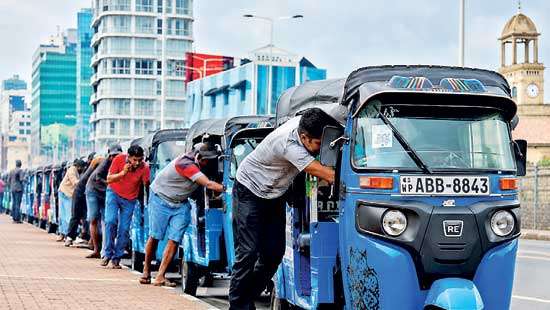
The socio-economic crisis since 2019 that turned severe in 2022 is the main driver of humanitarian needs in Sri Lanka, with an estimated seven million people needing humanitarian assistance. Persistent fiscal and current account deficits, mounting debt, and poor governance are the main contributors to this crisis. Sri Lankans have taken to the streets in record numbers to protest economic hardships. In the face of severe economic hardships marked by power blackouts, shortages of fuel, cooking oil and food, protesters have been demanding the resignation of the Rajapaksa-led government since March 2022.
The Sri Lankan economic crisis is an ongoing crisis in Sri Lanka that started in 2019. It is the country’s worst economic crisis since its independence in 1948. It has led to unprecedented levels of inflation, near-depletion of foreign exchange reserves, shortages of medical supplies, and an increase in prices of basic commodities. The crisis is said to have begun due to multiple compounding factors like tax cuts, money creation, a nationwide policy to shift to organic or biological farming, the 2019 Sri Lanka Easter bombings, and the impact of the COVID-19 pandemic in Sri Lanka.
The subsequent economic hardships resulted in the 2022 protests. Sri Lanka received a lifeline in the form of an Indian line of credit amounting to $4 billion. This substantial credit infusion served to cover the costs of importing essential goods and fuel. As a result, the foreign currency reserves of debt-ridden Sri Lanka experienced a notable improvement, reaching $2.69 billion. The incoming President needs to understand the depth of the socio-economic problems faced by the citizens and be able to manage them without allowing it to go from bad to worse. It is the biggest challenge that has to be faced by the incoming President.
THIRTEEN FUNDAMENTALS TO BE FULFILLED BY THE PRESIDENTIAL CANDIDATES
Whoever promises should be able to prove it by actions the following 13 fundamentals would most likely win the confidence of the majority in the upcoming election.
1.Avert and pre-empty corruption and expose corrupt politicians including state officers.
2.Concede freedom of actions to the judiciary, police, Election Commission and other commissions and refrain from political interference.
3.Take steps to prevent and reoccurrence of the state wastefulness. The Presidential candidates could promise to follow in the footsteps of Mao Zedong (China) and Angela Merkel (Germany) in this regard. Meanwhile, the prime minister of Great Britain travels by train, the Sri Lankan parliamentarians travel by ultra-luxury vehicles like V8, Benz and BMW at the expenses of destitute tax payers. The parliamentary members can use inexpensive Indian, Malaysian or Japanese vehicles. If they want to use luxury vehicles, they can do so from their own money. The former President Maithripala Sirisena travelled overseas 33 times with his siblings, friends and henchmen at the expense of taxpayers during his tenure and the writer has serious doubt whether he has been able to bring back 33 cents worth of benefits to our country. Which candidate takes precautionary measures to stop/ prevent state wastefulness?
4.Designate subject experts with proven track records to Government positions of superior status substituting friends and political henchmen.
5.Abstain from giving nominations to anyone with allegations of corruption, murder, bribery, rape, waste and already convicted criminals. The party nominations to be given to those who possess a Degree/ Diploma / national level achievement or at least with moral turpitude.
6.Abolish powers to select and award tenders from ministers, deputy ministers and state ministers including secretaries of ministries. Recommend appointing seven-member honorable, subject experts from outside the ministry to handle the complete tender procedure. Ensure transparency and the right to information without delay to citizens.
7.The national security policy to be integrated into the National Economy, National Culture, National Diplomacy, National Science and Technology, National Intelligence and Innovation and finally National Political Capability. The national security policy should ensure the territorial integrity and sovereignty of the country. It should suit and assist the interest of the citizens and the Government’s overall strategy for development. Safeguarding Unity and opposing split is of greater importance. National unity is the theme to ensure national security. It is confirmed by the old wise saying “United we stand, divided we fall”. The National identity of all the citizens to be “SRI LANKAN”. Which candidate can assure National security based on these principles?
8.Preclude by law the division of citizens by ethnicity, language and religion to obtain political benefits.
9.Crystalline transparency and bribe-free environment to Foreign Direct Investors and local investors. They must be allowed to express their views/ opinions to the world.
10. The mandatory retirement age for politicians to be made 75 years. Age can have an impact on work performance. Older workers may experience natural age-related decline that can impede their performance. Sleep and cognitive function, which both decline with age, can also affect work performance in older workers. Nimal Siripala De Silva is a living example in the Sri Lanka parliament.You can observe him sleeping almost all the time in the parliament. By age 75, the percentage of body fat typically doubles compared with what it was during young adulthood. Too much body fat can increase the risk of health problems, such as diabetes. Politicians over 75 years to undergo mental competency tests. Politicians themselves decide their service conditions. They don’t want to lose their powers. They want to enjoy the benefits life time or till they want to enjoy them at the expense of tax payers and citizens. Therefore, laws must be enacted that the mandatory retirement age for politicians to be 75 years.
11. Rajapaksa and his family were the subjects of numerous state resource abuse complaints from organisations and election monitors, including claims of their involvement in fraud, misuse of powers, murder, and money-laundering activities said to have taken a couple of $ billions. On 7 May 2015, Foreign Minister Mangala Samaraweera received intelligence reports from four foreign nations that involved tracing billions of dollars stashed abroad, stating that the Rajapaksa family holds $18 billion worth of assets in foreign countries. Which presidential candidate can sincerely assure people of Sri Lanka that stolen money will be recovered despite relationships, political affiliations and positions of any politician or state officer?
12. Hospital policies prohibit sharing a hospital bed due to safety, space, and infection control concerns. Hospital beds are designed for single occupancy to ensure the patient’s rest and proper medical care. The writer’s sister was admitted to Ragama General Hospital where she had to share a mini bed with another patient for seven days. The situation in other wards was the same. Nonavailability of basic drugs for patients was another serious matter and most of the patients take medicine once in three days. Which candidate can assure solutions to the burning health issues including one patient and one bed?
13. Which contender can truthfully enssure punishment to those accused in the Easter Sunday carnage and relief to victims? To my understanding, there are many accused who are directly and indirectly responsible and are affiliated with all the main political parties. The above 13 fundamentals are more important than 13th amendments to the citizens.
Manifestation of broken promises and public trust
Promising rice from the moon was the nadir of election promises in this country. That clearly over-the-top election pledge made in 1970 to woo voters has yet to be matched. The first Executive President of Sri Lanka JR Jayewardene made a broken promise. The abolition of the executive presidency was the common broken promise made by all the leaders of the country. A recent survey conducted by the Centre for Policy Alternatives (CPA) has unearthed that public trust in Parliament and political parties has reached an all-time low, with parliament showing 22 percent public trust and political parties showing 19 percent trust. The trust placed in Presidents is no different and Gotabaya Rajapaksa was a classic example.
It is a proven fact that the citizens of the country have not placed trust in politicians. The regaining trust is a mammoth task for all the candidates as of today the citizens are faced with severe economic hardships and finding it difficult to survive. The parents, youth, state and public sector including entrepreneurs, investors, intellectuals, farmer and fishing communities and in general all the citizens except very few have either lost or have no hope for their future. It can be justified by studying how many youths have left the country for the last four years including intellectuals.
Who can win public confidence?
Whoever can sincerely promise and implement the above 13 fundamentals could win the public confidence to be the champion. The writer guesses no candidate has the courage, bravery and sincerity to implement the 13 fundamentals on behalf of the country. Lastly, any candidate, by focusing on accomplishments, demonstrating skills, genuineness and proving by actions, not by arguments could command respect in the race.
“THE SPOON WILL NEVER SENSE THE TASTE OF THE MEAL, THUS THE IGNORANT ONE WILL NEVER ABSORB FACTS EVEN IF HE ASSOCIATES THE INTELLECTUAL ONES”. (Lord Buddha)
(The writer is a battle-hardened Infantry officer who served the Sri Lanka Army for over 36 years dedicating 20 years in the battlefield. He was the former Security Forces Commander of the Wanni Region and Eastern province in addition to being the Competent Authority to resettle 300,000 displaced people in the North. Having secured a PhD in economics, Presently he is working as an international researcher and international writer. He has authored more than 100 research articles and 16 scientific books. He is an advanced researcher in the University of Science and Technology in Taiwan. He is also an entrepreneur and philanthropist)
Comments - 32
Comments - Sri Lanka’s Presidential Elections - 2024 Who will Champion the Race?
Lk Wednesday, 26 June 2024 12:24 AM
Who can apply all these ideas.? among all parties, NPP Is only honest party. All others are same, and they will help one another in corruption and fraud, they know how to fool people and when to fool them.
295300
Adwani Wednesday, 26 June 2024 12:53 PM
Now NPP is silent about Files of corrupt politicians which Anura claims to have. Even NPP failed to takeover from Gota, when invited to do so. When Sajith invited Anura to have an open debate on Economy of SL, especially in English Language; that too was refused by Anura. You think Anura can lead.???
262245
Real situation Thursday, 27 June 2024 02:48 AM
English language is not a idea for presidency if we once give chance to them we can except the changes from them now out happened after argalaya only got more debts and increased price of good and services as much as possible and given more benefits for politicians as to purpose of re elected as per the result of above what happened most of poors are starvation without at least one time food for one time
Did we expect this result from government? If so any body can do easily it?
GR period line created to buy goods such as gas, petrol that did not much affect poors starvation in village because they don't depend on gas or fuels for daily work expect electricity
But now Price increased no line but richest have money to buy goods easily without money but poor don't have money at least for one time food
This is only happened during aragalaya after aragalaya
38
Guna Wednesday, 26 June 2024 01:45 PM
NPP also silent about tourist visa scam from which they are getting scammed money!
3111
Man Wednesday, 26 June 2024 03:33 PM
Silent of selling state properties, too as they got multiple deals that got exposed.
213
Ram Wednesday, 26 June 2024 03:45 PM
NPP will not repeat the same thing all the time. They said a couple of time about the files, I am sure they will honour the promises made by prosecuting the rogues
109122
Lk Wednesday, 26 June 2024 12:24 AM
Who can apply all these ideas.? among all parties, NPP Is only honest party. All others are same, and they will help one another in corruption and fraud, they know how to fool people and when to fool them.
162116
Man Wednesday, 26 June 2024 03:22 PM
Definitely, they are not competent or clever as honesty and capability are two words with two different meanings. NPP don't understand, too.
8872
Democrat Wednesday, 26 June 2024 05:10 AM
All most every man on the street except for very few is in the opinion that they are fed up of voting as they have not seen and received any thing what these politicians promised once they come in to power. Behavior of politicians once they get power is disgusting. It is the view of the people that we have fallen from the frying pan to fire under these politicians since independence hence we will try this time a different set of people who has not governed this country since independence.
3728
Man Wednesday, 26 June 2024 03:30 PM
They governed with Chandrika and AKD as the agricultural minister could not do anything and heading for Gota part II after telling blatant lies one after another. Another opposition party in full swing to help the needy with computer labs, hospital equipment, etc. without talking. It's the gauge to decide by the people of some knowledge. Last time, there were 6.9 M idiots. Nothing to surprise indeed as they are still alive.
822
Island factory worker Wednesday, 26 June 2024 05:16 PM
What nonsense you are saying,Just study what AKD has done being the minister of Agriculture and animal husbandry of Chandrikas government. The bank balance of island milk food factory which was in the red was made a favorable balance when he left the ministry 1.5 years of stay. He bought 2 buses out of the allowances he received as the minister and those buses still transport Island Milk food factory workers to their work place. Please dont distort the facts of AKD of his service as a minister.
7883
Man Thursday, 27 June 2024 10:59 AM
Island Factory Worker: What to study work of clowns and nothing to be studied. Even those files including of that his friend Sudharman getting decayed with termite attacks. Two busses bought with government funds. Is that a capability? Nonsense. You are well distorted and moulded so with lies of one after another and heading for Gota part II.
02
mohandev Wednesday, 26 June 2024 10:15 AM
Since all three possible front runner candidates follow USA, why dont they follow them at least having a debate amongst 3 on live national
036
Politics Wednesday, 26 June 2024 11:56 AM
all know that executive presidency is a misuse of power. as long as this system is in Sri Lanka. we will never see any change in politics
120
Chandrika Wednesday, 26 June 2024 12:38 PM
2/3 of the voters were either fools or crooks. Who is the one planning the jilmart fooling the people again? Why are they not talked off these days?
014
Adwani Wednesday, 26 June 2024 01:04 PM
'SLPP candidate Gotabaya Rajapaksa won the election in a landslide victory' But Prof. Ratnajeewan Hoole, who was one of the members for election monitoring claimed to have said that we are like Emperor without clothes. Also he said the Election Results were suspiciously rigged, when two unknown persons attended the computerised counting.
210
UMBALAKADA Saturday, 29 June 2024 05:47 PM
ONE OF THEM WAS Mr BASIL
00
Volker Metzger Wednesday, 26 June 2024 02:17 PM
The excellent presentation of the historical development of the political system and the presidential structures of the country have been comprehensively described by Major Gen. Dr. Perera! The 13 basic principles of political action derived from this, which the author recommends to the three (!?) presidential candidates as a recipe for success in the election, is the essence of his very qualified analysis and can be defined as a program for future, successful politics!!! A policy that the strong majority of the population would support!!! But which of these three presidential candidates could be the executor and completer of such a policy entirely "in the spirit of the people"!??? In my view, none of those mentioned, not AKD, Premadasa, and certainly not Ranil, has the radicalism, courage and perseverance necessary to make these basic principles of a new policy the maxim of their actions and to implement them against the expected resistance!???
1618
Volker Metzger Wednesday, 26 June 2024 02:53 PM
The excellent presentation of the historical development of the political system and the presidential structures of the country have been comprehensively described by Major Gen. Dr. Perera! The 13 basic principles of political action derived from this, which the author recommends to the three (!?) presidential candidates as a recipe for success in the election, is the essence of his very qualified analysis and can be defined as a program for future, successful politics!!! A policy that the strong majority of the population would support!!! But which of these three presidential candidates could be the executor and completer of such a policy entirely "in the spirit of the people"!??? In my view, none of those mentioned, not AKD, Premadasa, and certainly not Ranil, has the radicalism, courage and perseverance necessary to make these basic principles of a new policy the maxim of their actions and to implement them against the expected resistance!???
710
Volker Metzger Wednesday, 26 June 2024 02:53 PM
The excellent presentation of the historical development of the political system and the presidential structures of the country have been comprehensively described by Major Gen. Dr. Perera! The 13 basic principles of political action derived from this, which the author recommends to the three (!?) presidential candidates as a recipe for success in the election, is the essence of his very qualified analysis and can be defined as a program for future, successful politics!!! A policy that the strong majority of the population would support!!! But which of these three presidential candidates could be the executor and completer of such a policy entirely "in the spirit of the people"!??? In my view, none of those mentioned, not AKD, Premadasa, and certainly not Ranil, has the radicalism, courage and perseverance necessary to make these basic principles of a new policy the maxim of their actions and to implement them against the expected resistance!???
25
Volker Metzger Wednesday, 26 June 2024 02:54 PM
Only the independent candidate Sarath Fonseka, who has not been mentioned here and who has repeatedly proven his genius in the military field, combines all the qualities and abilities to implement such a policy in practice!!!
111
M Fernando Wednesday, 26 June 2024 05:21 PM
Success on battlefield is no guarantee of success in politics .. SF may turn out to be as good as those we are complaining of today. GR was also a military man.
86
Volker Metzger Wednesday, 26 June 2024 05:43 PM
THE COMPARISON between Gota and Fonseka is nonsense !!!
39
George Wednesday, 26 June 2024 05:07 PM
Lovely article.
It is these political parties who select and field uneducated, uncivilized, anti social elements as their candidates for parliamentary and provincial councils.
There should be a system that all political parties should submit the candidates application for approval by Election Commission or any higher Judicial Authority for background check for criminal records, Financial records, Educational qualification and Eligibility to enter Parliament.
This will make way for the professionals to enter parliament and clean the parliament of any anti social elements.
1213
Volker Metzger Wednesday, 26 June 2024 05:47 PM
Fernando, the comparison between Gota and Fonseka is nonsense !!! There are Worldcup between the two !!!
00
Volker Metzger Wednesday, 26 June 2024 06:36 PM
Fernando, The comparion between Gota and Fonseka is nonsense !!! There are worlds between the two !!!
05
joshua Wednesday, 26 June 2024 10:46 PM
we have had enough of UNP, SLPP and SJB. Time for NPP even if it backfires.
1418
Kps Wednesday, 26 June 2024 10:47 PM
We need a drastic change ! Let’s give a chance to young NPP Malimawa .
4427
Nayana Sumathipala Friday, 28 June 2024 02:40 PM
Unelected, refused Nariya is everywhere - Myna in China went to deposit stolen money! Some modayas are still behind them for Rs10000 Bath packet bottle of arrack!! Suffer another 40 years!!
00
Sachith Monday, 01 July 2024 12:47 PM
No more Ranil, SLPP, SLFP or even SJB.
Want to get rid of the old robbers
00
Rangana kalansuriya Wednesday, 17 July 2024 02:19 PM
Sri Lanka Administrative service also responsible for this disastrous situation in the country
00
Su Friday, 09 August 2024 02:36 PM
Thank you for such an in-depth account of the current political situation in Sri Lanka. Unfortunately I live abroad and unable to return to vote due to health reasons, though I am eligible to do so.
I trust that the majority of the citizens living in Sri Lanka who have suffered unheard of hardships due to corrupt Presidents starting from Mahinda Rajapakse, abused by Gotabaya Rajapakse. They only gained public vote due to the ending of our long term North South divide.
I trust that the public would exercise their right to vote for a better future. Getting rid of all political corruption
00
222
Add comment
Comments will be edited (grammar, spelling and slang) and authorized at the discretion of Daily Mirror online. The website also has the right not to publish selected comments.




 “POLITICS IS TOO SERIOUS A MATTER TO BE LEFT TO THE POLITICIANS “(Charles de Gaulle)
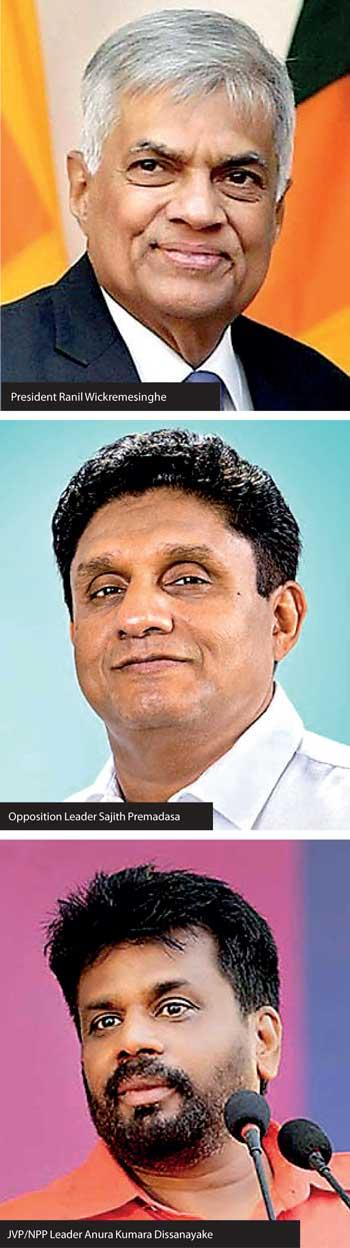 The Presidential elections are scheduled to be held in Sri Lanka any time between September 17 and October 16, 2024, according to the Constitution of Sri Lanka. Voters will elect a president for a term of five years. As per www. Daily mirror 8.4.2024, the incumbent President Ranil Wickremesinghe is eligible to run for re-election.