Reply To:
Name - Reply Comment
Subramanian interviewed everyone from President Kumaratunga to LTTE leader Prabhakaran to victims and participants of the civil war
Expressing sympathy for the “enemy” risked being labelled a traitor by both communities
Tamils fleeing LTTE faced further hardship through mandatory police registration in Colombo
 We forget very easily. Even the terrors and travails of the recent pandemic are being forgotten. When it comes to Sri Lanka’s civil war, which lasted three decades and ended only in 2009, so much is now forgotten.
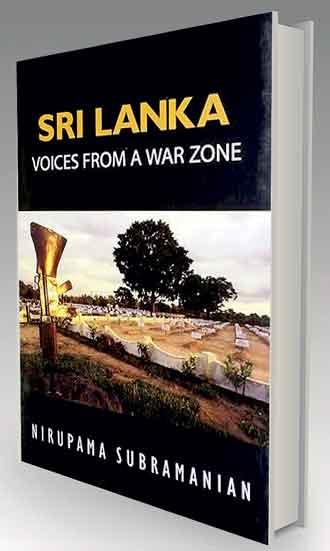
Flipping through the pages of Nirupama Subramanian’s 2005 book, ‘Sri Lanka, Voices From A War Zone’, is to relive those terrible times.
|
|
|
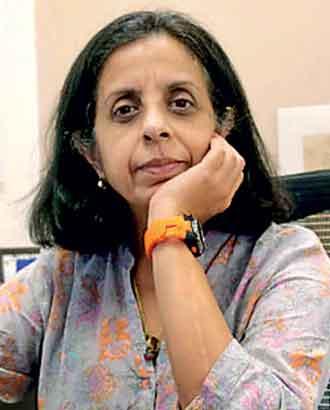
Nirupama Subramanian
|
These are not the best of memories to rekindle, but there is a danger of collective amnesia as events press upon us. With the current economic crisis—seemingly interminable just like that nasty and not-so-little war—overwhelming everything else, it’s important to remember what people had to go through from the 1980s to 2010.
Among all the books written about the civil war, this is my favourite. It is unbiased, describing what all communities had to undergo with an equally sympathetic eye.
Nirupama Subramanian was based in Colombo from 1996 to 2002 as a correspondent, initially for the Indian Express, and later for The Hindu. She spoke with people at all levels, from then President Chandrika Kumaratunga to LTTE leader Vellupillai Prabhakaran, to participants in the war as well as its victims—military and LTTE spokesmen, soldiers, deserters, LTTE child recruits, widows, traders, teachers, bureaucrats, and even a child monk. It is this wide spectrum which makes her book so interesting today.
It ended in 2005 as the Norwegian-brokered ceasefire finally began to look promising. To anyone ignorant of what happened afterwards, it’s a happy ending. But we can begin at the start, as another fragile ceasefire is broken when the Tigers attack two navy ships on April 19, 2005, just a day before the writer is due in Colombo to begin reporting on the war.
Explosives do not discriminate on an ethnic basis. The Central Bank bombing, designed to kill Sinhalese, killed Tamils, too. On the morning of January 31, 2006, K. V. Somasundaram’s daughter Vasumathy parked her car at the Galadari Hotel parking lot and walked to Central Bank. Her burnt body was found inside the charred building three days later.
Somasundaran’s wife, healthy till that date, lost her voice, then her memory, and finally had a stroke. She is dead by the time Nirupama Subramanian interviews Vasumathy’s father.
In Veyangoda, the parents of Lt. Harshana, who went missing in Mullaitivu, were waiting for their son to return. He never did. These are just two tragedies among tens of thousands, cutting across all communities during those long 30-plus years of war. Some of these stories were reported. Many were not. Even the reported stories are now forgotten, hence the need to rekindle memories; hopefully, history will not be repeated again.
My own personal impression during those years was that all communities began to be affected by compassion fatigue, with no sympathy for the suffering of the ‘enemy’. The media was often one-sided, reporting from a very biased base. There were and will always be exceptions, though it was very hard then to be exceptional.
This applied not only to the media but to everyone, as it was all too easy to be labelled ‘Tiger sympathiser’ on the Sinhalese side and a ‘traitor’ by Tamils if one dared express liberal views or some sympathy for the suffering of the ‘other side’. I remember being asked by an acquaintance if Tamils were my relatives after I expressed sympathy for Tamil civilians in the north and east. After all, there were no Tamil civilians, they were all ‘Tigers’.
Nirupama Subramanian didn’t have to take sides. But simply being Tamil was enough to arouse suspicion. She writes about hotel staff spying on her and military raids of her hotel room. When asked by an officer if she’s Tamil, she replies: ‘Indian’.
Many Tamils from the north and east came to Colombo in the 1990s to escape LTTE pressure. But they fell from the frying pan into the fire when the government required all Tamils in Colombo to register at police stations following the Central Bank bomb.
“Every police station was its own kingdom,” she writes. “There was no unified procedure. At some stations, Tamils had to provide recent photographs. Some stations wanted the landlord’s signature on the registration form. At others, they would register the person only for a week or a month.”
“We know all Tamils forge documents,” a policeman tells the writer when she shows him her Indian passport at a checkpoint. As Tamils suffered at checkpoints in Omanthai or Vavuniya, the Sinhalese suffered in Colombo and elsewhere. Many checkpoints were dark at night, and motorists who failed to see soldiers signalling them to stop got killed. I recall that at the infamous checkpoint passing Medawachchiya between Anuradhapura and Padaviya, there were mile-long queues as each vehicle was checked thoroughly. If it was a truckload of rice or a tipper load of sand, everything had to be unloaded and then loaded back again.
But Nirupama Subramaniam finds that in besieged Colombo, even as the LTTE suicide and truck bombers struck regularly, life has its perks and high points, at least for some. She quotes from Michael Ondaatje’s ‘Running In The Family’: “After the (horse) races, everyone would go to dinner together, dance into the morning and have breakfast at the Mt. Lavinia hotel. They would sleep until noon till it was time for the races again. The races were not postponed even during the war”.
“That was Colombo in the 1930s and 1940s,” she writes, “but it could well have described Colombo in the late 1990s, if you substitute the races with the Royal-Thomian cricket match”.
In March 1998, when Operation Jaya Sikurui was in full swing, a general who was supposed to be at the front called the writer from Colombo; he had taken time off for the Battle of the Blues.
But for the mass of Sri Lankans, it was life inside a cauldron with no relief, and one can see how virulent nationalism became the dominant factor in politics. The writer talks to a mother whose schoolboy son is ordained at a Buddhist mass ordination ceremony. This was at the behest of then prime minister Ratnasiri Wikremanayake, who found religion to be the best motivator to keep up both military and civilian morale in a stalemated war.
She talks to poor rural women being taught English and trained to work as housemaids, sent to the Middle East to earn precious foreign exchange for a cash-strapped government. She talks to Razeek, a former Indian-trained EPRLF member now working for the army with his group of vigilantes in Batticaloa, just before he is killed by a Tiger suicide bomber.
Then there is the Chemmani mass grave, which became known only because the first accused of the Krishanthi Koomaraswami rape-murder case, lance corporal Somaratna Rajapakse, turned whistleblower and exposed a dark secret.
Fortunately, the final chapter of this grim war—the Rajapaksas’ successful conclusion of the war achieved with the same blatant disregard for human rights that the Israelis practised in Gaza—is not here. I say fortunately because what is recorded here from 1996 to 2002 is grim enough.
But what happened afterwards may be taken as a lesson in kammic laws—Sinhalese majority euphoria after the annihilation of the LTTE was short-lived, just like the victorious Rajapakses’ promise of never-never land and limitless prosperity. Post-2022, when the economy crashed, the Sinhalese too were forced to undergo the same hell—lack of electricity, shortages of essentials, black market prices, and loss of self-esteem and hope, just like the northern Tamil population did during the war.
Those who forget history are condemned to repeat it. This may well be the underlying message of ‘Sri Lanka: Voices From A War Zone,’ a good book to carry to the next Battle of the Blues to read during a break.