Reply To:
Name - Reply Comment
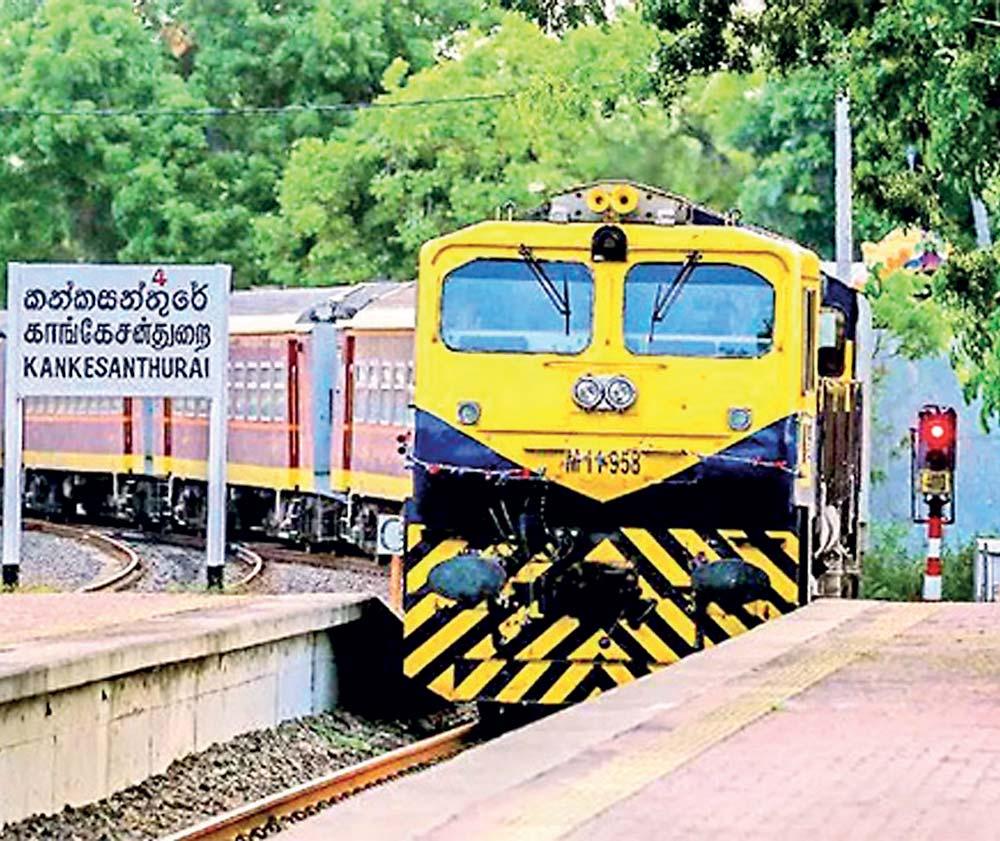
As much as trains are used for extensive travelling, ones like Yal Devi were recommenced to gain political mileage and to link communities which had drifted apart during the civil war
 We have a new government in place, but the railways is still in a position of peril and quickly needs to rebuild its lost image. This is because the train is a popular mode of transport for both locals and tourists. Hence, the need to have the trains running sans accidents and on time.
Sri Lanka Railways (formerly Ceylon Government Railways) had its golden years before the 1990s. After the civil war escalated on the island, train services to the north were suspended in 1990. There were occasions when some trains were blasted due to terrorist actions.
 Sri Lanka Railways is in the news for neglect and shame, and an underlying reason for this state could be political in a way. The Daily Mirror carried in its June 18th issue a comprehensive feature article about the state of present railways in the island. The writer reveals, among other pathetic reasons, the absence of a proper Human Resource Department as a major contributing factor towards the downfall of Sri Lanka Railways.
There is a school of thought that politicians love to see places and events that inconvenience the people exist. When such hardships exist, politicians believe they can negotiate or prepare for elections from a position of strength. ‘Vote for me or my party and what’s troubling you will be attended to’ is the catchphrase that has worked wonders for years.
We have a new government in place, but the railways is still in a position of peril and quickly needs to rebuild its lost image. This is because the train is a popular mode of transport for both locals and tourists. Hence, the need to have the trains running sans accidents and on time. When the NPP was campaigning prior to the presidential elections, one of the election pledges made was to prioritise public transport. These plans included uplifting the railways as well. But even today, we see strikes and negative campaigns that destroy the image of railways. Such acts taking place at a time when the economy is on the road to recovery must be checked.
We remember how the Rajapaksa regime took political mileage out of restarting Yal devi, a train which connects a powerhouse like Colombo with remote and emotionally scarred Jaffna. It was just after the war when the ruling SLFP was eager to set foot in battle-torn Jaffna. Mahinda Rajapaksa was present in person at the recommencing ceremony of Yal Devi. The train was arriving from Palai to Jaffna and people, not affiliated to any political party as such, came in their numbers to celebrate the resumption of the train service. Critics, however, viewed the occasion from a different perspective. They maintained that the Government’s attempt was to relink a broken-off Jaffna with a hostile South. The latter is where the Rajapaksas come from and there was a great need at that time to show that Mahinda was a father figure to the entire nation. Fast forward the clock to 2025 and most trains—including the Yal Devi—are now very old and demand to be replaced. There was a newspaper article carried sometime back in the Sri Lanka Guardian which said that past governments had looked upon the railways not as a public service, but as a political asset. Countless are the occasions when politicians have offered employment to their supporters in the railways; most of the recruits do not possess even the basic qualifications to serve in the railways.
If we rewind back the clock to the time when Ceylon was a colony of the British, these trains were mostly used by the Englishmen who were here to engage in official work. Most of the travelling Englishmen were government officials and tea planters. Those trains back then travelled at a speed of like 80 kilo metres per hour, but the irony of it all is that train speeds have not bettered even 77 years after Sri Lanka received independence from the British. And we still see trains that are fit to be displayed in museums being run on rail tracks.
There are critics, who are sharp, who use a faltering railway system to make comparisons with the existing government. Some say that the poor state of a railway system is a reflection of a wider failure of a government. Many are of the opinion that the ‘honeymoon’ period given to this government by the public is over and it has to now deliver in all departments, as promised in their election manifesto.
Sri Lanka Railways (formerly Ceylon Government Railways) had its golden years before the 1990s. After the civil war escalated on the island, train services to the north were suspended in 1990. There were occasions when some trains were blasted due to terrorist actions. From that time onwards, right throughout the Rajapaksa regime and up to the present times of the NPP-led government, we as a country have failed to put the railways in order.
As trains chug on despite disgruntled and overworked railway workers putting in laborious hours at work (It is official now that the Sri Lanka Railways is understaffed), the answers to all these problems seem to be so distant from the questions posed by critics. The minister of transport must be ruthless enough to drive in the point to all employees at the railways that if this department needs to return to its past glories, Sri Lanka Railways must be rid of corruption, mismanagement and political interference.