Reply To:
Name - Reply Comment
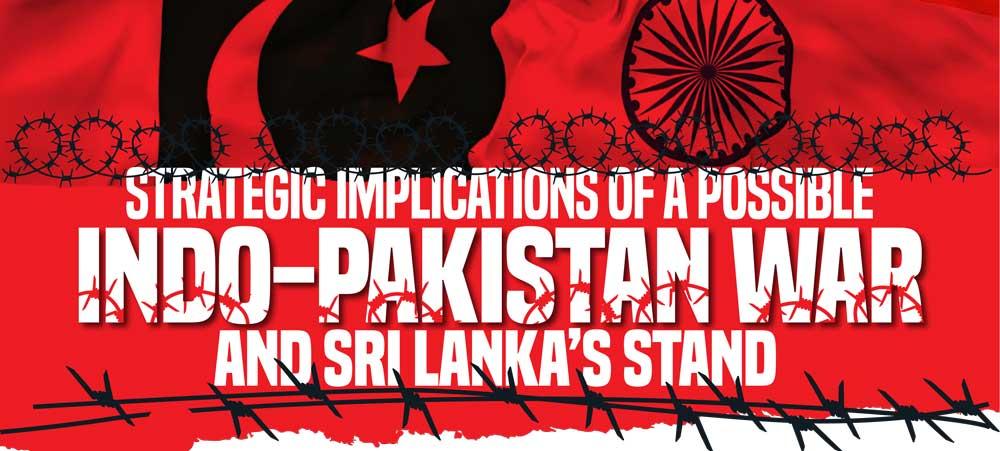
 The growing tensions between India and Pakistan, fueled by historical disputes and recent tragic incidents in Kashmir, threaten to destabilise not just South Asia but the broader global order. Sri Lanka, as a strategically located South Asian nation, faces critical decisions in maintaining regional stability and balancing diplomatic neutrality with emerging security and economic realities.
The Historical Context
The Indian subcontinent, rich in civilisation and culture, was once a unified region under British colonial rule. Before 1947, what we today call India, Pakistan, and Bangladesh existed as one country—British India. Administered under a single political framework, the subcontinent, however, housed a diverse tapestry of ethnicities, religions, and languages. The seeds of division were planted over decades of British “divide and rule” policies, and compounded by the rise of communal tensions in the early 20th century.
The eventual result was the Partition of 1947, a deeply traumatic event that led to the mass displacement of over 14 million people and the deaths of an estimated one million. Pakistan was created as a separate homeland for Muslims, while India retained a secular and pluralistic identity.
Recent Kashmir Incident
On April 22, 2025, the killing of 21 tourists in Kashmir sparked global outrage. Although the perpetrators were identified as militants linked to Pakistan-based groups, Islamabad denied involvement. India, however, intensified military operations in Kashmir and increased pressure on Pakistan diplomatically. This tragic event has reignited old wounds. For Sri Lanka, it signals the urgent need for South Asian nations to prevent another spiral into conflict that could engulf the region.
The Kashmir Dispute
The Kashmir conflict remains the most dangerous flashpoint between the two nuclear-armed neighbours. When Maharaja Hari Singh acceded to India, Pakistan claimed Kashmir based on its Muslim majority. India countered that accession was legal under international law. Today, India controls about two-thirds of Kashmir, while Pakistan administers one-third. The real issue, however, is the lack of political autonomy, rampant militarisation, cross-border terrorism, and civilian suffering. Resolution has proven elusive, with both nations using Kashmir to stoke nationalist sentiments internally.
Military and Economic Comparison
India has a standing force of 1.4 million active personnel; Pakistan has about 654,000. India maintains a clear advantage in terms of air power, naval strength, and armoured vehicles. Both nations possess nuclear weapons, but India’s “No First Use” doctrine contrasts with Pakistan’s more aggressive nuclear posture.
India’s GDP: ~$3.7 trillion (5th largest globally).
Pakistan’s GDP: ~$370 billion (much smaller).
India’s larger economy allows for sustained defence spending (2.4% of GDP), whereas Pakistan struggles economically, heavily relying on foreign aid and loans (notably from China, the IMF, and Saudi Arabia).
The imbalance suggests that Pakistan would seek quick escalation to internationalise a conflict, whereas India could sustain a longer conventional war.
A full-scale Indo-Pak war, especially with nuclear risks, would be catastrophic: Asia would face a massive refugee crisis (millions fleeing across borders). Global trade would be disrupted, especially oil routes through the Arabian Sea. Stock markets would plunge; insurance premiums in Asia would skyrocket. Nuclear winter scenarios (even a limited exchange) could globally depress agriculture and temperatures.
Moreover, South Asia’s image as an emerging economic powerhouse would be severely damaged.
Global Perspectives
United States:
Washington traditionally supports India’s rise as a counterbalance to China, but fears nuclear escalation. It would pressure both sides for restraint, possibly broker ceasefires through diplomatic backchannels.
Russia:
Moscow has strong historic ties with India, but also seeks to sell arms to both nations. Russia would advocate for de-escalation while quietly supplying weapons.
China:
The “all-weather” alliance China has adopted with Pakistan complicates matters. Beijing may subtly support Pakistan to bog down India, but would avoid overt confrontation, fearing a global backlash.
These powers would likely prioritise regional stability over taking hard sides, despite their respective alliances.
Three possible forecasted scenarios emerge:
1. Escalated Skirmishes: Likely. Limited border clashes without full-scale war.
2. Diplomatic Freeze: Very likely. Both nations avoid war, but relations hit a new low.
3. Full War: Possible but less probable. Nuclear deterrence continues to work. However, the probability of proxy conflicts (e.g., cyberattacks, localised militant activities) remains high.
The Best Options for India and Pakistan include:
1. Bilateral Dialogue: Restart direct talks without preconditions.
2. Third-party Mediation: Although India resists external mediation, creative mechanisms via SAARC or the UN could be explored.
3. Economic Integration: Trade agreements and energy corridors could create interdependence that makes war unattractive.
4. Counter-terrorism Cooperation: A joint framework to address militant threats could build trust. The Peace is not idealism in South Asia; it is a strategic necessity.
Sri Lanka’s Desirable Stand
Sri Lanka, with its long-standing policy of non-alignment, is likely to maintain strict neutrality. However, Colombo could:
1. Offer to host peace talks or backchannel diplomacy.
2. Act within the SAARC framework to advocate regional peace.
3. Strengthen regional intelligence-sharing mechanisms to prevent the conflict from expanding into the Indian Ocean.
Sri Lanka’s stability itself is tied to South Asian stability
Here’s an analysis of the likely impacts and the most probable actions Sri Lanka should initiate:
1. Potential Impacts of an Indo-Pakistan War on Sri Lanka.
2. Sri Lanka’s geographic proximity to India, its location astride vital Indian Ocean Sea lanes, and its economic ties within the region make it highly vulnerable to the fallout from an Indo-Pakistan conflict.
Economic Impacts
1. Maritime Trade Disruption: A conflict would severely disrupt shipping routes in the Arabian Sea and potentially the wider northern Indian Ocean. This would drastically impact Sri Lanka’s Colombo Port, a major transhipment hub. Increased maritime insurance premiums, freight costs, and delays would cripple trade activities, affecting both imports and exports.
2. Tourism Collapse: The tourism sector, a vital foreign exchange earner still recovering, would face an immediate and severe downturn. India is a primary source market for Sri Lankan tourism; arrivals from both India and Pakistan would cease. Furthermore, the perception of regional instability would deter tourists from other parts of the world.
3. Energy Price Shocks: Regional instability often leads to volatility in global oil prices. A major conflict involving nuclear-capable states could trigger significant spikes, drastically increasing Sri Lanka’s energy import bill and fueling domestic inflation, exacerbating existing economic pressures.
4. Supply Chain Disruptions: Sri Lanka relies on imports for essential goods, including food items, pharmaceuticals, and industrial raw materials. Many of these come from or transit through India or the affected region. War would disrupt these supply chains, potentially leading to shortages and price hikes.
5. Investment Climate Deterioration: Regional conflict significantly increases perceived risk for investors. Foreign Direct Investment (FDI) inflows could decrease as investors adopt a wait-and-see approach or divert funds to more stable regions.
6. Remittances: While less significant than Middle Eastern sources, remittances from Sri Lankans working in India could be affected.
Geopolitical and Diplomatic Impacts
1. Pressure on Neutrality: Sri Lanka maintains close relations with India but also has ties with Pakistan. A conflict would place Colombo under immense diplomatic pressure. Maintaining strict neutrality, while essential, would be challenging. India, given its proximity and strategic weight, might expect tacit support or at least complete non-interference.
2. Regional Instability: The conflict would paralyse regional cooperation frameworks like SAARC (already largely inactive) and potentially strain other forums like BIMSTEC. It would increase regional militarisation and suspicion.
3. Humanitarian Concerns: While a mass influx of refugees directly from the conflict zone is unlikely given the distance and geography, there might be smaller numbers attempting sea journeys, requiring maritime search and rescue and processing, straining resources.
Security Impacts
1. Maritime Security Challenges: The Sri Lanka Navy and Air Force would face increased pressure to monitor the country’s vast Exclusive Economic Zone (EEZ). There would be risks of naval assets of the warring parties operating near Sri Lankan waters, potential for smuggling activities, or even stray ordnance.
2. Airspace Violations: Increased military air activity in the region raises the risk of accidental or deliberate violations of Sri Lankan airspace, requiring enhanced aerial surveillance and control.
3. Internal Security: There’s a potential risk, albeit lower, of the conflict being exploited by domestic extremist elements or causing communal tensions within Sri Lanka, requiring vigilance from security forces.
Proactive measures are crucial for Sri Lanka; hence, the most probable actions Sri Lanka must initiate at this moment, given the potential severity of these impacts and the current volatile situation, are:
1. Reinforce Diplomatic Neutrality and Advocate De-escalation.
2. Issue Clear Policy Stance: Publicly reiterate Sri Lanka’s unwavering commitment to neutrality. Issue strong diplomatic statements urging both India and Pakistan to exercise maximum restraint, de-escalate tensions immediately, and resolve differences through dialogue.
3. Engage Bilaterally: Utilise diplomatic channels to communicate Sri Lanka’s position and concerns directly to both New Delhi and Islamabad. Leverage the strong existing relationship with India to emphasise the need for regional stability.
4. Multilateral Advocacy: Work actively within the UN, NAM, and other relevant international forums to support global calls for peace and offer Colombo as a potential venue for dialogue if appropriate.
5. Develop Robust Economic Contingency Plans.
6. Supply Chain Resilience: Immediately assess critical import dependencies (fuel, food, medicine, key industrial inputs) from the region. Identify and secure alternative sourcing routes and suppliers. Explore possibilities for building strategic stockpiles.
7. Energy Security Strategy: Prepare for potential fuel price hikes and supply disruptions. Evaluate options for securing emergency fuel supplies or credit lines. Promote energy conservation measures domestically.
8. Tourism Sector Mitigation: Engage with industry stakeholders to develop contingency plans, potentially including financial relief measures and explore alternative source markets less likely to be affected.
9. Monitor Economic Indicators: Establish a task force to continuously monitor foreign reserves, exchange rate stability, trade flows, and inflation, preparing policy responses for adverse scenarios.
10. Enhance National Security Preparedness.
11. Intensify Maritime/Air Surveillance: Significantly increase naval and air patrols within Sri Lanka’s EEZ and territorial waters/airspace to monitor activity, assert sovereignty, and deter misuse of its territory. Utilise all available ISR (Intelligence, Surveillance, Reconnaissance) assets.
12. Strengthen Border Control: Heighten security at maritime ports, airports, and along coastlines to prevent illegal entry, smuggling, or infiltration related to the conflict.
13. Establish Clear Neutrality Protocols: Ensure clear directives and Rules of Engagement (ROE) are in place for the Navy and Air Force on how to handle encounters with foreign military vessels/aircraft, strictly enforcing neutrality.
14. Intelligence Vigilance: Enhance intelligence operations to detect any potential spillover effects, including extremist activities or threats to maritime security.
15. Ensure Domestic Stability and Public Communication:
16. Transparent Public Briefings: Keep the Sri Lankan public informed about the regional situation, the government’s stance, and the measures being taken to protect national interests, aiming to prevent panic and misinformation.
17. Promote Internal Cohesion: Encourage national unity and discourage any domestic groups from attempting to exploit the external conflict for local agendas or inciting communal disharmony.
In essence, Sri Lanka must adopt a proactive stance of vigilant neutrality, coupled with urgent economic and security contingency planning. The focus should be on mitigating the inevitable negative impacts while positioning Sri Lanka as a responsible regional actor advocating for peace and stability.
Sri Lanka’s Ability to Handle an Indo-Pakistan War Scenario
Sri Lanka’s leadership currently faces a challenge of enormous complexity, one that demands an extraordinary blend of diplomatic finesse, economic crisis management, and hard-headed security strategy. Yet, there are serious reasons to doubt that the present government can manage this situation effectively.
Diplomatic Leadership
Sri Lankan foreign policy over the past decade has been more reactive than strategic. Colombo tends to oscillate between Indian appeasement and cautious engagement with China/Pakistan, without a coherent long-term doctrine. In a high-stakes conflict like the Indo-Pakistan war, Sri Lanka needs deft diplomatic balancing—something it has not demonstrated recently.
After the 2022-2023 economic crisis, diplomatic initiatives were mostly focused on debt restructuring and foreign aid, rather than broader regional security engagement.
Hence, there’s a high risk that Sri Lanka will either appear indecisive, silent, or worse, be perceived as aligned too closely with India, thus eroding its neutrality. Sri Lanka still enjoys residual goodwill in SAARC and NAM, and theoretically could position itself as a peace broker. However, the initiative needed for this is lacking.
The majority speculate that the Diplomatic leadership will likely struggle to maintain strict neutrality without alienating one side.
Economic Management
Sri Lanka is economically fragile following its 2022 default and slow recovery. The leadership’s track record in contingency planning is poor—even predictable crises like the global oil price surges of 2022 were badly mishandled, leading to fuel queues and social unrest. Given this background, expecting the current economic management team to proactively build strategic stockpiles, secure alternative suppliers, or hedge against maritime trade disruptions is unrealistic. Emergency economic response mechanisms (like dollar liquidity lines, insurance funds for shipping) remain largely absent.
The central bank has become slightly more disciplined post-2023, and inflation has been brought under control somewhat. However, economic recovery remains extremely brittle, leaving no fiscal space for shock absorption. The majority opine that the Economic leadership is unlikely to act fast enough to shield Sri Lanka from the second-order effects of regional war.
Security and Defence Preparedness
Sri Lanka’s military capability is optimised for internal security and counterinsurgency, not for regional maritime surveillance or enforcing neutrality in a hostile maritime environment.
The Sri Lanka Navy, although professional, is under-resourced for wide-area EEZ monitoring during wartime conditions. The Air Force lacks robust early warning systems needed for detecting foreign aerial incursions or missiles.
Worse, coordination between civilian leadership and the military remains ad hoc, with frequent overlaps between ministries (Defence, Ports, External Affairs) delaying decisions.
Sri Lanka does have experience with maintaining a secure maritime border during the LTTE-era naval conflicts (Sea Tigers era). This experience could help, but the scale and technological sophistication of modern naval threats are much higher now. The Security agencies will be stretched dangerously thin if an Indo-Pakistan conflict destabilises the regional seas.
Public Communication and National Unity
The leadership has a historical weakness in transparent communication during crises. Even during COVID-19 and the economic collapse, mixed messaging, censorship, and ad hoc press conferences fueled public panic.
In a war situation nearby, if maritime trade collapses or fuel runs short again, public trust could erode rapidly, leading to unrest and political instability. Moreover, communal fault lines (Sinhala-Tamil-Muslim relations) could be exacerbated by imported tensions, especially if extremists try to link the war to domestic agendas.
Some improvements in disaster communication (after the 2022 protests) are visible, but institutional memory remains weak.
The Public management during a regional war is very likely to be inconsistent and prone to avoidable mistakes.
Strategic Vision
Sri Lanka’s leadership (both political and bureaucratic) tends to operate only on short-term horizons—election cycles, IMF review periods, or short crisis windows. There’s little evidence of forward-looking security-economic integration planning (e.g., comprehensive maritime strategy, diversified trade routes, strategic reserves).
In contrast, handling an Indo-Pakistan war spillover would require multi-year resilience planning, including insurance arrangements for Colombo Port, alternative trade partnerships, and early diplomatic balancing with China and Gulf states—none of which are in place. The Strategic vision and foresight are glaringly inadequate to prepare for a major regional war.
Can the leadership of Sri Lanka handle this complex situation?
It is discernible that Sri Lanka’s leadership, including the respective bureaucrats today, lacks the strategic depth, operational agility, and economic resilience to adequately manage the fallout from a full-scale Indo-Pakistan war.
Unless there is immediate, extraordinary effort across diplomacy, defence, and economic preparedness, Sri Lanka risks becoming a collateral victim of South Asia’s instability.
Conclusion
The Indo-Pakistan rivalry is rooted in deep historical grievances but continues to be fueled by nationalism, unresolved political questions, and global power dynamics.
A war today would not just devastate India and Pakistan—it would drag down South Asia’s economic future and destabilise the broader Indo-Pacific.
For Sri Lanka and other regional actors, neutrality alone is insufficient; proactive diplomacy is essential. Peace in South Asia demands more than strategic posturing—it demands bold, visionary leadership willing to break the cycles of history.
The writer is an Infantry officer who served the Sri Lanka Army for over 36 years, a former Security Forces Commander of the Wanni Region and Eastern Province, and he holds a PhD in economics.