Reply To:
Name - Reply Comment
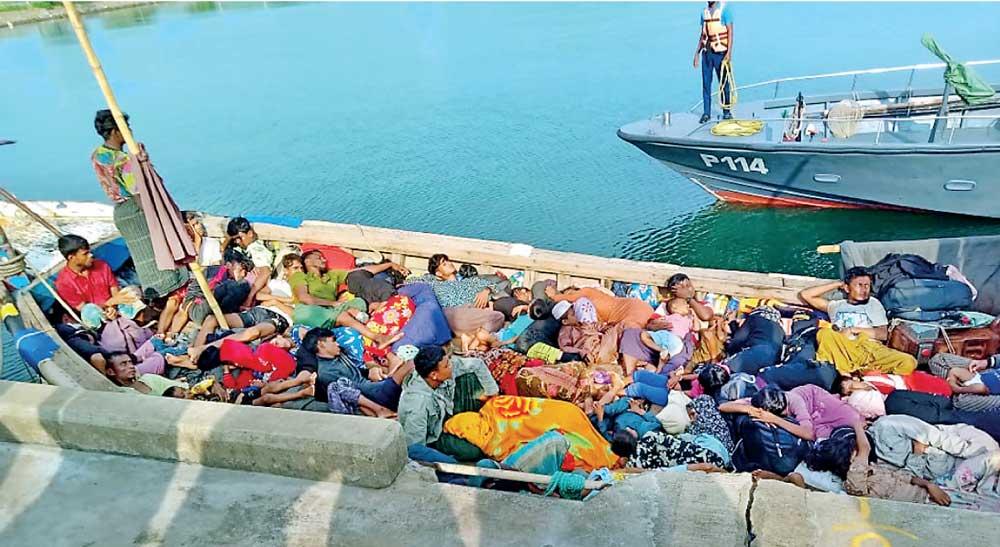
 Many of the Rohingya have been living as internally displaced in camps while others have gone to other countries as refugees.
Rohingyas are an ethnic community from Myanmar’s Rakhine province who have been facing severe persecution for decades. Myanmar’s government doesn’t accept them as citizens and hence, they are stateless. Many have been living as internally displaced in camps while others have gone to other countries as refugees. Bangladesh hosts most of the Rohingya refugees, numbering about one million. There are also Rohingya refugees in other countries. Sri Lanka has only hosted about 300 since 2008 and most have left Sri Lanka after receiving permanent resettlement in other countries. About 100 remain in Sri Lanka and they are also hoping to get permanent resettlement in other countries.
The latest group of Rohingyas to arrive in Sri Lanka was seen off the shores of Mullaitivu on 19th December 2024. They are estimated to be 116, including 57 children, many of whom are under the age of 5. They were taken to Trincomalee through the sea by the Navy and landed in Trincomalee on 20th December. They were presented before the Trincomalee Magistrate and are presently detained by the Department of Immigration and Emigration. They were kept in a school in Trincomalee for 3 days and since 23rd December, they have been detained in a high-security Air Force camp in Kepapulavu, Mullaitivu. Health officials have been allowed in, but other local government officials, local social workers and UNHCR personnel have been denied access. The Human Rights Commission was also denied access in violation of existing domestic laws and practices but was able to visit later after writing a letter to the President and summoning the Controller of Immigration and Emigration demanding an explanation.
Government’s position and criticism
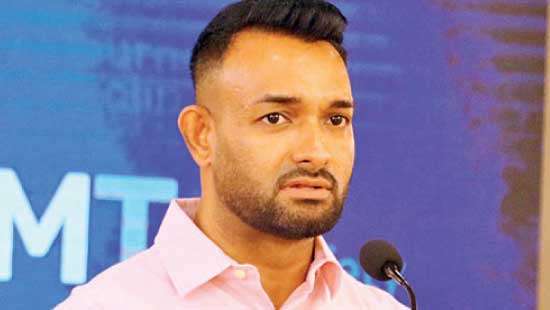
One of the first persons to visit the Rohingyas when they landed in Trincomalee was the Deputy Minister of Foreign Affairs and Trincomalee district Member of Parliament, Arun Hemachandra. He has been quoted in the media saying the Rohingyas will be treated according to national and international law. However, the Minister of Public Security was quoted in the media on 3rd January as saying that they may be deported to Myanmar and that the government had even shared details of the persons with the Myanmar government and was having discussions with them. On 9th January, the Minister was quoted in the media saying that according to investigations and intelligence information received as of then, it clearly shows that it is a human trafficking scandal and that they are not refugees.
The Minister’s statement had led to criticism and questioning, including by the Opposition leader and other opposition MPs. On 9th January 2025, The North East Coordinating Committee (NECC) together with civil society groups and residents from North and East held a protest outside the Mullaitivu district secretariat, calling on the Sri Lankan government not to deport Rohingyas and treat them in line with international law. They also pointed out that it’s better to keep the Rohingya under the supervision of civilian administration rather than in an Air Force camp. A few days later, the main organiser, from Mannar, was summoned to Colombo for questioning by the Human Trafficking and Maritime Crimes division of the Criminal Investigation Department (CID) of the Police. A protest was also held in Colombo on 10th January against deportation and detention in a military camp.
On 10th January, when the case was taken up at Trincomalee Magistrate Court, the police had asked for more time for investigations. Lawyers had requested access to the people being detained and the Magistrate had summoned officials from the Air Force and Immigration to the next hearing scheduled for 31st January 2024.
Rohingya’s testimonies
Journalists and human rights defenders have been denied access to the newly arrived Rohingyas since they were detained in the Air Force camp on 23rd December. This has resulted in those being detained not having the opportunity to tell their story and our country not having an opportunity to know their side of the story.
However, while the Rohingyas were in Trincomalee, local journalist Sanjeevan Thurainayagam published seven video testimonies (in the Rohingya language) on his Facebook and this author obtained English translations of these. Another local journalist, Amadoru Amarajeeva, had also published three quotes in articles he wrote for the “Lankadeepa” and “Sunday Times”.
Below are quotes from Rohingyas who came to Sri Lanka last month:
“The Burmese (Myanmar) government forces and other parties are fighting, but they are slaughtering and killing our families. Some have lost their parents, and others their siblings. Some of their fathers had survived but not their husbands. Due to such circumstances, we had to come here”.
“Clashes are going on between the armed groups (Arakan Army and Myanmar military) and dropping bombs by aerial strikes, killing several people. That’s why we had to flee our homeland”.
“The Moghs (Rakhines) have been burning our homes and persecuting us, and we can no longer tolerate it. We came to this place because we cannot protect our children”.
“As people are being killed one by one, we feel insecure about staying there”.
“Because of the threats to our lives from the nonstop bombings and destruction, we came here to save our lives”.
“The government burnt down all our villages in 2012 and carried out a genocide on us in 2017”.
“We have been living a life under persecution in Arakan. There was not any freedom and we were not allowed to go anywhere”.
“Communication links with his village had been cut off”.
“All have become refugees and are living in the camps. It has now been 12 years. The UN is no longer coming to help because of the fight going on between the government and the rebels. So many...over 150,000 people”.
“Nobody can access that place now. All the ways have been closed down. The UN agencies and the UNHCR were operating there before. From 2023, UNHCR or anyone can no longer go there. The cities have been shut down. From 2012 to 2023, UN agencies such as UNHCR and other agencies such as LWF could work to provide rations and benefits. They stopped providing us with rations in 2023. Since then, nobody has been able to access the place”.
“We held a meeting, decided to buy a boat by selling our lands, and then fled Myanmar”.
“We all sold our belongings and the jewellery of our women to make it here”.
“We had to pay both the government and the other party. We paid a total of 800 lakh Kyats; and 8 lakh Kyats for each individual. We used to possess some assets, some gold. We sold all those in the camp to gather money to make this journey”.
“We met storms in the ocean on the way here”.
“We don’t even know where God has brought us or where he will take us next”.
“They had no idea where they were headed but wanted to get to safety”.
“As we did not have anywhere else to go, we had to come here”.
“We came to Sri Lanka because we heard that the UN (UNHCR) is present here. We will go anywhere the UNHCR takes us to. We did not come to stay here.
“I heard that Sri Lankans are very merciful and generous, and because of that, we came seeking refuge in Sri Lanka. We are very grateful to them and pray for them”.
“They are treating us very well showing their sympathy and mercy on us. May Allah also have Mercy on them. They are taking care of us respectfully. They are giving us more than enough food”.
“12 from among us were taken to jail. They came here to save their lives just like us. They are not traffickers. Their family members are here. They all came with us. They are innocent people. They were a big help for us during the journey. We are weak people. We have little children with us. They helped us a lot and found easy ways for us. They are now separated from us. They cannot communicate with us now. Please request the authorities and release my brothers.
“Please try to help us in any way possible. Please have mercy on us, and God will have mercy on you”.
Refugees OR victims of trafficking?
The testimonies indicate they are asylum seekers fleeing a well-founded fear of persecution rather than those being trafficked or engaged in illegal migration. Fishermen in Mullaitivu who themselves had faced similar persecution during the war and had been the first to visit and assist the Rohingyas when their boat was still at sea, had understood them to be people fleeing persecution and seeking protection. They had pleaded with the Navy to bring them ashore and categorically stated that the government should take care of them.
Documents concerning the Genocide case filed by Gambia against Myanmar at the International Court of Justice, reports by the UN Human Rights Council’s Fact-Finding Mission, UN Human Rights Council’s Special Rapporteur on Myanmar and UN High Commissioner for Human Rights and numerous other international groups have found Rohingya to be stateless and facing serious persecution.
The Sri Lankan government needs to listen to the stories of Rohingyas, without rushing to popularise the narrative that the Rohingyas who came by boat are illegal migrants or victims of trafficking. The government should also allow citizens to listen to these stories, by allowing access to journalists and human rights defenders.
From a legal dimension, the Sri Lankan government should respect Article 14 of the Universal Declaration of Human Rights which guarantees everyone the right to seek asylum and the international customary law principle of “non-refoulment” prohibiting returning of those having a well-founded fear of persecution to their place of origin. The government should also provide “unimpeded access” to UNHCR as per the 2006 agreement between the government and UNHCR. And ensure that the procedure outlined concerning the asylum seekers in the 2006 terms of reference between the government and UNHCR is carried out.
The government could also learn from the Mullivaikkal and Trincomalee people’s sensitivity, kindness and willingness to welcome and help strangers fleeing persecution who have come into their shoes.