Reply To:
Name - Reply Comment
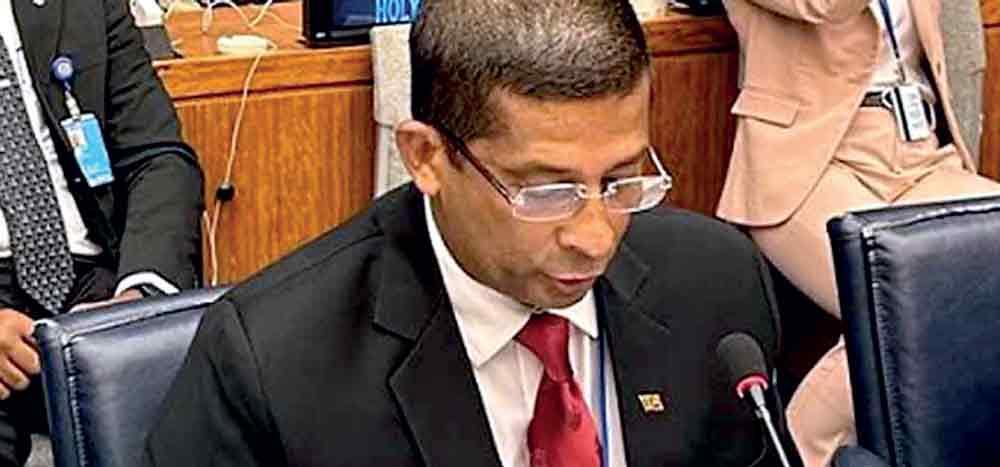
Maj. Gen. Salay’s case invites comparison with the 1962 abortive coup case because of familial concerns common to both
 From a 1962 Letter to a Modern Custody Controversy: Enduring Questions on Detention, Rights, and State Power
 A renewed debate over custodial treatment and due process has emerged in Sri Lanka following the detention of former State Intelligence Service (SIS) Director Major General (Retd) Suresh Sallay under the Prevention of Terrorism Act (PTA). Allegations raised by his family regarding his physical condition and treatment in custody, alongside the government’s position that the detention is lawful, have prompted an inquiry by the Human Rights Commission of Sri Lanka (HRCSL).
The controversy is further sharpened by the fact that the NPP/JVP government has repeatedly pledged, both before and after the elections, to repeal the PTA, a law it has long criticised. Critics, therefore, argue that the continued use of the Act sits uneasily with the government’s stated position on its necessity and legitimacy.
While the present controversy unfolds within the legal framework of contemporary Sri Lanka, it has also revived interest in a much earlier episode: a collective letter written in February 1962 by the wives of eight individuals detained in connection with the failed coup attempt against the government of the day. Taken together, the two episodes, separated by more than six decades, raise recurring questions about detention conditions, pre-trial rights, and the balance between national security and humane treatment in custody.
The 1962 Wives’ Letter: A Collective Appeal
On February 21, 1962, the wives of eight men detained since January 28 addressed a formal letter to N.Q. Dias, then Permanent Secretary to the Ministry of Defence and External Affairs. The detainees were held over allegations relating to an attempted conspiracy against the state.
Preserved in archival records of the J.R. Jayewardene Centre, the original letter provides a rare contemporaneous account of family concerns during a politically sensitive detention episode. The signatories stated they had been denied any opportunity to see or speak with their husbands since arrest, creating deep anxiety about their physical and mental condition. Their concerns focused not on the allegations but on detention conditions. They warned that continued deprivation of contact and normal social interaction “was bound to affect their sanity,” reflecting early awareness of the psychological impact of isolation.
The wives set out practical requests: access to prison library facilities, permission to practise religion, and provision of adequate clothing, food, medicine, and essentials. They also proposed that items could be supplied by families or purchased through prison funds. A central concern was solitary confinement. They described it as a severe punishment typically reserved for convicted prisoners, and argued it should not be imposed on those awaiting trial. They warned prolonged isolation could seriously affect the detainees’ mental stability.
The letter concluded with an appeal for humane consideration and was signed collectively by eight women, wives of senior Army, Police and Navy officers, Ms R. Abraham, Ms M. Loyola, Ms C.C. Dissanayake, Majorie Johnpillai, Dorothy Joseph, Joyce White, Ms. Van den Driesen, and Ms F. C. de Saram. Yet even within this national security context, the wives’ letter reflects that concerns about humane treatment and custodial conditions were already part of public consciousness.
The Sallay Detention and Renewed Scrutiny
In the present case, Suresh Sallay has been detained under the PTA during an ongoing investigation. His wife, Ms Manori Sallay, has written to the CID Director and IGP alleging severe physical weakness, emotional distress, and deteriorating health, reportedly linked to a hunger strike. She has requested urgent hospital transfer and an independent medical board. Her complaints also include restricted sanitation access at night, inadequate food, limited medical care, restricted family visits, and alleged breaches of attorney-client confidentiality.
Following deterioration in his condition, Sallay was admitted to the Emergency Treatment Unit of the National Hospital.
Government Response and Legal Position
Deputy Minister of Public Security Sunil Watagala defended the detention, stating that Major General (Retd.) Suresh Sallay was held strictly under provisions of the Prevention of Terrorism Act (PTA) and that there had been no political interference in the process. He maintained that the actions of law enforcement were fully within the legal framework, adding, “It is legal and only imposing provisions of an Act.” The government’s position, therefore, rests primarily on the legality of the detention itself rather than on the conditions under which the detainee is held or the allegations raised regarding custodial treatment.
In parallel, the Human Rights Commission of Sri Lanka (HRCSL) has initiated a formal inquiry into the circumstances surrounding the detention. As part of its investigation, the Commission has recorded statements from Sallay, interviewed other detainees held in adjacent cells, and summoned officers of the Criminal Investigation Department (CID) for clarification. This process underscores the continuing role of independent oversight bodies in examining custodial practices, particularly where concerns of possible rights violations, due process breaches, or inadequate treatment of detainees are raised during ongoing investigations.
Despite the differing legal frameworks and political contexts, notable parallels emerge between the current case and earlier historical episodes. In both situations, families of detainees have expressed concerns that extend beyond the underlying allegations, focusing instead on the manner in which individuals are treated while in state custody. These concerns commonly include prolonged isolation, restricted access to family communication, limitations on basic amenities, and broader anxieties regarding the physical and psychological well-being of those detained.
The 1962 letter from the wives of coup suspects explicitly warned of the mental strain caused by isolation and deprivation of normal contact. Similarly, the present allegations surrounding Sallay highlight concerns of deteriorating health and restrictive custodial conditions affecting both physical and emotional stability.
At the same time, significant differences exist in the legal and institutional environment. Contemporary detention practices operate within a more developed framework of constitutional safeguards, human rights norms, and procedural oversight. Mechanisms such as access to legal counsel, judicial review of detention, medical monitoring, and independent complaint procedures now form part of the broader system intended to regulate custodial authority and prevent abuse.
Conclusion
The comparison between the 1962 wives’ letter and the present detention controversy is not intended to suggest equivalence between the two cases, but rather to highlight a continuity of concern across very different political and legal eras. In both instances, the central issue is how the state exercises its custodial authority over individuals who have not yet been convicted of any offence.
The 1962 letter represents an early and striking articulation of anxieties surrounding isolation, family separation, and the psychological impact of detention. The current debate involving Maj. Gen. Suresh Sallay indicates that similar questions continue to surface in public discourse today. Ultimately, it underscores that the rule of law is measured not only by whether detention is legally authorised, but also by the extent to which it is implemented with respect for human dignity and humane treatment. [Comparison was adapted from the work titled “Bloodshed ’62: Aborted or Abandoned? …,” authored by the writer.]