 MOHAMED AYUB
 Reply To:
Name - Reply Comment
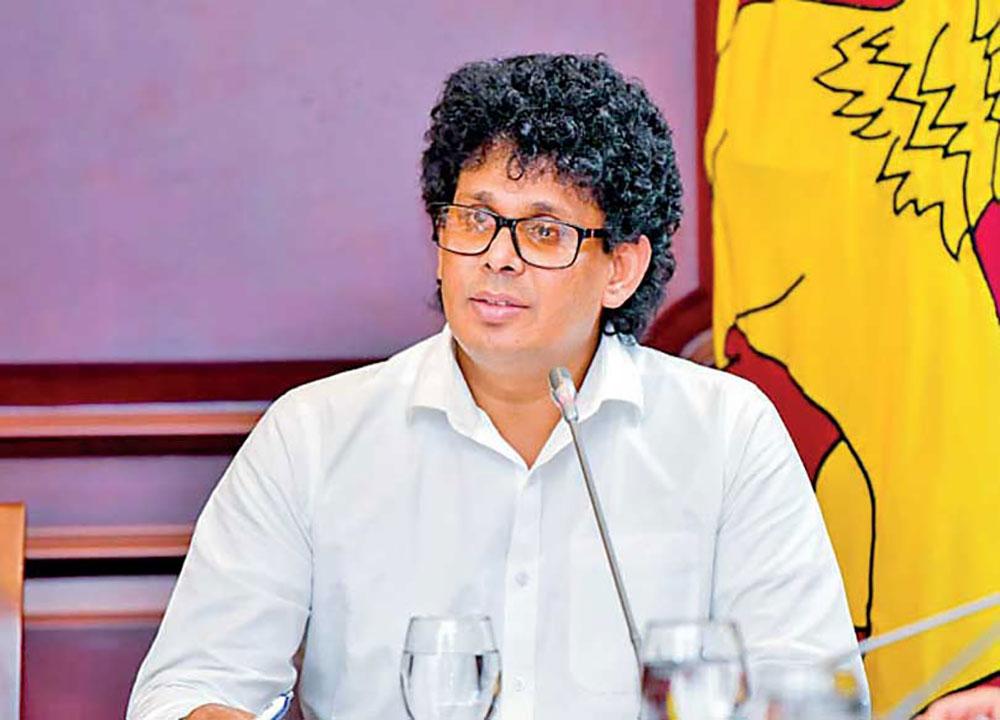
Minister Wasantha Samarasinghe says much of his wealth is inherited
Hence, only those who do not know this history would blame the JVP for having wealthy people in its ranks
Has the Janatha Vimukthi Peramuna (JVP), the core constituent of the ruling National People’s Power (NPP), lost its credentials as a party of the poor, due to the declaration of assets submitted by some of its leaders to the Commission to investigate Allegations of Bribery or Corruption (CIABOC)?
Trade, Commerce, Food Security and Cooperative Development Minister Wasantha Samarasinghe’s declaration of assets which has been published in the website of the CIABOC indicate his net wealth to be Rs. 275 million.
Opposition parties claim that the JVP has lost its credentials, arguing that a “proletarian” party such as the JVP claims itself to be, cannot have leaders with such wealth, whereas the NPP and the JVP are adamant in justifying Samarasinghe’s wealth, contending that it is a rare case.
Providing more fodder for the Opposition politicians a video is being circulated in social media where Samarasinghe says that he, as the other full-time activists of the party, was also being supported by members of the party, and that they sometimes help him with a few kilos of rice or a stack of bananas. Opposition politicians question how ethical is it for a wealthy politician to accept such support from poor members of the Party.
The declarations of assets submitted by JVP leaders such as Foreign Affairs Minister Vijitha Herath and the Deputy Minister of Vocational Education Nalin Hewage have also been questioned by Opposition politicians.
An interesting point here is that these details of assets owned by JVP leaders were not exposures by the Opposition parties or the media; rather, they have been declared to the CIABOC by the respective JVP leaders themselves. And Samarasinghe claims that he inherited most of his wealth from his parents, and the rest consists of improvements on what he inherited, as well as his own earnings. Interestingly, nobody contested his claims.
He said although the Opposition parties make a big fuss over his wealth now, most of the items in his declaration of assets had been included in his previous declarations as well, which he had submitted during each general election he contested since 2010.
Sometimes back, NPP/JVP leader Anura Kumara Dissanayake also stated during a televised interview that there were wealthy people such as Samarasinghe and Vijitha Herath in his party, explaining that Samarasinghe’s family owns a large area of land in Thambuththegama, as does the family of Herath’s wife in Narahenpita in Colombo. He stated that even the land where the Abhayaramaya Temple is situated in Narahenpita had been donated by the family of Herath’s wife.
Deputy Minister Hewage told media that a portion of the Rs 2.2 million in his bank account was received by his daughter during a ceremony, without revealing the exact amount so received.
The Opposition seems to be harming its credibility by generalising its reproaches against individual members of the NPP. When former Speaker Asoka Ranwala failed to prove that the doctorate that he claimed to have was genuine, leaders of the Opposition accused the NPP as a whole were a bunch of fake scholars. They lamented that foreign investors were leaving Sri Lanka when Adani Group of India withdrew from the wind power project in Mannar. Similarly, when one of several factories of the NEXT Garment company was closed down in May due to unprofitability for the past few years, they portrayed it as a string of garment factories being closed down under the NPP administration.
Now, they generalise the assets issue as well, generally calling the NPP leaders rich politicians. It is true that a few wealthy individuals have always been in the JVP since its inception. For instance, former JVP Parliamentarian Vijitha Ranaweera who was elected at the 2004 general election was a staunch supporter of the party even before the 1971 insurrection. He was a “Walawwe Hamu” and was chairman of the Salt Corporation when he was arrested following the 1971 insurrection. A sawmill owner had given the upper floor of his sawmill at Armour Street in Colombo to the JVP in 1977 to be used as the party’s head office. Lionel Bopage, the former General Secretary of the JVP had written a separate article for the Colombo Telegraph website in 2020 on the propertied members and supporters of the JVP of his time.
In fact, the leaders of socialist parties in many countries were propertied. Karl Marx was the son of a lawyer in Prussia who owned a number of vineyards. His closest friend and collaborator in politics, Friedrich Engels, was the son of Textile factory owner, and he too, engaged in businesses. The entire Marxist theory and philosophy was developed by the duo.
Lenin who brought down the Tsarist administration in Russia in 1917 and established the first socialist state in the world was a law graduate, and his mother was a wealthy woman. His father was appointed the director of education in a Russian province, and 450 schools functioned under him. Mao Tse-Tung (later called Mao Zedong) who transformed feudal China into a world power through a socialist revolution in 1949 was a wealthy farmer’s son. Fidel Castro of Cuba was a lawyer, and his father was a rich farmer. Ernesto ‘Che’ Guevara hailed from an affluent family.
Locally, almost all pioneers of Sri Lanka’s leftist movement such as Philip Gunawardena, Dr. N. M. Perera. Dr. Colvin R. de Silva and Dr. S.A. Wickremasinghe were all affluent people who had the financial capacity to obtain foreign education in the 1930s. The reason is that for leftist leaders in almost all countries hailing from the wealthy or the middle class, Marxism, the doctrine of poor man’s politics, is a deep-rooted subject which requires someone to have a background knowledge to grasp it. And that knowledge or education in turn requires financial wherewithal.
Hence, only those who do not know this history would blame the JVP for having wealthy people in its ranks. Yet, Wasanatha Samarasinghe receiving support from ordinary members and supporters of the JVP definitely raises ethical issues. Similarly, his having cryptocurrency in his possession as he has declared, is another ethical issue he has to address, as Central Bank Governor Dr. Nandalal Weerasinghe had stated that such currency would lead to money laundering. Also, Deputy Minister Hewage must convince the people that his daughter received gifts in hundreds of thousands of rupees.
However, anybody would be at a loss to see some politicians who justified corruption running into billions of rupees during successive governments in the past attempting to create a mountain out of a molehill – the case of Samarasinghe receiving a bunch of bananas from a poor supporter.