Reply To:
Name - Reply Comment
The case against certain prison officials including the Prisons Commissioner General for allegedly releasing prisoners illegally in the guise of a presidential pardon is not merely a corruption case, it is a matter of paramount importance as it concerns rights of the judiciary.
Nobody has the right to deliver judgements on the proceedings of a court that investigates a matter. It is a fact well-known especially to the lawyers, Parliamentarians and journalists making public statements on subjects that are under scrutiny of a court is illegal and unethical. Sometimes it would amount to contempt of court.
This bar imposed on the outsiders of the court is called in law “sub judice,” a Latin term meaning “under a judge”, or a particular case or matter is under trial or being considered by a judge or court. It is not preferable, if not a breach of Standing Orders of the Parliament, to discuss such matters even in the House. In some cases the Speakers of the Parliament have ordered to expunge such comments from the Hansard.
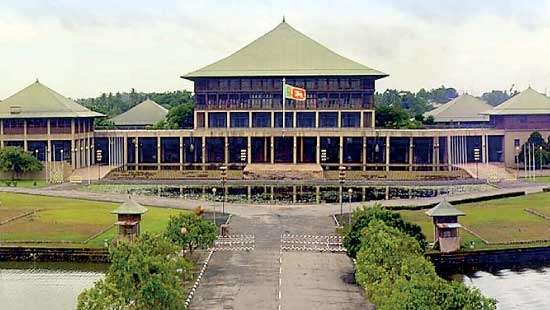
However, recently some sitting and former parliamentarians were on record as making judgmental remarks over the alleged illegal release of prisoners by prison officials. We are not going to contest the veracity of what they stated, as that would run counter to our purpose. Nor do we want to delve into the purpose or reasons of those politicians making such statements that clearly amount to “sub judice.”They can intervene in the case through a motion and express their views on the matter before the judge, if they are of the view that their interests or that of the people are involved in it.
Demeaning of the judiciary by politicians has become so frequent that people do not seem to take them seriously. Sometimes, motivation to belittle the judiciary and similar august institutions comes from the highest levels of society.
It must be recalled that Sri Lanka Podujana Peramuna(SLPP) MP, Attorney Premnath C. Dolawatte raised a matter of privilege in Parliament on 7 March against three Supreme Court judges after they issued an interim order on March 3 on the Secretary to the Ministry of Finance, preventing him from withholding the funds allocated through the 2023 Budget for the local government elections.
Later it was reported that the three judges were to be summoned before the Parliamentary Committee on Ethics and Privileges. It was not a secret who was behind the move then. Those attempts were later rolled back following opposition from various sections.
In the same year, another MP of the same party (the SLPP) made an inflammatory speech in Parliament, referring to a Magistrate repeatedly as “a mentally ill person.” President Ranil Wickremesinghe, on June 18 last year, making a statement in Parliament regarding the Supreme Court determination of the Gender Equality Bill, proposed to appoint a Parliamentary select committee to review the determination. He also criticised the Supreme Court saying that it is in a way engaged in judicial cannibalism.
Sri Lanka has a notorious history of politicians threatening and discrediting the judiciary. This is a country where commissions were appointed for the wholesale annulment of court cases. As far back as the nineteen eighties, goons who demonstrated outside the residences of three Supreme Court judges hurled stones at them shortly after they ruled that the arrest of veteran politicians Vivienne Goonerwardene and her husband Leslie was wrongful. The leaders of the ruling UNP then called the demonstration a democratic protest.
It was during the same period that provisions were brought in for allegations against apex court judges under impeachment processes to be investigated by a Parliamentary select committee dominated by the ruling party. That procedure still stands and was applied to impeach the 43rdChief Justice of Sri Lanka Dr. Shirani Bandaranayake in 2013, during Mahinda Rajapaksa administration.
If the esteem of the judges and courts is eroded, the entire judicial administration too would run into discredit which ultimately would lead to people losing faith in the judicial system and taking the law unto their hands. The recent warning by Director General of the Commission to investigate Allegations of Bribery and Corruption (CIABOC) Ranga Dissanayake to take legal action against those politicians who call litigations by his commission as political vengeance has to be understood accordingly.
‘Your Thought’ is a space, a right of the readers to support or contradict and discuss the issues highlighted in the editorial and other articles in the editorial and op-ed pages. Designed as the reader’s editorial; our readers can send in their writings, with a word count not exceeding 200, to ‘Your Thought’, Daily Mirror Political Features Desk, No 8, Hunupitiya Cross Road, Colombo 2 or email to [email protected]