Reply To:
Name - Reply Comment
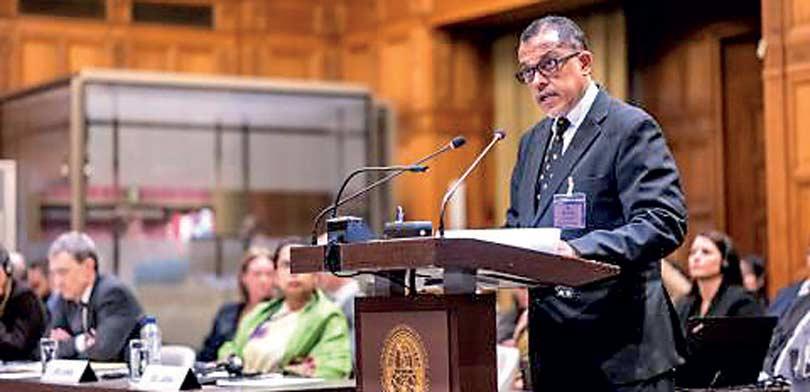
Attorney General Parinda Ranasinghe has correctly noted his decisions remain subject to judicial review
 When Minister of Justice Harshana Nanayakkara recently felt compelled to clarify that no cabinet discussions have taken place regarding the removal of the current Attorney General, it was a telling moment. The very need for such a statement reveals how precarious institutional independence has become in Sri Lanka. What should be unthinkable -- political interference with the nation’s chief legal officer -- has become so routine that ministers must publicly deny it.
The controversy is not occurring in isolation. In January 2026, silent protests materialised outside courts and the Attorney General’s Department, with groups demanding the removal of Attorney General Parinda Ranasinghe over allegations of corruption and bias. The opposition counters that the government is orchestrating a coordinated pressure campaign to compromise his office’s independence. When the Bar Association — the guardian of legal professional standards, expresses concern over possible interference, the matter transcends ordinary political disputes.
A Troubling Pattern Emerges
Professor G.L. Peiris has urged viewing these developments in a broader context: delays in appointing the Auditor General, controversies over judicial promotions, and questionable appointment processes. President Dissanayake appointed 18 High Court judges, including D.M.D.C. Bandara, Senior Assistant Secretary of the Judicial Service Commission. Questions arose about whether proper consultation occurred with the Chief Justice regarding these appointments.
The historical irony is sharp. In 2012-13, the JVP stood firm in defending Chief Justice Shirani Bandaranayake when the Mahinda Rajapaksa government targeted her for political reasons, launching a vilification campaign before wrongfully impeaching her. Today, the JVP-led NPP government faces similar accusations of attempting to oust a state prosecutor through social media attacks and public pressure. This pattern is not new to Sri Lankan politics. While the Attorney General has stated his decisions remain open to judicial review, properly affirming accountability within legal frameworks, the question remains whether institutional processes will be respected or circumvented through political pressure.
Lessons Written in Our Own History
The Attorney General’s Department, established in 1884, was designed as an independent pillar of legal governance. History shows what happens when this independence crumbles.
Consider the 1965-70 period under Dudley Senanayake’s government. Attorney General Victor Tennakoon refused to prosecute Dr. Mackie Ratwatte, finding no prima facie case. He was promptly removed and elevated to the Supreme Court, a classic instance of being “kicked upstairs.” His replacement proceeded with the politically motivated prosecution, which a District Court dismissed at the first hearing without even calling for defense. The message was clear: independent legal judgement was unwelcome.
Felix Dias Bandaranaike’s tenure as Minister of Justice during 1970-77 saw interference becoming systematic. The manipulation of the legal system grew so egregious that it inspired filmmaker Gamini Fonseka to produce “Sagarayak Meda”—a cultural monument to public revulsion at judicial corruption.
J.R. Jayewardene, architect of the executive presidency, violated long-standing norms in 1980 by allowing the Attorney General to engage in private practice. This compromised the financial independence and exclusive public service dedication that had protected the office’s integrity.
But perhaps the most structurally damaging intervention came under Mahinda Rajapaksa, who brought the Attorney General’s Department directly under his purview. This demolished the separation of powers, making the chief legal advisor subordinate to executive authority. When legal oversight becomes executive control, the rule of law transforms into the rule of power. These aren’t isolated incidents from a distant past. Revelations from former officials about political pressure in sensitive cases suggest such interference has become woven into how politics and law interact in Sri Lanka—systemic rather than exceptional.
Why This Matters Beyond Politics
When the Attorney General can be pressured based on political considerations, law stops applying equally. The powerful evade accountability; the politically inconvenient face selective prosecution. This isn’t justice; it’s power masquerading as law. An independent legal system protects governments from their own worst impulses. It prevents actions that may be politically expedient but legally disastrous. Without this check, temporary majorities can inflict permanent constitutional damage.
Investors require predictable, impartial legal systems. When businesses cannot trust that contracts will be enforced fairly or that legal proceedings will be conducted without political interference, they invest elsewhere. Sri Lanka’s poor performance on rule of law indices directly translates to lost economic opportunities and foregone jobs. Independent courts and prosecutors are citizens’ ultimate defense against arbitrary state power. When these institutions become political instruments, individual rights become negotiable commodities rather than inviolable principles.
Governance requires more than electoral mandates, it demands constructive engagement with professional bodies and civil society. The Bar Association’s institutional role in safeguarding the rule of law makes its concerns particularly significant. When legal professionals collectively raise questions about institutional integrity, they’re signalling deeper problems in how justice is administered.
Public confidence in governance correlates directly with perceptions of independence and due process. While the Attorney General’s Department undeniably faces legitimate challenges, case backlogs, institutional deficiencies accumulated over decades, and need for structural reform, the method of addressing these problems matters profoundly. Pressure campaigns and social media vilification undermine the very independence required for genuine institutional improvement.
Conclusion -- Clear-eyed commitment to several principles.
Institutional Channels: Concerns about judicial or prosecutorial conduct must flow through established legal and institutional mechanisms. Protests, social media attacks, and political pressure campaigns, regardless of their source subvert the procedural integrity necessary for institutional stability and public trust.
Constitutional Safeguards: Sri Lanka needs stronger structural protections for the Attorney General’s Department, with clearer separation between political and legal governmental functions. The practice of placing this office under ministerial control must be permanently reversed.
Merit-Based Appointments: Transparent processes emphasising professional competence over political loyalty must govern appointments to legal institutions. The recurring pattern of political allies from private practice bypassing qualified career prosecutors should be constrained through clear criteria and independent review.
Cultural Transformation: Perhaps most challenging, we need political leaders who recognise that institutional manipulation for short-term advantage destroys long-term democratic health. We need citizens who demand accountability from their own political champions when they abuse institutional independence, not just from opponents.
The Attorney General’s Department and broader judicial system serve functions essential to democracy itself. When politicians treat these institutions as tools to be manipulated for political convenience, they don’t just damage specific offices, they corrode the foundational principles of democratic governance.
Minister Nanayakkara’s clarification is welcome but insufficient. What Sri Lanka requires is national commitment transcending party boundaries to rebuild genuine respect for institutional independence. Without this, we’re condemned to endless cycles of institutional crises, eroded public confidence, and rule of law that remains aspiration rather than reality. The Attorney General has correctly noted his decisions remain subject to judicial review. This points toward the answer: accountability through proper legal frameworks, not political pressure. Whether regarding case handling, appointment processes, or institutional reform, the path forward must respect established legal channels.
Sri Lanka faces a choice: continue the familiar pattern of institutional manipulation that has characterised our political history, or finally learn from decades of damage and build a system where justice operates independently, law applies equally to all, and the powerful face the same standards as ordinary citizens.
Our future as a functioning democracy depends entirely on which path we choose. The time for that choice is now.