Reply To:
Name - Reply Comment
 Hence this NPP regime has the potential to tap the youth votes and appeal to an ambitious audience. But this regime must be cautious about the use of AI because this tool can be misused
Premadasa and Wijeweera were quite different in their approach to gaining power. They both used roughhouse tactics
Even with regard to Dissanayake, there was an overwhelming peoples’ support for him, despite him not having served for very long in a ministerial position
The only little drawback for this regime is that delivering on promises is slow. Other than that this regime has scored heavily on reducing corruption and bringing crooks to book
 Just the other day, this writer read somewhere in the social media a fantastic saying, ‘Earlier weapons were manufactured to fight wars. Now wars are manufactured to sell weapons’. A saying like this goes on to underscore the need to have strong advertising and propaganda ‘arms’ to convince people, when they become voters.
It’s amazing how our politicians have influenced the thinking of people. This is why we reiterate time and time again that advertising is acceptable, but not necessarily all what takes place in the name of propaganda. Unemployment is a potential area to work in and garner votes when an election is just around the corner. We remember one politician who did the rounds during an election and promised many luxury items to farmers to make them look modern (mod goviyas). But nothing worked for this lawmaker who suffered a string of political defeats, back then.
|
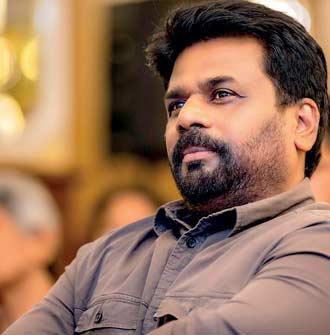
President Anura Kumara Dissanayake |
Advertising here in Sri Lanka plays the godfather’s role quite easily. And when the advertising companies start their propaganda machines, their paymasters know that there is money for jam. Remember Gotabaya Rajapaksa and how he set about his election campaign when running for president? He came with no political background, sans even an invitation from the party he eventually represented, and ambitiously started his presidential campaign. By the time the election was to be held, he had enough votes to emerge the victor. It was all propaganda! It was a classic case of promoting a hero who turned out to have clay feet.
The next president elected by the people was Anura Kumara Dissanayake. Even with regard to Dissanayake, there was an overwhelming peoples’ support for him, despite him not having served for very long in a ministerial position.
If we remember right, he held the portfolio of Agriculture minister in 2004/5. People believed in his speeches and the aggressive approach to politics. There was no working track record for Dissanayake other than for his association with that institute, but people went by ‘what I would do if I came to power’ slogan. And there was one catch phrase of Dissanayake that opened the ‘eyes’ of the general public. He often said ‘Just think for a moment’ (poddak hithala balanna) and he used the Sinhala language to say this; largely for its ‘effectiveness’. No other politician before him told us to ‘think’.
Now, it’s the third generation after independence that is working and holding top posts in the corporate and state sectors. This is a generation that uses hi tech appliances and are focused on the advances made in the use of goods and services through digitalization. This new regime has harped on the fact that it is serious about its digitalization drive. Hence this NPP regime has the potential to tap the youth votes and appeal to an ambitious audience. But this regime must be cautious about the use of AI because this tool can be misused. Brand names in politics must be made using what’s real. One must cautiously tread the grounds when AI is used for propaganda and advertising. This is because this is a country which has a recorded history of over 2500 years. Nothing from this rich past must be distorted in the haste of promoting an individual whose ancestors have deep roots in Sri Lankan politics.
The only little drawback for this regime is that delivering on promises is slow. Other than that this regime has scored heavily on reducing corruption and bringing crooks to book.
We remember political figures like Rohana Wijeweera, Vijaya Kumarathunga and Ranasinghe Premadasa, the latter being the second executive president of Sri Lanka. Though the digital era had not even begun at that time, these individuals had their own mechanisms to reach the public. Vijaya was a hero in the silver screen, hence his mode of communication of making a link with the public was cinematography. When he went to Jaffna in 1986 to have a dialog with the tiger rebels, he received more than a warm welcome because of cinema fame and inbuilt charisma. Vijaya could carry his personality where ever he went. He also believed in a peaceful and democratic way of assuming power.
Premadasa and Wijeweera were quite different in their approach to gaining power. They both used roughhouse tactics. When propaganda machines were at work during their times, bad prevailed over good. The poster put in favour of Premadasa and reading ‘Meh kawuda, monawada karanne’ translated into English read ‘who is he and what is he doing’. The naïve people would believe back then that it was about an ambitious project by a politician aimed at making the lives of the people better. A cold shiver ran along the spines of those who knew the underhand tactics of Premadasa. He never gave an inch to his political opponents and used both ethical and unethical means to secure power and cement his position in politics.
Wijeweera initiated his terror campaign in the 1980s, knowing very well that the Premadasa regime at that time was engaged in a fully-blown civil war. His ‘five classes’ was hit a programme. The content fed to participants had convincing power; often changing a passive participant at a rally to soon clench his fists and scream for his demands. In the ‘propaganda war’ Premadasa was king.
This present regime must take a cue from them. The NPP led government started its tenure by issuing hand-outs to media, akin to how it is done in China. But when delivery on promises is slow and people’s patience is running thin, a government must highlight through the media even the slightest of achievement. Mahinda Rajapaksa was a master at this. Remember how he got a top mobile phone service provider to send SMS to customers when every time a tiger rebel-held town fell to the advancing soldiers?
The senior citizens of this country have seen this country from post-independence, to the civil war and now a peaceful existence. When life is normal- sans the troubles of a war- it has its dangers because people can be caught napping when propaganda is at work. The Local Government elections are around the corner and nomination dates have been made public. We must be able to read in between the lines when browsing through propaganda and advertising material and then vote wisely! This is because there is a very thin divide between advertising and propaganda.