Reply To:
Name - Reply Comment
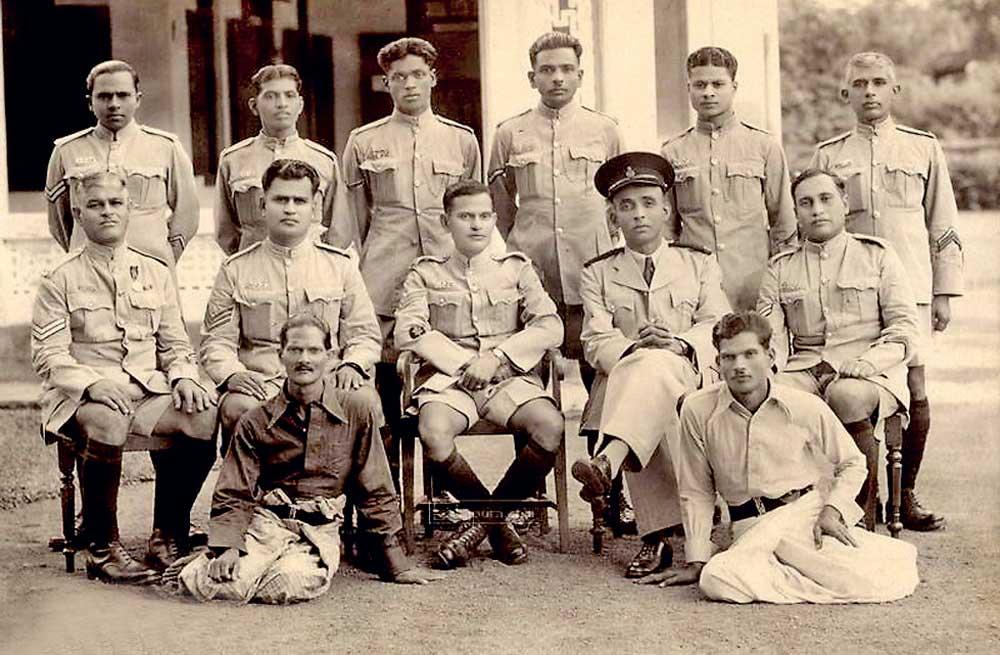
Image credit: Lankapura.com
Police now have better unforms but need to be depoliticised
 He joined the police force as a constable. While serving, he sat for his Advanced Level examination and earned promotion to Sub Inspector grade, subsequently gaining selection to the Law Faculty at university, and obtained his LL.B. degree. Promoted to ASP rank, he continued pursuing higher post graduate education, developing into a disciplined and exemplary police officer.
Sri Lankan policing history has witnessed several remarkable firsts in recent times. For the first time ever, both an interdicted Inspector General of Police (IGP) and an acting IGP have served simultaneously—a situation unprecedented in the country’s law enforcement history. In another groundbreaking development, Parliament exercised its power to vote for the removal of an IGP, marking the first instance of such democratic intervention in police leadership.
Perhaps most inspiring is the rise of a police officer who began at the lowest rank and climbed through every level to reach the pinnacle as IGP—a testament to merit-based advancement and a beacon of hope for career progression within the force. When someone enters an institution at its most junior level and ascends to its highest echelons, this is no mere coincidence. It represents the culmination of extraordinary dedication and an unwavering chain of determined effort coming to fruition.
Historical Precedents of External Appointments
This recent emphasis on internal promotion stands in stark contrast to earlier practices. June 1, 1947, marked a significant moment in Ceylon’s history. Prime Minister D. S. Senanayake appointed his friend Richard Aluvihare as IGP—a civil servant with military experience but an outsider to the police hierarchy. Nearly a decade later, in 1957, Prime Minister S.W.R.D. Bandaranaike faced a unique challenge: unable to identify a senior Sinhala Buddhist officer within the existing police leadership structure, he controversially appointed M.F.W. Abeykoon, another external candidate, as IGP.
Bandaranaike’s decision sparked significant unrest and dissatisfaction within the police ranks, as officers who had dedicated their careers to the force watched leadership positions go to outsiders. Ultimately, the DIGs presented a unified counter-proposal to the Prime Minister: they would prefer to serve under Stanley Senanayake, a young Superintendent of Police who was the most senior Buddhist officer in the service, despite his junior rank relative to all of them. They argued this internal appointment would preserve institutional integrity better than bringing in an outsider with no police experience.
The Birth of Modern Policing in Ceylon: A Colonial Legacy
The Dutch established Sri Lanka’s first organised police infrastructure, creating three strategically positioned stations that laid the groundwork for all future law enforcement systems.
The Dutch placed their stations with careful consideration for both security and commerce. The first station guarded Colombo Fort’s north gate, protecting the colonial administrative centre. The second was positioned along the crucial Fort-Pettah road, monitoring the vital link between the fortified headquarters and the commercial district. The third station operated near Pettah’s Cayman Gate, maintaining order in the bustling marketplace.
The Governor of Bombay Province recommended a seasoned administrator: G.W.R. Campbell, who was then successfully heading the police force in Ratnagiri, a coastal district known for its complex administrative challenges. On September 3, 1866, Campbell was appointed as Chief Superintendent of Police for Ceylon—Just one year later, in 1867, administration formalised Campbell’s enhanced authority by changing his title to “Inspector General of Police (IGP)”—a designation that carried greater prestige and clearer hierarchical authority. This moment marked not just a change in nomenclature, but the official birth of Ceylon’s modern police service as we know it today.
The 1906 Murder Case: A Controversial Investigation
The December 5, 1906 murder investigation revealed police creating two contradictory versions of events, sparking numerous allegations about mishandled evidence and prosecution. IGP Dowbiggin appeared to have a personal vendetta against John Kotelawala Sr., the third accused and father of future Prime Minister Sir John Kotelawala.
Kotelawala had antagonised authorities by organising a carters’ strike and testifying against corrupt police officers who demanded bribes. He was brother-in-law to victim Francis Attygalle, whose sisters married FR Senanayake and TG Jayewardene (JRJ’s uncle). Facing an all-white jury and flimsy evidence designed to entrap him, Kotelawala fell into despair. On the trial’s fourth day, feeling hopeless about his chances, he committed suicide in jail. His final letter denied guilt, blaming police persecution under Dowbiggin. Despite these controversies, Dowbiggin became Ceylon’s eighth British IGP at age 33, serving 24 years from 1913. He later authorised draconian measures during the 1915 riots, including summary executions.
Across all eras and civilizations, leaders have consistently sought to place their chosen allies in crucial positions within government administration. This enduring phenomenon demonstrates the universal inclination of those in power to build networks of trusted confidants who occupy strategic roles in the bureaucratic machinery.
Such appointments serve multiple purposes for political leaders. By installing loyal supporters in key administrative positions, rulers create a reliable framework for executing their policies and maintaining institutional control. These trusted appointees become extensions of the leader’s authority, ensuring that governmental objectives are pursued with dedication and minimal resistance.
The Double-Edged Nature of Political Appointments
While this practice offers clear advantages in terms of policy implementation and administrative cohesion, it simultaneously generates significant risks. The prioritisation of personal loyalty over professional merit can undermine institutional competence and public trust. When political allegiance becomes the primary qualification for senior positions, the result often manifests as compromised decision-making, reduced accountability, and erosion of public service standards.
This tension between political expediency and administrative excellence remains one of governance’s most persistent challenges, affecting the quality and credibility of public institutions across different political systems and historical periods.
Inspector General Priyantha Weerasuriya has identified politicians supporting underworld figures and promised legal action. While targeting corrupt politicians is important, he must first address corrupt colleagues and politically aligned senior officers within his own ranks. We welcome these promises but expect action, not “NATO” (No Action, Talk Only).
Historical Political-Criminal Alliance
Since 1977, governments have used criminal gangs for political work. Jayewardene employed convicted rapist Gonawala Sunil after a presidential pardon. Kumaratunga appointed contract killer Beddegana Sanjeewa as a reserve Sub Inspector. During Rajapaksa’s rule, police remained passive as SLPP-aligned groups attacked peaceful Aragalaya protesters in 2022, leading to retaliatory arson attacks on approximately 80 homes belonging to SLPP members.
All major parties—UNP, SLFP—have employed criminals for assassinations, election rigging, and attacks on democracy, showing no remorse for past crimes. Weerasooriya joined the police force as a constable in 1988 at age 19, and survived the T/56 attacks by DJV, [arm of JVP in 88/89 which gunned down several cops in broad day-light], to serve in the Special Task Force, traffic, and crime divisions during the time. IGP Weerasooriya has correctly prioritised removing corrupt officers, with several already dismissed and prosecuted. However, his success depends on depoliticising a police force filled with officers willing to serve political masters rather than uphold the law. Success hinges on dismantling political subservience within police ranks. This requires removing officers who prioritise political loyalty over professional duty. Only by ending this culture of institutional servility can the police force restore independence and credibility as an impartial law enforcement agency.
[email protected]