Reply To:
Name - Reply Comment
 The history of policing in Sri Lanka dates back to the 17th century when the Dutch introduced paid guards in 1659, the first official policemen. After the British took control in 1796, the military briefly maintained order for few years, when the role of ‘Fiscal’ was reinstated. A clearly defined police service emerged in the 1910s.
In 1866, G.W.R. Campbell was appointed by Governor Frederick North as Chief Superintendent of Police, overseeing the Police Force in Ceylon. This date, September 3, 1866, is considered the beginning of the Sri Lanka Police Service. The post was upgraded to Inspector-General of Police in 1867. However, by the 1870s, the service began to decline. In 1870, an attack on the Police Headquarters in Maradana by an unruly gang and rising crime highlighted the inefficiency of the police, becoming a growing concern.
|
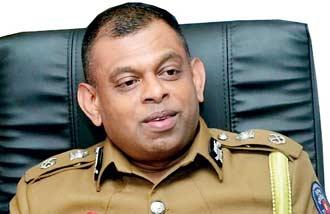
Deshabandu Tennakoon |
‘Crime and Police Commission of 1888…
“… Inefficiency of Police may in some degree contribute to the prevalence of crime and in view of this possibility, … I obtain the services of some Indian officials… to inquire into and report on the working of the Police Department”—Sir Arthur Gordon—Governor: -- AC Dep, ex DIG
Frequent clashes among different racial and religious factions became a common occurrence. In many cases, senior police officers displayed favouritism in their actions, while junior officers were influenced by leaders of these groups.
Dowbiggin: The longest survived Controversial IGP
One of the earliest gruesome murders in Ceylon was the Attygalle murder in 1906, which led Superintendent of Police Herbert Dowbiggin to personally investigate the incident. The police produced conflicting versions of the crime, raising suspicions of manipulation. Dowbiggin had a personal vendetta against John Kotelawala [Snr]-ex police inspector, the third accused and victim’s brother-in-law, due to Kotelawala’s earlier actions, including a carters’ strike and exposing police corruption. Sir Herbert Layard Dowbiggin known as the ‘Father of Colonial Police’ was the son of Rev. Richard Thomas Dowbiggin, a Sinhalese scholar who translated the Bible into Sinhala.
During the trial, Kotelawala, fearing an unfair trial, took his own life, leading some to accuse Dowbiggin of poisoning him.
Excerpts from a letter to his wife, ‘My dear wife,
I write this to bid you and others good bye. The case against me was strong, though I have not instigated anyone to murder Francis…. I see I have no chance of escape, government and my enemies are determined to see that I am hanged. They are doing all mean things to gain that object. ….’
Despite the controversy, Dowbiggin was appointed Ceylon’s IGP in 1913 and served for 24 years in this position. In 1915, he played a key role in suppressing racial riots, executing innocent leaders, and imprisoning prominent political figures, actions that contributed to the recall of Governor Chalmers. Numerous incidents of misconduct by police officers were reported, reflecting a significant decline in discipline. Divided authority and inconsistent standards contributed to this deterioration. In addition to the usual conflicts with the public, there were also rare disputes among the police force members themselves. Officers were frequently brought to court and found guilty of their misconduct. However, Dowbiggin modernised the force, introducing new techniques of investigation such as fingerprinting and photography and improving the telecommunications network for the police as well as increasing the mobility of the force. The analysis of crime reports became more systematic. He purchased the land on Havelock Road, Colombo, on which the police headquarters and the ‘Police Park’ playing fields are located.
“Once Inspector John Kotelawala (father of Sir John, the third PM) detected Sergeant W Kelaart taking a bribe of Rs 5/-. The accused Sgt. was kept out of the station and there was displeasure between Kotelawala and Inspector Ohlums over it. When the case came up at Magistrates courts, the Magistrate asked ASP de Saram to drop the case as it disclosed internal trouble between police officers!”
—History of Ceylon Police-Dep: pp 370/371- [A Kekille verdict?]
The Legacy of Politicisation in Police
Throughout history, rulers have sought to place loyalists in key public service positions. While this is a common political strategy worldwide, in Sri Lanka, it has led to concerns over nepotism, favouritism, and weakened institutional integrity. The politicisation of the police service has deep historical roots, dating back not only to Bandaranaike but also to pre-independence appointments such as that of Richard Aluvihare’s. This underscores the longstanding challenge of balancing governance with institutional independence.
In 1947, Hon D.S. Senanayake appointed Sir Richard Aluvihare, a member of the Ceylon Civil Service, as the first Ceylonese Inspector General of Police (IGP), marking the onset of political influence in the police force. His decision to transfer the Police Department under the Ministry of Defence played a key role in modernising law enforcement in Sri Lanka. However, his handling of the Sathasivam murder case was challenged by the defense, raising concerns over bias.
In 1957, Bandaranaike appointed Civilian, M.W.F. Abeykoon as IGP, as he could not find a Sinhala-Buddhist among the DIGs, sparking protests from senior officers. Abeykoon’s appointment followed the forced retirement of IGP Osmand de Silva, (son-in-law of Aluvihare) who refused to align with political interests. This marked a growing political influence over the police.
Ravi Seneviratne, a retired Senior Deputy Inspector General of Police with a Master’s in Human Rights, was a known supporter of the JVP/NPP during the election campaign. His appointment as Secretary to Ministry of Public Security has drawn criticism from the opposition. They accuse the government of perpetuating political appointments, questioning its commitment to impartiality and professionalism in governance.
A Test for Law Enforcement and Governance
Sri Lanka’s law enforcement is in crisis after Inspector General of Police (IGP-suspended) Deshabandu Tennekoon defied a court order for 20 days. The Appeal Courts verdict was against the IGP with significant implications for the police force. The ruling was pivotal. It upheld the arrest order, setting a precedent for accountability at the highest levels. If it was overturned, it may have reinforced perceptions of impunity among Sri Lanka’s elite.
Adding to the crisis, Ishara Sewwandi, a key accomplice in the murder of underworld figure Sanjeewa Kumara Samararatne, within the court house, has also disappeared. The handling of the cases has reignited debates about police independence, political interference, and the erosion of public trust.
Chief Constables [IGP] in the UK
Nick Adderley, chief constable of Northamptonshire Police, was recently fired for gross misconduct after an IOPC investigation found he lied about his naval rank, service length, and achievements. He falsely claimed 10 years of Navy service instead of two. The Ministry of Public Security has responded poorly, reacting only after the situation became a national scandal.
Jean Charles de Menezes was mistakenly shot dead by London police on 22 July 2005 after being misidentified as a terror suspect. Officers fired seven shots into his head at Stockwell station. Crucial CCTV evidence went missing, the surveillance log was altered, and Police Chief Ian Blair lied—yet he remained as Metropolitan Police Commissioner till his retirement.
This crisis echoes the 2019 arrest of IGP Pujith Jayasundara over the Easter Sunday attacks, though Tennekoon’s resistance to legal proceedings escalates the crisis. His failure to surrender and the police’s inability to locate him severely damaged the credibility of Sri Lanka’s police force.
[email protected]