Reply To:
Name - Reply Comment
 met Isra on the bus travelling from Jerusalem to Ramallah in the occupied West Bank, a short bus ride of about 45 minutes. She said she was 15. The ride starts at the Damascus gates of the old city of Jerusalem. I didn’t know exactly where we were and she seemed to be the only one who could speak English. The rest of the bus looked at me and smiled, empathetic but unable to help.
She didn’t look 15. I assumed she was in her mid-twenties, a mature woman. She was on the bus with her sister, who said she was 25. Curiosity got the better of me and during the ride, I asked Isra how she spoke English so well. “I am a tour guide” she said. “But you are 15, don’t you go to school?” I asked. She smiled, the sort of smile which indicated that she had answered this question many times before.
“My father was in prison and my brother is still in prison. The uncle who took care of us was killed. There was no one to take care of the family and I had to earn a living,” she said. I thought for a moment about 15-year-olds in Sri Lanka. Some privileged enough to have an education, the rest facing the same plight as Isra. Education, although free, may be a distant dream for many in distant villages around the country. The plight of the children of those killed in the 30-year war is not within the discourse of my circles, journalistic and otherwise.
As we proceeded to Ramallah, Isra told me that we should get off and she attempted to carry my bag. Her sister had to handle four children, the oldest of whom seemed 6. I politely declined her help and got down. It took a few minutes for me to realise that I was yet to get to Ramallah. This was Calandia- no-mans land. Neither the Palestinian authorities nor the Israeli Government control the area.
Throughout my formal education, the Israeli-Palestinian conflict has been at the centre of discourse and debate. It has been an issue that compelled me to understand the larger dimensions of religion- its evolution and socio-political influence on the world as we see it today. If not for the conflict, I doubt religion would have been a subject I would have delved into. I would’ve instead been happy going through the motions of ritual and defending the rituals with scripture.
The issue of Palestine was different. It brought to the fore the need to understand the inherent political component of religion. Why else would Jerusalem be at the centre of bloodshed, conflict and conquests for over three millenia, I asked myself? What makes Jerusalem important to all three Abrahamic religions? How and why do the politics of sacred space supersede empathy toward each other?
The answers have been written and re-written. The scholarship on these questions reaches far and wide, are in depth and nuanced. David, the father of Solomon brought the Ark of the Covenant to Jerusalem in 1000BCE, after he united the Kingdoms of Biblical Israel; Judah, whose inhabitants were Philistines and the Jebusites; who inhabited Jerusalem, into a single Kingdom. This remains the first  instance in which religion was used to propagate power in this part of the world.
David, a Prophet of all Abrahamic religions was the first King of the united Kingdom of the people of Judah, Philistine and the Jebusites. He betrayed his former King, Saul, who ruled the people of Israel. Thereafter he assumed power near the neighbouring Philistines. In Hebron he took over the Jebusite stronghold of Jerusalem, in what was termed a ‘military coup’, with no bloodshed. Following the death of King Saul, he was also invited to take over the territories ruled by Saul- after the son of Saul who assumed power failed in exercising it to the benefit of his people and was killed.
The ark of the Covenant represented all that was sacred to the sons of Abraham. It was the throne of their God Yahweh. The fascinating history of the politics of God are for a different day, but the transition of monotheism; of the sons of Abraham is indicative of many things, central to which is the cementing of authority. From El to Eliyon, to Yahweh to Al-ilah to Allah, the same sacred power, monotheists believe evolved from generation to generation, an epistemology that is not even in discourse today. If it were, I assume many of the rituals and abominations would dissolve without a second reading.
So in order to cement power, David, as any ruler 3000 years ago or today would have done, used a relic, the Ark of the Covenant- relocating it to Jerusalem from the neighbouring valley. The decision 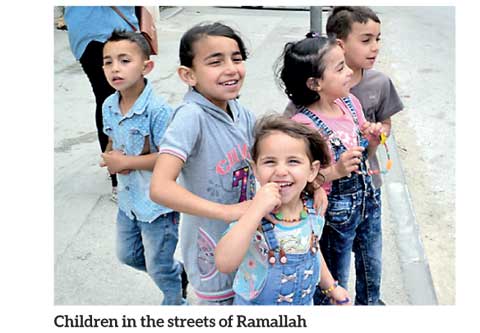 was political. It provided credence to his rule, to a Kingdom which was inherently disunited and yet to welcome him as a King. He remained an outsider and betrayer to all three kingdoms: A betrayer to the Kingdom of Saul and an outsider to the Philistines and Jebusites. It gave his rule validation in the eyes of the population. ‘After all if he could bring in the Ark- the most sacred symbol to the monotheists- then he must be God’s chosen ruler’. The Ark of the Covenant has been lost since but scriptures make central reference to it as the Throne.
History tells us that both David and his son Solomon became unpopular with the masses late into their reigns. The initial revolt against both was initiated within the Royal court, with their older sons taking the helm.
‘The first Temple’ which houses the Ark was an idea conceived by David carried out by his son Solomon. The Temple was not built by David, who was revered for having united the Kingdom. The construction of religious buildings was an integral component of authority. The fact that David didn’t build it was incomprehensible to the later day chronicler. They chronicled that David’s rule came with  bloodshed and God therefore did not will David to build the Temple. Instead he provided David with the plan, which was put in place by his son, Solomon who was considered a just ruler. However, his passion for building ultimately led to all the resources of the state being drawn into his building projects, leaving the people poor.
The chroniclers go further in reconciling David’s inability to build the temple. They tell us the reason David was not permitted to build the temple may have been because David had sinned. The sin was the ordering of a census during his rule. The ordering of a census was usually a prelude to severe taxation and forced labour. As a result of this, we are told that God sent a severe plague that killed 70,000 people.
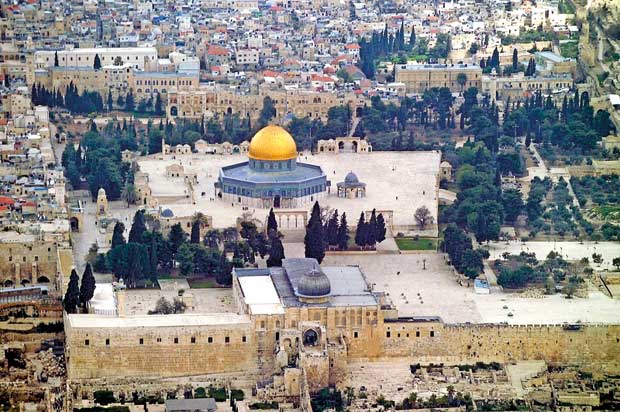
Thereafter, conquest after conquest shaped and continued to shape the area. The reason for this is thought to be the sacredness of the area which was home to Prophets and Sages of all Abrahmic religions. We are also told that Abraham attempted to sacrifice his son here and that the mound of earth which created Adam, the first man, was also chosen from here. It is in these precincts that Jesus uttered the words, “It is written ‘My house will be called a house of prayer,’ but you have turned it into a den of robbers!” after the Temple was overturned for unethical commercial trading and usury. These events led to the eventual crucifixion of Jesus, a 5-minute walk away from the Haram al Sharif/ Al Aqsa/ Temple mount within the city of Jerusalem.
For Muslims, it remains one of the holiest places, for it believed that Prophet Muhammad ascended 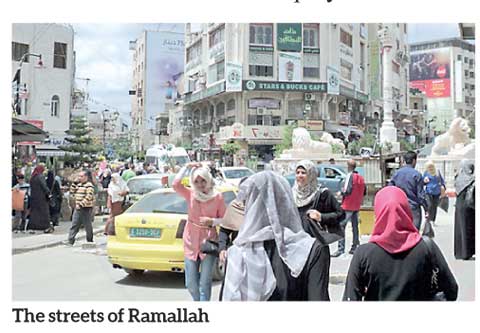 into heaven to meet God in a chariot named ‘Burak’ from the very rock located in the Dome of the Rock. The entire area is known as the Haram Al Sharif to Muslims. The area is central to the apocalypse- the end of time. It is here that the judgment and Resurrection were said to take place according to all three monotheistic traditions- Judaism, Islam and Christianity.
As a footnote, it must be added that the worship of many gods was part and parcel of the sons of Abraham, until the exile of the then sons of Abraham, the Jews, to Babylon, following the destruction and massacre by the invading army in and around the area of the Haram al Sharif in (597-539). The decision to worship one God again appears to be political in order to preserve the identity against an imposing Babylonian culture which served many different gods. After the destruction of the First Temple- the fact that God let it happen meant the end of the world- metaphorically to all adherents of Yahweh. It meant a defeat of the God they worshipped. They fled to areas under Babylonian domination which had conflicting cultures and gods. Ultimately they believed they had angered God and the destruction was therefore his will. The Second Temple built after the destruction of the first therefore was a more sober one- sans the pomp and pageantry of the work of Solomon. It was believed that Yahweh may have not been pleased with such exuberance, resulting in its destruction by the invading forces.
As a way of connecting with the sacred place following the exile, the sons of Abraham worshipped facing the direction of the Temple. In order to distinguish themselves from the imposing Babylonians whose land they now found sanctuary in, they also initialized new practices such as taking ablution, abstaining from certain kinds of meat, circumcision, wearing a cap on the head etc. Muslims followed this tradition including the use of ‘Haram al Sharif’ being the first kiblah- the direction toward which the Muslims prayed.
The West Bank has three different areas, marked and coded by the Israeli government. Area “A” comes under the direct governance of the Palestinian authority. The Palestinian Police remain the dominant force. Palestinians are free to build and farm in the area, which comprises only 18% of arable land. Area “B” is the second demarcation. Palestinians do not have judicial authority over the  area. Area “C” which comprises 61% of the land comes under direct Israeli control and the Palestinians have no control here and aren’t free to build or farm in the lands owned by them. They have to obtain permission from the Israeli government in order to do so.
The city of Ramallah, however is bustling. It reminds me of a more organized Pettah. The marketplace is full of fruits and vegetables and the Coffee shops see the youth enjoying their evenings, smoking Shisha. However, like Tel Aviv, it is a very expensive city, even to a traveller from Europe or the United States.
Having been treated to an Arabic coffee and other such niceties I left Isra to travel to the main city. That night was the night of the Champions league football final between Real Madrid and Atletico Madrid. I never for once realized how important a sport could be to a people. Three of us, backpackers who just met at a hostel in Ramallah proceeded to a Shisha bar. The place was packed. Palestinian youth in their numbers, replete with Real Madrid T shirts and flags were at the edge of their seats cheering and praying. The match was no disappointment, going into a penalty shootout but the moment of victory was a sight to see. I have seldom experienced that kind of passion and emotion in such a closed space over a sporting victory and here I am from Sri Lanka, where sports are more than just games.
The crowd erupted. People hugged each other and were on the top of their chairs the moment the Atletico player failed to find the net. As we walked out, the youth had poured into the streets shouting and drumming celebratory tones.
They seemed to have forgotten, at least for a moment that they were surrounded by a wall stretching 700 kilo metres. “We can’t go to the beach. That is something that I want for my son” one man told me. Another lamented that he could not visit Al- Aqsa, just 45 minutes away. “I haven’t been there for 30 years, it is very difficult for us to go. We have to get a permit and getting it is next to impossible” he lamented. Another woman was to show me her land, filled with Olive trees, on my way into the outskirts of Ramallah. “ This is the land my father gave me, but I cant build anything or collect the olive produce” she said. “Why?” I asked naturally. “You see those houses on that side and the houses on the other side?” she asked. “Those are settlements and we cant do anything in between that area.” 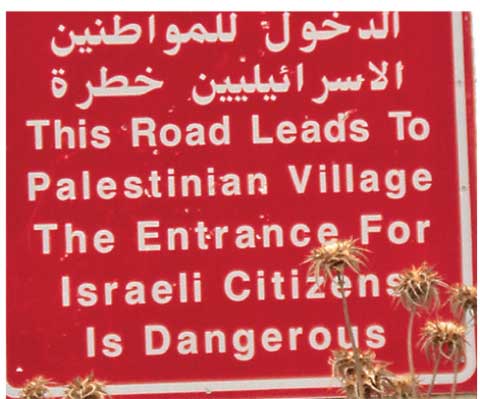 Right at her doorstep, she lived on occupied land.
Almost everyone I spoke to had a relative or a friend missing, injured or incarcerated. “We are educated people, there are more girls in university these days than boys” Samina, a 23-year-old English graduate of Al-Quds told me.
It was after I attended a wedding quite by chance, in a village on the outskirts of Ramallah that I felt compelled to ask questions. Palestinian weddings seldom draw parallel. The wedding usually spans three days, filled with song, dance and laughter. The night before the wedding is the biggest celebration. On the day of the wedding, guests are served a traditional Palestinian lunch of meat, rice and yogurt. There are two kinds of dishes served at weddings, I was told. Following the meal, the groom is taken in a procession around the village and the men and women joining in the singing and traditional Arabic dances. The groom is then taken to the house of the bride and the newly-wedded couple make their way to the house of the groom, at which the celebration of the ladies continues.
The ‘coffee man’ was indeed a sight to see, dressed in traditional costume, pouring coffee. So were the women dressed in traditional Palestinian ‘throbe’, A rich garment, hand-woven in traditional Palestinian fabric. I was struck by the fact that in the land of Philistine- where Prophets and sages have set foot, one of the first conquests of the Caliphate- the cultural influence of the house of Saud (Saudi Arabia) was nonexistent. “There is no lady in a Nikab in this village, the next or the next” a man told me, pointing left and right from where we were. Everyone I spoke to from the village was insightful- speaking fluent English, with a nuanced understanding of the world and outspoken about the occupation. Come to think of it, I am yet to see someone in a Nikab. 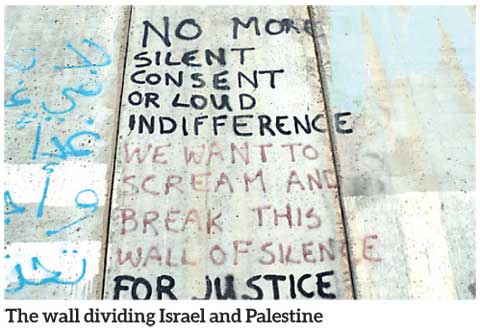
There was no wall between the genders, nor was there a feeling of imposition. The music was beautiful, with a beat strong enough to energize the young and old towards traditional dance. It was an event in which all of them gathered to celebrate the union of the young, with open hearts and warmth I’ve seldom experienced.
“We are proud of our culture and although there may be political extremism against the occupier, there is no religious extremism here” I was told. “The battle is against the colonization of our people. It’s about our land. Our resistance draws from that. It doesn’t spill into religious fanaticism,” a woman in her early forties told me.
On my way back, I couldn’t help but think of Isra. Fifteen, intelligent and confident. Yet going through the economic struggle of a 40-year old, to keep her family alive. She told me that she could give me a guided tour, if I wished. I am yet to make up my mind but the hazel brown eyes and the smile tell me that I should.