Reply To:
Name - Reply Comment
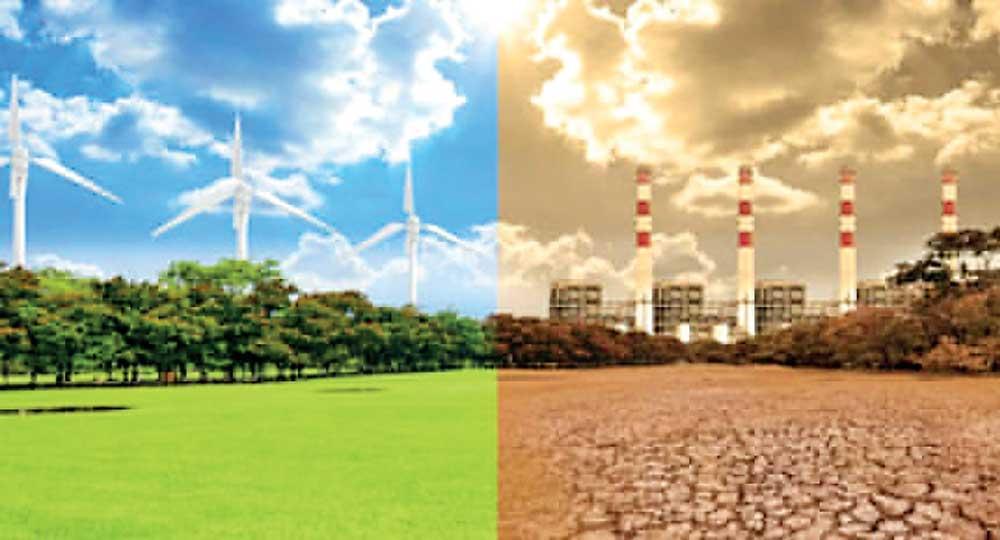
Renewable energy is powering down the fossil fuel age and lowering energy bills and cleaning our air, but the shift to clean energy must be faster and fairer
 In a year marked by both progress and disparity, the global renewable energy sector witnessed a record-breaking addition of 585 gigawatts (GW) to its capacity in 2024, according to the International Renewable Energy Agency’s (IRENA) latest statistics report released in March 2025. This milestone brought total installed renewable energy capacity of the world to 4,448 GW, a 15.1% increase from the previous year. Solar power led the charge, contributing over 452 GW—more than three-quarters of the new additions—while wind energy followed with 113 GW. Together, renewables accounted for an unprecedented 92.5% of all power generation additions worldwide.
Despite these gains, distribution remains uneven. China, the United States, and the European Union collectively installed 489 GW, representing 83.6% of global growth. In contrast, Africa added just 4.2 GW, and small island developing states—despite a 9.3% growth—make up only 0.2% of global capacity. IRENA’s report warns that current growth trends fall short of the COP28 goal to triple renewable capacity to 11 terawatts by 2030. To meet this target and stay on a 1.5°C warming pathway, annual additions must exceed 1,120 GW—nearly double the gains seen in 2024.
Francesco La Camera, IRENA’s Director-General, emphasised that, “This report is both a celebration and a clarion call. We are moving in the right direction, but not nearly fast enough. With economic competitiveness and energy security being increasingly a major global concern today, expanding renewable power capacity at speed equals tapping into business opportunities and addressing energy security quickly and sustainably.”
Commenting on the remarkable progress, the United Nations Secretary-General, António Guterres, said “Renewable energy is powering down the fossil fuel age. Record-breaking growth is creating jobs, lowering energy bills and cleaning our air. Renewables renew economies. But the shift to clean energy must be faster and fairer – with all countries given the chance to fully benefit from cheap, clean renewable power.”
Significant development
As of March 2024, Sri Lanka’s total renewable energy capacity stood at 3,612 MW, with major hydro contributing 1,535 MW (46%), followed by rooftop solar (897 MW), mini hydro (422 MW), wind (267 MW), and biomass and waste-to-energy (54 MW).
Sri Lanka’s renewable energy share of electricity capacity has seen a significant development being at 47.3% in the year 2015 to 63.2% in the year 2024. This is a clear indication of strategic planning and deploying the correct decisions consistently to Sri Lanka’s ambitious goal of sourcing 70% of electricity from renewables by 2030.
It is becoming increasingly evident that future energy supply is going to be through renewable energy sources. Coal is no longer as attractive a source of energy as it once was.
However considerable arguments have been made by some energy sector officials that fossil fuel is still cheaper than renewable energy sources due to the high capital cost of renewable energy project installations. Fossil fuel energy promoters also argue that fossil fuel outperform renewable energy when it comes to reliability.
In an era where nations are racing to achieve energy security and sustainability, legislative frameworks often serve as the bedrock for transformation. Sri Lanka’s Electricity Act, No. 36 of 2024, represents a major achievement in the island’s power sector. At its inception, the 2024 Act aimed to liberalise Sri Lanka’s electricity market by unbundling the vertically integrated Ceylon Electricity Board (CEB), introducing a competitive wholesale electricity market, and expanding opportunities for private and renewable energy investment.
One of the key statements in the preamble to the Act is about Sri Lanka’s commitment towards becoming a green energy country. Act states “ it is also necessary to recognise the Government of Sri Lanka’s commitment to the evolution of the Electricity Industry through the implementation of its decarbonisation goals, climate change policies and the enhancement of the contribution of renewable energy to the generation of electricity facilitated by modern technology and processes to optimise generation of energy from domestic renewable energy sources to minimize the dependence on imported fossil fuel sources and adaption of emerging technologies in energy conversion, storage and management to facilitate the integration of renewable energy and to promote competition amongst alternate processes of generation of electricity in an efficient and transparent manner”.
On 16th May 2025 during the 10th Parliament, the Minister for Energy published in the gazette, an amendment to the Sri Lanka Electricity Act No. 36 of 2024.
Among other significant structural changes, it has been proposed to amend Section 2(i) of the original Act. The proposed new amendment is to repeal the current section 2 (i) and replace it with the following;
“to minimise the carbon footprint of the Sri Lankan electricity industry with the view of achieving the Government’s international commitments for decarbonisation, promoting renewable energy, and optimising the integration of indigenous energy resources in line with the national policies of Sri Lanka”.
It appears that the original Act was firm in its objective to decarbonize Sri Lankan Electricity Industry by switching from fossil fuels to renewable sources. However, the proposed amendment does not have strong commitment towards this goal.
It could be argued that the meaning of ‘decarbonisation’ and ‘reducing carbon footprint’ are not the same although they are closely related. ‘Decarbonisation’ is the big-picture mission. It refers to cutting down the greenhouse gases you personally generate.
Reliance on fossil fuels to generate electricity particularly coal and oil has raised significant environmental and health concerns. Coal and oil combustion emits sulfur dioxide (SO₂), nitrogen oxides (NOₓ), carbon dioxide (CO₂), and fine particulate matter (PM2.5) a cocktail of pollutants known to contribute to respiratory illness, acid rain, smog formation, and climate change.
The power sector also contributes significantly to Sri Lanka’s greenhouse gas emissions, undermining its climate commitments under international frameworks such as the Paris Agreement. Hence policy makers must revaluate their decision to amend any progressive objectives of the Sri Lanka Electricity Act 2024. Fossil fuel pollution in Sri Lanka’s electricity sector is a pressing issue that demands immediate and sustained action. By investing in renewable energy, improving regulatory frameworks, and phasing out fossil fuels, Sri Lanka can light its path to a cleaner, healthier, and more sustainable future.
(The author has been a lawyer, judicial officer and legal reformer in Sri Lanka, Republic of Fiji and Seychelles)