Reply To:
Name - Reply Comment
 The addition of the section on the importance of maintaining school records helps contextualize the role of historical documentation in preserving the heritage and ongoing development of educational institutions
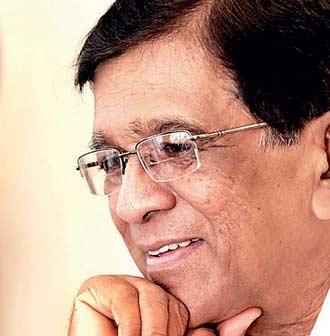
 P. Dayaratne, the former District and Cabinet Minister who represented Ampara (Digamadulla) in Parliament for an uninterrupted 38 years, belonged to a rare and vanishing generation of honourable politicians. His integrity and dedication set him apart in an era where such qualities are increasingly scarce. Among his many recollections, one vivid memory of Damana Vidyalaya stood out.
The Southern Wewgam Pattuwa: A Legacy of Growth and Development
|
P. Dayaratne
|
While translating the autobiography of this gentle and dignified politician into English, the writer discovered an intriguing chapter on The Southern Wewgam Pattuwa and its Damana Village School. Turning to the history of the Southern Wewgam Pattuwa, Dayaratne focused on a few books about its recent past, particularly ‘Mage Rajyaya’ and ‘Digamadulle Ashcharya’, “My Kingdom” & “The Wonder of Digamadulla”, both authored by Mahanama Rajapaksa under pen name Maya Ranjan. Rajapaksa served as the principal of several schools in the Southern Wewgam Pattuwa, beginning with Damana Vidyalaya in 1948. Though now a major school, at the time, it was a modest institution, founded in 1924.
Years ago, at a prize giving ceremony, the principal showed Minister Dayaratne, the original school logbook maintained since its inception. Reading those records filled him with joy, as they captured the simple lives of the people of Damana. The logbook detailed school term endings and events such as the birthday of King George V, when students hoisted the Union Jack [British flag] and celebrated with traditional delicacies like kavum and kiribath.
The preservation of such records is invaluable, offering a glimpse into the past and providing insights into the historical context of the school, its community, and its traditions. These documents serve not only as a historical archive but also as an educational tool, highlighting the evolution of the school and the values it upheld. Maintaining such records is crucial for future generations, allowing them to understand and appreciate the roots of their educational institutions.
Curious about whether the old British flag still existed, Dayaratne asked the principal, who revealed its tattered remains. Among the log entries he reviewed was one from June 3, 1929:
“The Empire Day celebrations were held in a grand manner. Students were taken to the Hingurana temple for religious observances and blessings for His Majesty the King’s long life. The head teacher delivered an inspiring speech on the significance of Empire Day. Local aristocrats of Wewgam Pattuwa and several village elders attended as guests.”
-K.D. Weerakoon, Head Master
Another entry, from June 3, 1930, recorded the King’s birthday celebrations:
“With support from Damana and Madana Arachchilas, the grand Royal Festival was conducted with much splendour. The British flag was hoisted and honoured, while guests enjoyed kiribath, ripe bananas, and tea. Games and festivities added to the joyous atmosphere.”
-K.D. Weerakoon, Head Master
The school also marked the Silver Jubilee of the King’s reign on May 6, 1935. With the support of the Korale regional leader and Arachchis of Damana, Madana, and Hingurana, a grand ceremony was held. Following the hoisting of the British flag, speeches were delivered, emphasizing the occasion’s significance. Festivities included games, a feast of kiribath, bananas, and tea, and alms-giving at the temple, dedicating merits for the King’s long life.
Development of the School
One notable aspect of the school was its preservation of the old British flag. Inspired by this, Dayaratne decided to contribute to its development. He personally funded the construction of a well-equipped library, a principal’s office, a teachers’ lounge, and an administrative building. Previously, the principal’s office had been a cramped space in an old building, barely accommodating seven or eight people. There was no dedicated teachers’ lounge or library. The new administrative complex greatly improved the school’s facilities and prestige.
In 1992, a video documentary showcasing the school was sent to the Sinhala Friends’ Organization in England, which responded with a Rs. 200,000 donation. Using these funds, Dayaratne furnished the library, principal’s office, and teachers’ lounge, significantly enhancing the school’s status.
On that day, Dayaratne recorded in the logbook:
“On this 16th day of 1992, reflecting on the school’s history and its development, I feel an immense sense of fulfilment. The progress since 1924, along with the preservation of its historical elements, stands as a testament to its growth. Support from external organizations has further enriched its educational environment, ensuring a brighter future for its students.”
Paadagoda Vidyalaya was another school in the region. One of Dayaratne’s most vivid memories was of a villager known as Gamarala, who had survived a brutal bear attack in the forest that left part of his face torn away. Though he lived, his face bore permanent scars. Nearly thirty years later, Dayaratne encountered him again and was struck by the same haunting injuries.
Rajagala, located in the northern part of Wewgam Pattuwa, is a historically significant site. A third-century BCE inscription identifies the monastery as Girikumbhila Viharaya, though later generations referred to it as Rajagala or Rakshahela.
Recognizing Udayagiri’s historical importance as an ancient royal monastery, Dayaratne played a significant role in its development. The monastery grounds contain scattered ruins, including stone pillars, moonstones, and other rock structures that reflect its past grandeur.
The most significant development within the Gal Oya project area took place in Wewgam Pattuwa, where the Ampara town emerged as the central hub. Surrounding towns such as Uhana, Gonagolla, Hingurana, and Damana also experienced rapid progress. Entrepreneurs from other regions, particularly the south, established businesses in these growing towns, fuelling remarkable economic expansion.
Lahugala’s 3rd Cen. Symbolic Cautionary Signs
Even today, one can observe the well-preserved forest cover along the route from Hulannuge to Pottuvil, a testament to Dayaratne’s vision. The Lahugala-Hulannuge Archaeological Site, which belongs to the Kingdom of Ruhuna during King Mahanaga’s reign (3rd Century BC), features fascinating depictions in a cave, including a lizard (possibly a crocodile) surrounded by dots, possibly indicating the presence of water and crocodiles in the stream. These symbols may have functioned as a warning for those crossing or bathing in the area, demonstrating that ancient Lankans used symbolic cautionary signs long before Western societies formally introduced them in the 19th century.
The addition of the section on the importance of maintaining school records helps contextualize the role of historical documentation in preserving the heritage and ongoing development of educational institutions.
It is essential to preserve this logbook and the tattered Union Jack with the National Archives, as a 100-year-old document and fabric require specialized archival care. A replica of both could be provided to the school to ensure the continuation of their commendable efforts in maintaining historical records. Over to you, Minister of Education and Director-General of the National Archives!
Information Courtesy: Chapter titled; “Legacy of the Southern Wewgam Pattuwa: A Journey Through Schools, Development, and Memories”-Biography of P. Dayaratne.