Reply To:
Name - Reply Comment
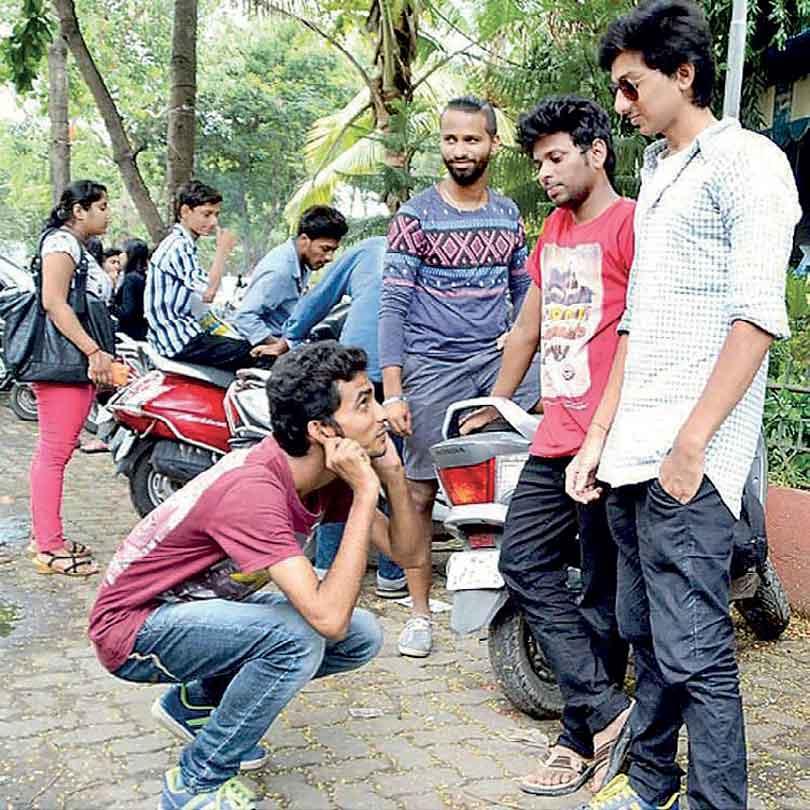
Ragging crosses the bounds of the gender divide, with students forced to perform humiliating acts before peers of both sexes. File photo
 Thanks to Social Media, there is more exposure to stories on accounts of ragging, which were often previously silenced, revealing disturbing patterns and stories of abuse within Universities
The sexual aspect of ragging reveals the broader society’s conservative attitudes and tensions towards this topic
Prof. Amarasena claims there are political motives behind ragging, that student unions exploit the practice to recruit members for party-related activities
Universities are closeted worlds. But the time they were held in awe as creators of the cream of a country’s workforce talent is long gone. The outside world’s curiosity about our universities is unfortunately aroused only when something notorious happens—for instance, the latest ragging scandal at the University of Sabaragamuwa, when an undergraduate committed suicide after being ragged by his seniors.
 Charith Dilshan, a first-year student at the faculty of engineering technology, committed suicide due to depression caused by ragging. There have been other deaths, suicide as well as what can only be described as culpable homicide, and cases of severe injury, paralysis, depression and trauma. But the ragging goes on unabated.
If universities look closeted, the world of ragging remains a Dark Net of mysteries. It’s very hard to get people, both victims and perpetrators, to talk about ragging. Very often, the perpetrators are former victims. I have spoken to former graduates—friends and acquaintances—and it’s really hard to get anyone to talk. But the little I have heard personally has changed forever my perception of our universities.
Fortunately, this wall of silence is now breaking down. Social media reports are often sensational. But over the past decade, social media has reported and given exposure to reliable accounts by student victims as well as the more responsible and concerned university authorities. What emerges is a horrifying picture of physical and mental abuse. The most disturbing factor is that this abuse now leans heavily towards sexual perversion and sadism.
Sexual frustration and abuse aren’t unique to Sri Lanka, still a largely puritanical society with a lid on sex outside of marriage (due to the boiling pressure inside, this lid is now unstable). But this phenomenon isn’t unique to us. Even in more sexually permissive societies, it is present in varying degrees, and ragging (also known as hazing) is present in universities and other institutions all over the world. National Geographic once published a photograph of a group of French architectural students forced to strip and run in the streets of Paris.
But attitudes towards exposing one’s naked body differ widely here and in the West. That doesn’t mean those French students were happy when forced to run naked in public. They didn’t do it voluntarily, but under coercion. But, given our constraints about sex, nudity and even women’s clothing, being forced to shed their clothes in a Sri Lankan institution in front of leering strangers would be not just humiliating but traumatic.
Accounts differ widely as to precisely what form of ragging made student Charith Dilshan commit suicide. Some say he was forced to hop in his underwear for the ‘crime’ of visiting another hostel room in shorts. Others say he was stripped naked, and his private parts were probed with a needle. There were female students present at this rag, which raises more questions.
First, female students are not supposed to be in male student hostels at night. Secondly, there has been some unwritten rule in university ragging—males rag males, and females rag females. But reliable accounts show that this is no longer the case, and there is no gender difference between senior student raggers. Girls rag boys or assist boys to rag girls.
Another Sabaragamuwa University rag victim’s suicide highlights this point. Student Amali Chathurika committed suicide after a year-long rag in 2015. She was likely the victim of a personal vendetta. Her mother says several senior male students began ragging and harassing Chathurika on a regular basis because a former schoolmate of hers, now a fellow campus student, was jealous and instigated them to rag her. Chathurika attempted suicide after the first rag and failed. She succeeded the second time when seniors forced her to mimic a porn actress.
Sexual abuse and acts of perversion by girls against girls are nothing new. An artist and graduate of the Peradeniya University ‘Maname’ Generation told me that a niece of a then famous artist, a fresher at this campus in the 60s, had a toothpaste tube squeezed into her vagina by a senior female student (she was subsequently suspended). But such incidents may have been rare. Now they are endemic.
There is another view that ragging is (or was) ‘sundarai’ (charming, may be a good word to say that in English). This is the word used by the artist quoted above to describe his ragging experience. A famous professor once said that he was ordered by raggers to sing a song from the top of a table. After he sang a song from Maname, a ragger told the crowd: ‘This guy is sure to get a first class.’
 Charith Dilshan, a first-year student at the faculty of engineering technology, committed suicide due to depression caused by ragging. There have been other deaths, suicide as well as what can only be described as culpable homicide, and cases of severe injury, paralysis, depression and trauma. But the ragging goes on unabated
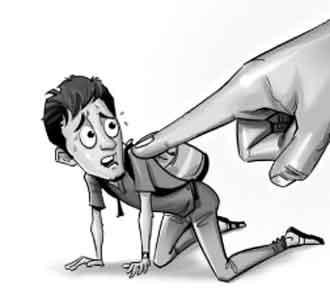 Such mild ragging is shown in Sugathapala Senarath Yapa’s film ‘Hanthane Kathawa,’ but now that looks like a thing of the past. The rationale behind ragging is that it levels social inequalities and builds camaraderie and bonds between students. The result is exactly the opposite. It creates fear and hatred.
Children of public figures are given particularly harsh treatment. According to another old story, the son of a famous professor was made to eat grass by raggers. In this context, film and stage actress Yasodha Wimaladharma has made some rare revelations in a TV interview. She said she was severely ragged at the University of Kelaniya. At the time, she was already famous as an actress, and she said that was a reason for the ‘unspeakable and degrading’ ragging which has left lasting psychological scars on her. Her father, a professor at the same university, was severely affected by this. He fell ill and died a few years later.
Prof. Sujeewa Amarasena, former VC of Ruhuna University (He says he’s a victim of political revenge-taking), has said in a TV interview that even rapes were committed in the guise of ragging. He bravely spoke and acted against ragging during his tenure (2019-2025). After discovering that 128 novice students had left the university because of ragging, he investigated and led a raid by university lecturers while a massive ragging of female students was being carried out by male seniors in the cafeteria. This was assisted by senior female students, who were posted to warn by phone en route, so that many of the raggers managed to escape. But a number were caught and prosecuted. He says two barrels of condoms, used and unused, were found in student union rooms, but these bodies have offered no explanation for that.
Later, the Inter University Federation of Students (IUFS) ganged up on him. Apart from genuine grievances, student unions use their clout to intimidate academic staff, even taking them hostage. A 1998 Act of Parliament empowers vice chancellors to suspend raggers on the spot, but few are courageous enough to use these powers.
A 2014 report names the JVP as the party responsible for ragging. Student unions of all universities are collectivised under the Inter University Federation of Students (IUFS), also known as ‘Anthare’. The Frontline Socialist Party (FSP), also referred to as Peratugami Party, a breakaway section of the JVP, has a strong presence in the IUFS. Prof. Amarasena claims that student unions use ragging to recruit helpers, spies and members who are sent to small towns to collect money for party causes. They are used, too, as pawns when the IUFS calls for demonstrations. Attending indoctrination classes at night affects students’ grade points.
President Anura Kumara Dissanayake, when asked by a television interviewer if the JVP is responsible for university ragging, began whitewashing his party. He’s a highly skilled orator and soon had the interviewer on the defensive. While saying that there could always be a few ‘bad’ elements within the ranks of raggers, he very cleverly put the blame on the political opposition, the political heavyweights of the Rajapaksa era, citing their notoriety in crimes against society.
We don’t need to be told twice about the opposition’s notoriety. But we need to hear a clear-cut answer to this question: If the JVP and the Frontline Party are the main driving forces behind ragging, what’s he going to do about it as president, without making a scapegoat of the latter for obvious reasons?