Reply To:
Name - Reply Comment
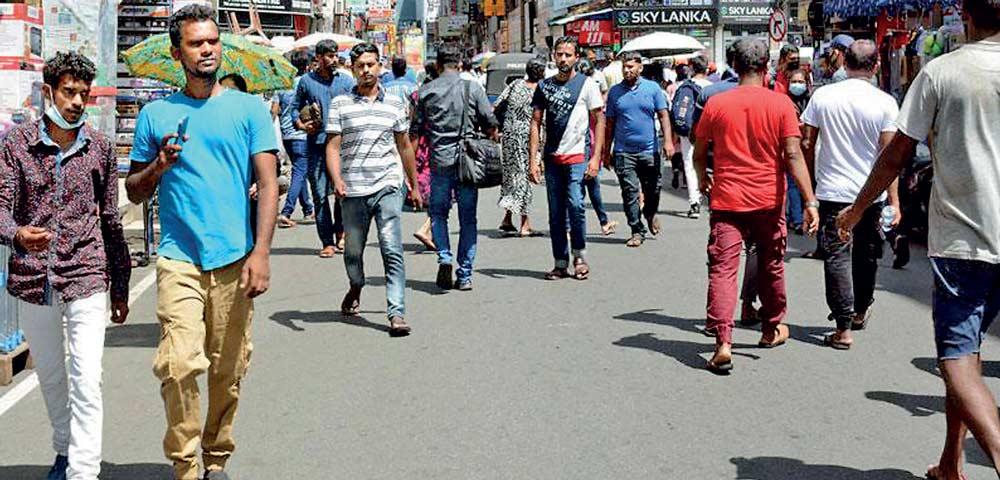
While Daily life continues in Pettah’s busy streets, Sri Lanka grapples with the region’s most rapid population ageing process.
Pix by Pradeep Pathirana
 Elder care training provides new career pathways for unemployed youth
Traditional ‘Moon School’ practices offer a blueprint for intergenerational learning
By Ravi Pratap Singh
The countries of South Asia, with the demographic dividend of the highest proportion of youth in the region, is also experiencing a significant increase in their elderly population. What is more worrisome is that this trend is happening at a relatively earlier stage of economic development compared to Western countries.
Sri Lanka happens to have the oldest ageing population in the region, with current estimates of 2023-24 suggesting over 17% of its population above the age of 60 (UNFPA & Department of Census and Statistics, GoSL). The projections suggest that Sri Lanka’s ageing process is the most rapid in the region, and by 2042, almost one in every four persons is expected to be elderly, over 60. This is primarily because Sri Lanka has achieved relatively low fertility rates and high life expectancy earlier than its South Asian neighbours, leading to a more advanced demographic transition.
India, on the other hand, has the largest absolute number of elderly people in South Asia (and globally). The number of Indians aged 60 or more has nearly tripled in the past three decades to over 150 million. While Bangladesh, Nepal, Bhutan and the Maldives also have trends of increasing proportion of their elderly population, Pakistan and Afghanistan have a relatively younger population. The percentage of elderly people in South Asia, which was around 8.5% in 2015, is projected to stretch to 18.9% by 2050.
The Challenges
Historically, the extended family has been the primary caregiver and support system for the elderly. However, rapid urbanisation, higher internal as well as international migration, smaller family sizes, and changing cultural norms are weakening this traditional support, leading to an increasing need for formal care systems. Adoption of filial responsibility laws in Sri Lanka, India and Bangladesh reflects an attempt to formalise traditional duties to alleviate the burden on state resources. These laws legally obligate adult children to provide maintenance and care for their elderly parents.
The major challenges across the region also include limited coverage of formal social security and pension schemes, especially for the vast informal sector workforce; public healthcare systems not being equipped for comprehensive geriatric care, including the lack of geriatric specialists; lack of institutional care facility in the form of elder-homes; and poor allocation of public resources by the governments that are primarily geared towards poverty alleviation and youth development and skilling programmes.
Opportunities and the Way Forward:
There is a need to have a careful look at the available opportunities in the given context and harness them to build strategies and actions to deal with the current challenges. I am detailing three such strategies here:
a. Modernisation of Traditional Practices
South Asia has a rich tapestry of traditional practices and informal forums that foster strong intergenerational bonds, particularly between grandparents and grandchildren. These interactions are deeply embedded in the cultural, social, and often religious fabric of the region. Grandparents are often the primary custodians of family history, cultural narratives, folk tales, myths, religious stories from epics like the Ramayana and Jataka tales, and local legends.
Some years back, during my professional travels to remote villages of the Nilgiri hills of India and the Chitwan region of Nepal, I discovered a tradition of monthly informal gathering of grandparents and grandchildren on a full moon day every month. The local name of this event roughly translates into ‘Moon School’, because it is a kind of learning exchange on a full moon or Poya day. During this gathering, grandchildren also impart newer skills or share the latest developments with their grandparents in a fun way. This practice, I later found out, has been there for direct transfer of knowledge and wisdom from grandparents to grandchildren, to avoid any loss due to a communication gap in a chain of communication through parents! It is mutually beneficial. This kind of traditional practice of intergenerational interaction is worth emulating in the current times, when societies in South Asia are facing a dual challenge of a lack of avenues for meaningful education for children/youth and reducing support systems for the elderly, who are increasingly facing more isolation. Our schools and universities must promote such learning systems by having regularly scheduled interaction of students with Professors of Practice.
b. Greater Investment in Vocational Training in Elder Care
Some government and non-government programmes, HelpAge Sri Lanka being the most prominent among them, have been training youth to become skilled caregivers for elderly persons. This kind of vocational training provides new career pathways to youth and prepares them in the areas of basic nursing and first aid, and personal care and daily living assistance by developing their understanding of the ageing process, common diseases of elderly persons, mental health and active ageing principles and communication skills with elderly persons. This kind of professional engagement of youth in the area of elderly care also strengthens intergenerational bonding.
Publicising the evidence of the impact of these programmes would help in a policy push for greater public investment in such future relevant vocational training programmes.
c. Intergenerational Partnership-based Enterprises
The growing recognition of the critical role youth can play in elderly care and support has also encouraged many governments in the South Asia region to promote general awareness programmes among children and youth to promote greater interaction between the youth and elderly persons. Lama Lokayayi Wedihiti Wiyayi (Children’s and Elders’ World) awareness programmes of the National Secretariat for Elders in Sri Lanka is a typical example of such initiatives. This Sri Lankan programme promotes awareness in schools to sensitise younger students to the needs and rights of elders. This often involves students visiting elder homes or engaging in activities with elders in their communities.
However, such awareness-building initiatives are not sufficient, and there is a need to promote programmes that put both ends of the generation on equal footing. This could be achieved by promoting enterprises, which are designed and built on the complementarity of skills, knowledge (understanding) and experience (wisdom) of young and elderly persons. These enterprises would thrive with the wisdom of elderly people and the energy and technology-friendliness of the youth. These enterprises are illustrated by the following five examples:
i. Herbal & Indigenous Health Products: Traditional knowledge of the elderly person about the herbs, preparation of various remedies and healing practices could be packaged, branded and marketed by the younger business partner through digital marketing or e-commerce. The technological interventions of the youth would help create a niche market for such products.
ii. Traditional Craft & Design Studio where handicraft skills of mask-making, weaving, pottery, embroidery, etc. and historical designs and motifs could be contributed by the elderly person and trend research, contemporary product design and marketing could be added by the youth. This would also help revive some of the dying crafts.
iii. Intergenerational Kitchen or Food Cart with elderly person’s recipes, cooking techniques and stories around food culture could be complemented by the youth through menu innovation, customer research and delivery partnerships. This would promote food heritage.
iv. Cultural Documentation & Tourism Services could be promoted through audio/video documentation, oral histories, folk tales, village legends and local rituals by the youth, as narrated by the elderly business partner. This could then be promoted through a website to generate interest in a larger number of tourists in a particular location of the country, where the youth can take the lead as tour guides.
v. Organic Farming and Seed Bank Services related business could thrive on the elderly person’s knowledge of traditional farming techniques, natural herbicides and pesticides, coupled with farm-tech integration, automation and marketing support by the youth. This would promote sustainable agriculture and much-needed access to healthy food.
In my view, such enterprises would create a more sustained and lasting institutional mechanism to foster intergenerational interaction, bonding, growth and care for each other.
The writer is a global public policy expert and Managing Director of iLEAD International Academy, Sri Lanka, which is promoting sustained youth engagement in the area of environmental conservation and climate resilience building at the local level. He can be contacted at [email protected]