Reply To:
Name - Reply Comment
In his maiden speech at the United Nations General Assembly (UNGA), President Dissanayaka touched on topics including global poverty, the debt burden of developing nations, the drug menace and organised crime. He also expressed concern over the ongoing humanitarian catastrophe in the Gaza Strip, calling for an immediate ceasefire and the unhindered delivery of humanitarian aid.
Dissanayake also demanded the release of hostages by all parties to the conflict. He was obviously referring to hostages taken by the Palestinian militant group Hamas in the lead-up to Israel’s genocidal attacks in Palestine’s Gaza Strip. Though he emphasised that strong international pressure needed to be applied to halt the continuing violence and killings, our president failed to even identify the perpetrator of the killings.
Unfortunately, our president did not make mention of the atrocities Israel continues committing against the Palestinians. It was these vile actions which led ‘Hamas’ (an armed Palestinian political movement in the Gaza Strip) to attack illegal Israeli settlements on October 7, 2023.
Among some of the atrocities committed against Palestinians, which caused Palestinian retaliation, was the limit placed on the amount of drinking water permitted to Palestinians. The confiscation of lands and homes of Palestinians, the handing over of the said lands to Jewish settlers of foreign descent and the near-daily raids by Israeli forces on Palestinian villages and incarceration of Palestinians on trumped-up charges.
Since the war in Gaza began in October 2023, Israel has killed over 60,000 Palestinian civilians. ‘Al Jazeera’ reports an average of 28 Palestinian children are killed daily in the Gaza Strip. The organisation ‘Save the Children’ reported on 6 September, 20,000 Palestinian children had been killed by Israeli forces in 23 months—an average of one child every hour.
Israel has also blocked the entry of all food, medical supplies and water into Gaza and has prevented the entry of humanitarian aid into the besieged area. As of September 19, the known number of people who have starved to death, according to the Palestinian Ministry of Health in Gaza, reached at least 440 people, including 147 children.)
The World Health Organization (WHO) has recorded 28 attacks on health care facilities in Gaza during this period and 697 attacks since October 2023. By not differentiating between the victim and aggressor, President Dissanayake has perhaps, unwittingly, suggested both parties (Israelis and Palestinians) are equally to blame for the unfolding misery.
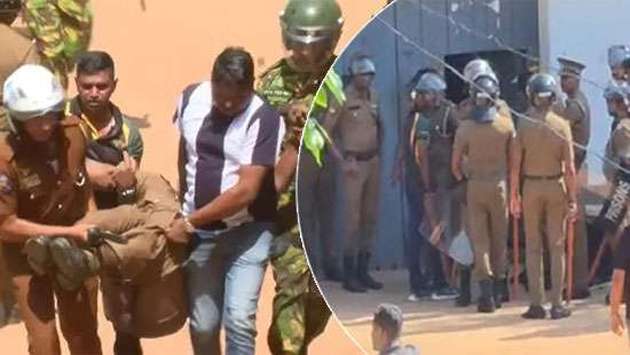
Sadly for a leftist leader, our president’s speech lacked verve or wit. Perhaps, President Dissanayake only mildly blamed the perpetrators of the attacks in Gaza, as back home in Lanka, the government is now cracking down on peaceful dissent in our own country. Yesterday’s police action against peaceful demonstrators in Mannar is a case in point.
Dissanayake spoke of global poverty, but failed to name those who were causing poverty or identify the cause of poverty. The mundane presentation of our president brought to mind another leftist leader –Fidel Castro- of Cuba, whose speech at the world body was filled with fire and home truths on the causes of poverty.
A stark contrast to our president’s performance. Yet, at the time, Cuba was in an even worse economic position than our country is presently in. So vividly different from our president’s presentation.
In addition to the empty coffers ‘Batista’—the previous Cuban leader—left behind, Cuba also faced a US invasion, multiple sanctions, robbery of its assets in the US and many attempts to assassinate its leader. But Castro had the courage of his convictions and the support of his people. He fearlessly called a spade a spade.
To many Lankans, it seemed our president was afraid of upsetting the now omnipresent International Monetary Fund, the US and the Western European powers.
While many countries, large and small, are trying to break the shackles of the IMF model of development and dependence on the US dollar, our leaders seem to be hitching their bandwagon to old, discredited models of development.
Even stranger is the fact that President Dissanayake is one of our leaders who, in times gone by, castigated the IMF bailout and repeatedly criticised the austerity measures tied to the IMF deal. However, after coming into power, he has walked back on his criticism.
A sad fate for a once firebrand leader who, unfortunately, promised more than he could deliver.