Reply To:
Name - Reply Comment
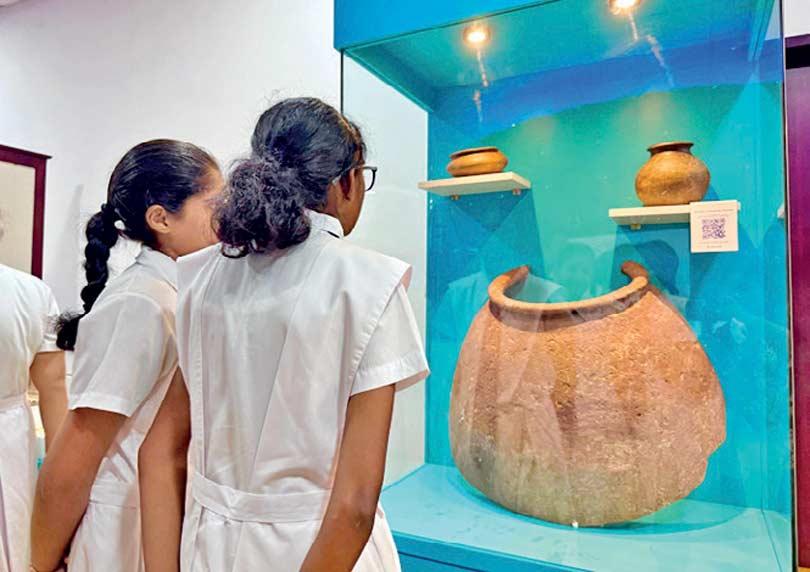

 The artefacts will be permanently on display at the Maritime Archaeology Museum in Galle, with an AFCP-supported education programme bringing the story of the shipwreck to local schools
Even though the shipwreck was discovered near Godawaya, a small fishing village between Hambantota and Ambalantota, the origin of the vessel is still unknown
The Godawaya shipwreck is a reminder that secure sea lanes have powered prosperity for centuries and remain vital to both American and Sri Lankan interests today
By Huzefa Aliasger
Artefacts salvaged from the Godawaya shipwreck which is considered to be the oldest known shipwreck in the Indian Ocean dating back to the 2nd century BCE which was discovered in 2003 by local divers was kept on public display yesterday by the Central Cultural Fund’s Maritime Archaeology Unit (MAU).
The project initiated by MAU was funded by the U.S. Ambassadors Fund for Cultural Preservation (AFCP). Through AFCP funding, the MAU has safeguarded nearly 200 artefacts salvaged from the wreck, employed advanced 3D modelling techniques for site surveying, and developed a comprehensive 3D model of the shipwreck site. Among the artefacts are pots, copper ingots and pearls symbolising heyday transnational trading.
Even though the shipwreck was discovered near Godawaya, a small fishing village between Hambantota and Ambalantota, the origin of the vessel is still unknown. Marine Archeologists from the MAU are yet to conclude whether the ship was sailing to or from Sri Lanka.
Attending the launch of the exhibition which featured the artifacts, U.S. Ambassador Julie Chung said “Maritime heritage is a story of connection — and today’s U.S.–Sri Lanka partnership continues that legacy. From ports to people, we are Indo-Pacific partners working together to safeguard security, ensure open commerce, and protect the futures of our nations. The Godawaya shipwreck is a reminder that secure sea lanes have powered prosperity for centuries and remain vital to both American and Sri Lankan interests today.”
The artefacts will be permanently housed at the Maritime Archaeology Museum in Galle, with an AFCP-supported education programme bringing the story of the shipwreck to local schools. Since 2001, AFCP has supported more than 1,300 projects worldwide, including 17 in Sri Lanka totaling over $1.3 million, preserving archaeological sites, historic buildings, museum collections, and cultural traditions.