 Kamanthi Wickramasinghe
 Reply To:
Name - Reply Comment
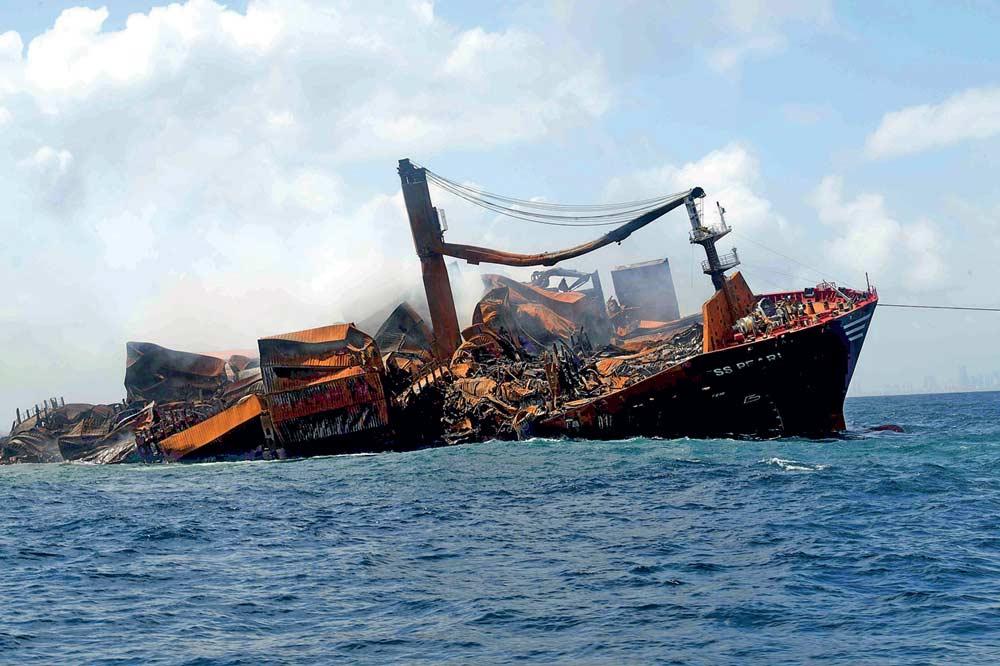
The MV X-Press Pearl disaster has sparked much outrage among the legal fraternity and petitioners that had been litigating against what was known to be one of the worst maritime disasters in recent history
 Upon the immediate aftermath of the X-Press Pearl disaster, consumption of fish and shell fish significantly reduced upon the public perception that they were unfit for consumption
Fisheries organisations representing fishermen and coastal communities affected by the incident argue whether the compensation process represents all affected fishermen
Maritime experts and environmental scientists maintain that it is the polluted who should pay and they have polluted Sri Lanka’s environment tremendously
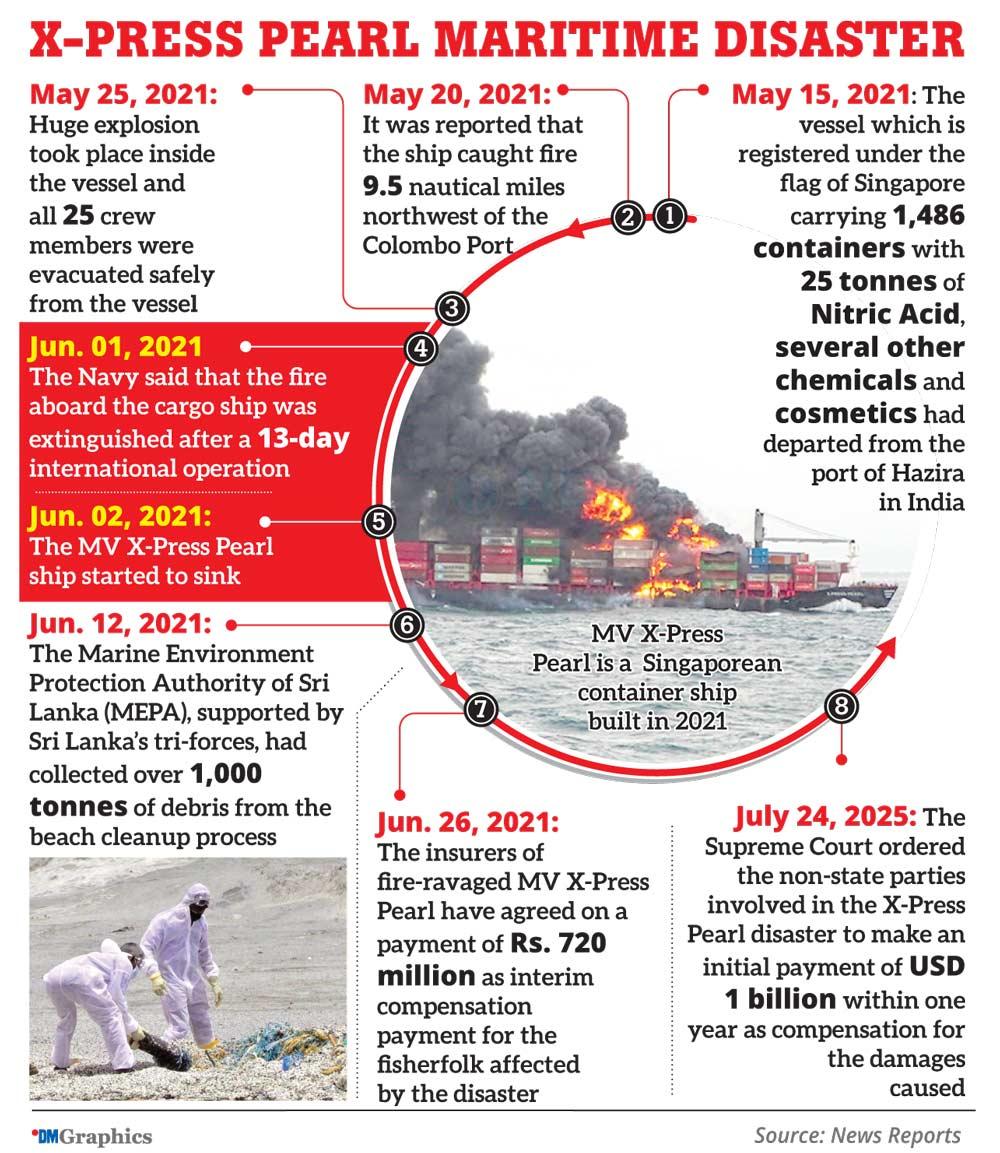
The refusal of payment of USD 1 billion as compensation for the damage caused by the MV X-Press Pearl disaster has sparked much outrage among the legal fraternity and petitioners that had been litigating against what was known to be one of the worst maritime disasters in recent history. In his comments made at an interview to AFP, CEO of Singapore-based shipping company Xpress Feeders Shmuel Yoskovitz said that the Supreme Court judgment undermines global maritime liability conventions and could set a dangerous precedent, risking higher insurance costs worldwide. While the government awaits Attorney General’s opinion on the next steps to be taken, litigants and petitioners of the case demand the sole polluter of the incident to pay compensation. However, fisheries organisations representing fishermen and coastal communities affected by the incident argue whether the compensation process represented all affected fishermen.
How ‘mysterious facts’ delayed compensation
Having studied the case from its inception, Senior Maritime Lawyer Dr. Dan Malika Gunasekara had been talking about how the state could obtain damages. He was quite vocal about international maritime laws governing Sri Lankan waters, the damage caused to and how maximum compensation could be obtained.
Speaking about recent developments Dr. Gunasekara said that the respondent parties, especially the company that operated the Xpress Pearl vessel based in Singapore made an application to courts through their lawyers that they are revoking their proxy. “For the local agent, a new proxy holder was filed and represented by a counsel. What I feel is that once a judgment is delivered, in this case for respondents to pay USD 1 billion then a legal question arises here as to whether opting out of jurisdiction of our Supreme Court could be granted or not. The court had already delivered the judgement, so they are under obligation now to pay. They could have made all the submissions during the case. It is only now that they are talking about limitation of liability and all kinds of things. They could have done that during the proceedings through their lawyers and try to win their case. Now in order to evade the payment they are opting out of the case, revoking proxies and doing all kinds of things,” he claimed.

 “The court had already delivered the judgement, so they are under obligation now to pay. They could have made all the submissions during the case. It is only now that they are talking about limitation of liability and all kinds of things. They could have done that during the proceedings through their lawyers and try to win their case”
- Dr. Dan Malika Gunasekara, Senior Maritime Lawyer
He said that now that the court had instructed the Attorney General’s department to consult the Executive of the country they should get expert opinions and services of Protection and Indemnity Insurers (P&I) because they have firsthand experience in handling these kinds of situations. “Ultimately it is the insurer that becomes liable in such a situation. There was an insurance cover when the incident happened with regards to marine pollution. I think we have to get services of a good P&I expert and take things forward. We have always been late in this process but we can take lessons from countries such as USA that have obtained their compensations successfully. Now it feels like we are lagging behind,” he opined.
When asked as to why there was a delay in filing compensation Dr. Gunasekara said that there are lot of ‘mysterious facts’ surrounding why authorities delayed it. “I can point my finger at past governments that were there including law enforcement officials and those who were responsible to institute legal action. So this government can now put the gears in place and do justice to our marine environment, the country and for all people,” he underscored.
Court orders AG to file contempt papers against violators
Speaking to the Daily Mirror, Attorney-at-law Dr. Ravindranath Dabare representing Centre for Environmental Justice, one of the main petitioners and litigants of the case said that at the last hearing they submitted that the private companies have violated the court order and as per the contents of the judgment it is the duty of the Attorney General to deal with the violators of the judgment. “When there’s a violation, it’s the duty of the AG to take cognizance of the violation and file contempt papers against the shipping companies and their directors. We submitted the court to direct the AG to file contempt papers. Other counsels appeared for other acting petitioners. AG made submissions after we made submissions to petitioners and he also agreed to it. The court directed the AG to take appropriate steps against violators according to the main judgment,” he added.

 “We submitted the court to direct the AG to file contempt papers. Other counsels appeared for other acting petitioners. AG made submissions after we made submissions to petitioners and he also agreed to it. The court directed the AG to take appropriate steps against violators according to the main judgment”
-Attorney-at-law Dr. Ravindranath Dabare, Represents Centre for Environmental Justice
He further said that a sum of Rs. 300 million was paid before September 23 which was the deadline but according to the direction issued by the Court, the initial amount payable was USD 250 million.
The polluter and its deceptive behaviour
In her comments, Environmental Scientist and Activist Dr. Ajantha Perera who is also one of the petitioners of the case said that it is obvious that any company would try not to pay. “But they need to understand that there’s a law. In fact the amounts we calculated were far higher. The Marine Environment Protection Authority (MEPA) calculated a figure of USD 6.4 billion. But when I claimed that this amount was quite less, the Supreme Court asked me to revise the figure and it came up to USD 57 billion. I provided scientific evidence for every charge. But the Supreme Court was decent enough to finalise the initial payment at USD 1 billion because they didn’t want to burden a profit-making company. But it is such a shame that a company like Xpress Feeders cannot afford to pay this amount. Shipping is a profitable business and they have been involved in it for a long time. In fact it is the polluted who should pay and they have polluted our environment tremendously,” she claimed.
Dr. Perera further said that perhaps the company doesn’t understand their responsibility. “We didn’t invite a ship with a leaking container. They came as a routine exercise but they hid the fact that there was a leaking container in the ship. Their behaviour is total deception,” she added.
Injustice faced by affected fishermen
Submissions made to the Supreme Court on the economic and financial losses caused to fishing communities indicated that upon the immediate aftermath of the X-Press Pearl disaster, consumption of fish and shell fish significantly reduced upon the public perception of consuming contaminated fish, which caused sales of seafood and consumption to plummet across the country which had a severe impact on the livelihood of 20,000 fishing families.
As such, the judgment reads as follows;
“This Court observes that the Fisheries Statistics Report published by the Ministry of Fisheries and produced before Court, which was not challenged by the Respondents, indicates that the coastal sub-section of the marine sector fish production is significantly more extensive and productive than the other sub-sectors of the fishing industry. This gives credence to the submission of the Petitioners that the imposition and the extension of the fishing ban within a 20 nautical mile radius from the site of the X-Press Pearl disaster, although necessitated to ensure the safety of fisherman, and fishing equipment and protecting health of consumers, had the consequential effect of denying thousands of families their only source of livelihood.

 “They need to understand that there’s a law. In fact the amounts we calculated were far higher. The Marine Environment Protection Authority (MEPA) calculated a figure of USD 6.4 billion. But when I claimed that this amount was quite less, the Supreme Court asked me to revise the figure and it came up to USD 57 billion”
-Dr. Ajantha Perera, Environmental Scientist and Activist
In light of the aforesaid circumstances, this Court holds that the economic consequences caused to the fishing communities and their livelihood is also due to the X-Press Pearl disaster and the X-Press Pearl group should be held responsible for the said economic consequences too,” the judgment read.
“Certain fisheries organisations got together to claim compensation for affected fishermen but they didn’t represent the entire fisheries community that was affected by this disaster,” said Pradeep Wanigasooriya representing the National Fisheries Solidarity Movement (NAFSO). He said that as a result, compensation was limited to these individuals who benefited from approaching authorities while others including fishermen and coastal communities didn’t receive any compensation.
NAFSO had intervened to educate people through the Sri Vimukthi Fisher Women’s Association, but it was during this time that these fisheries societies approached authorities. “So, many fishermen faced injustices during this process,” Wanigasooriya added.