 KELUM BANDARA
 Reply To:
Name - Reply Comment
Iran’s Foreign Affairs Minister Seyed Abbas Araghchi confirmed on social media that a two-week ceasefire in the Middle East has begun. He expressed gratitude to Pakistan’s Prime Minister Shehbaz Sharif and Field Marshal Asim Munir, whom he cited as “my dear brothers.” Pakistan is acting as the intermediary in peace talks aimed at bringing the Israeli–US war on Iran to an end. US President Donald Trump has already acknowledged Islamabad’s role in the peace talks.
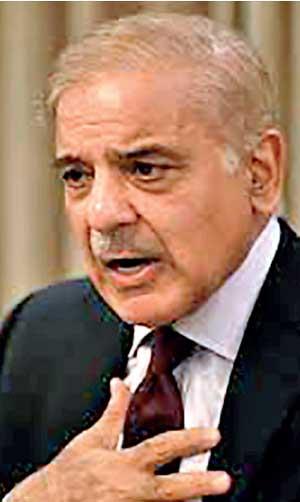 Pakistan’s Prime Minister Shehbaz Sharif also said in a post on X, “With the greatest humility, I am pleased to announce that the Islamic Republic of Iran and the United States of America, along with their allies, have agreed to an immediate ceasefire everywhere, including Lebanon and elsewhere, effective immediately.”
“I warmly welcome the sagacious gesture and extend my deepest gratitude to the leadership of both countries, and invite their delegations to Islamabad on Friday, 10 April 2026, to further negotiate a conclusive agreement to settle all disputes,” he added. “We earnestly hope that the ‘Islamabad Talks’ succeed in achieving sustainable peace and wish to share more good news in the coming days,” Sharif said.
Pakistan has sprung into action. In the region, there are clear reasons for the selection of Pakistan as the venue for talks. It is not incidental. For the parties to the war, Islamabad remains a neutral venue. The perception of neutrality among the parties to the conflict matters greatly in the choice of venue for talks at this hour.
Pakistan is an Islamic country in the region but not a direct party to the war. Unlike Middle Eastern countries that host US military bases—which were targeted by Iran in its retaliatory strikes—Pakistan does not host such facilities. In that sense, it remains neutral as far as this war is concerned. Its relations with the US have evolved positively under the Trump administration since last year.
Pakistan even joined US President Donald Trump’s Board of Peace, which aims to ensure peace in Gaza. Islamabad holds relevance for the US in that context.
Iran–Pakistan relations rest upon a solid foundation of shared history, cultural affinity, and common strategic interests. Iran cannot fully trust many of its Arab neighbours that host US military facilities, but Pakistan is viewed differently.
Iran and Pakistan share a long border and together represent a population of nearly 350 million people. Pakistan maintains relations with both sides as a result and fits the situation as a neutral venue. Besides, Pakistan does not have diplomatic ties with Israel, which enables Tehran to trust Pakistan more.
Pakistan is also strategically positioned at the intersection of the Middle East, Central Asia, and China . This location allows it to function as a natural meeting point for delegations coming from different geopolitical spaces.
In the meantime, Pakistan has its own reasons to act as an intermediary in this regard. Pakistan, a nuclear-armed country, has signed a formal mutual defence pact with Saudi Arabia.
According to a joint statement published in international media, the agreement reflects the shared commitment of both nations to enhance their security and achieve peace in the region and the world. It aims to develop defence cooperation between the two countries and strengthen joint deterrence against any aggression. The agreement states that any aggression against either country shall be considered an aggression against both.
If the current conflict escalates with Saudi Arabia becoming involved, Pakistan could come under pressure to play a role under the terms of this agreement. Such a development could turn the conflict into a war among Muslim countries. Pakistan may want to avoid such a scenario. In that sense, it has its own reasons to intervene in preventing further escalation of the war.
In addition, Pakistan holds the world’s second-largest Shia Muslim population after Iran, with estimates placing the number between 25 and 40 million or approximately 15 to 20 per cent of the country’s total population. If unrest develops in the region, it could become a domestic issue for Pakistan.
Pakistan also cannot afford instability in Iran, which lies in its immediate neighbourhood. If the regime collapses and anarchy prevails in Iran, it will have a spillover effect.
The two countries share a 900-kilometre border that has long been vulnerable to militant activity, smuggling networks, and sectarian spillover. Instability in Iran could increase cross-border movement by armed groups and inflame sectarian tensions within Pakistan, as reported by Pakistani media.
Pakistan’s prime minister has invited delegations from both Iran and the US to Islamabad for talks on Friday.
If the peace initiative yields results, it will be welcome news for the whole world. Sri Lanka is no exception. It has already been hit hard by the knock-on effects of the war. Fuel prices have been adjusted locally in line with spikes in the world market, resulting in a surge in the cost of living. Cooking gas prices have also increased once again.
If the war prolongs, it will further undermine tourism revenue. The flow of remittances could also be affected. As such, a peaceful settlement of the conflict is much desired by countries such as Sri Lanka.
The two-week ceasefire comes after Trump spoke to Pakistan’s leaders, with China also believed to be exerting influence over Tehran.
Now the US and Iran have agreed to a two-week ceasefire. According to Iranian media, Iran will accept the conclusion of the war only once the details are finalised in line with a 10-point peace plan reportedly submitted to the White House via Pakistani intermediaries.
The plan reportedly includes the lifting of all primary and secondary sanctions on Iran, continued Iranian control over the Strait of Hormuz, US military withdrawal from the Middle East, and an end to attacks on Iran and its allies.
Pressure continues to build on all parties to end the war as early as possible.