Reply To:
Name - Reply Comment
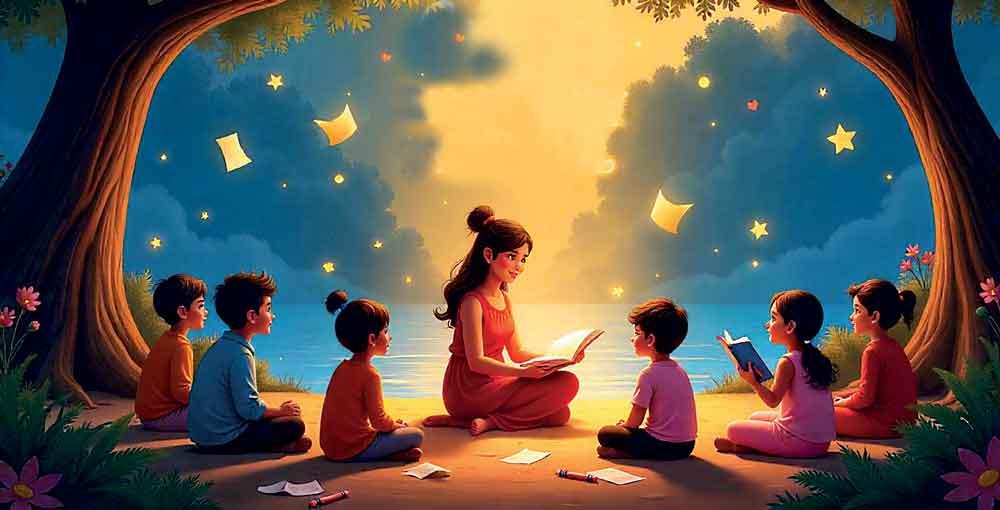
 Emotional vocabulary should not be confined by language. When a child learns to name sadness, joy or frustration in their mother tongue, the experience becomes more intimate and authentic

 On a bright February morning at Cinnamon Lakeside, the usual hush of literary seriousness gave way to something far more vibrant: children’s laughter
Crayons rolled across polished floors, pages rustled with anticipation, and small hands lifted eagerly into the air. At the centre of this joyful energy sat Artika Aurora Bakshi: composed yet animated, listening with the kind of attention that suggests every child’s thought matters.
In a festival that welcomed internationally acclaimed writers and heavyweight conversations, Bakshi’s presence reminded audiences of something fundamental: literature begins not on grand stages, but in small, formative moments when a child first recognises themselves in a story.
At the third edition of the Ceylon Literary Festival, she arrived not merely as an author but as a cultural bridge, linking India and Sri Lanka, heritage and modernity, and most importantly, adults and children.
A Life Rooted in Story
Born and raised in Amritsar, India, Bakshi grew up immersed in the spiritual and historical richness of Punjab.
Today, Sri Lanka is home. That journey, from one culturally textured landscape to another, has quietly shaped her voice as a writer.
Before literature claimed her fully, Bakshi pursued a master’s degree in International Banking & Finance.
It was a path grounded in numbers, structure and analysis.
Yet storytelling lingered, persistent and patient. Over time, she chose to follow it.
She would go on to become one of the most recognisable literary figures within Sri Lanka’s children’s literary scene, an author, editor, workshop facilitator and cultural commentator whose work consistently weaves identity with imagination.
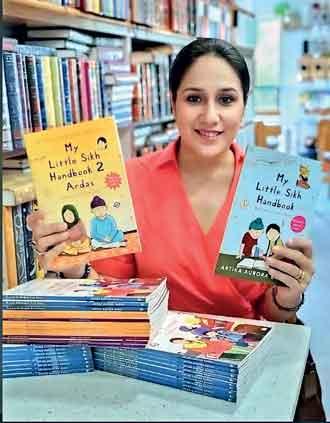
Her celebrated My Little Sikh Handbook series introduced young readers to Sikh faith, values and history through an interactive and accessible lens.
Titles within the series, from explorations of prayer to reflections on the Sikh Empire, invite children into heritage without overwhelming them.
Her anthology Hold On To Me revealed a more reflective, emotionally nuanced side of her writing.
But perhaps one of her most impactful works has been My Little Handbook of Feelings, a gentle, practical guide to emotional literacy for children navigating everyday experiences.
When a Book Finds a New Language
One of the most meaningful milestones in Bakshi’s Sri Lankan journey came when My Little Handbook of Feelings was translated into Sinhala and launched locally through Sarasavi Bookshop.
The translation was not simply a publishing achievement; it was a moment of cultural integration.
For Bakshi, emotional vocabulary should not be confined by language. When a child learns to name sadness, joy or frustration in their mother tongue, the experience becomes more intimate and authentic.
The Sinhala edition opened the book to children beyond English-speaking spaces, allowing emotional literacy to feel personal rather than foreign.
At a festival where conversations explored language, identity and cultural memory, the translated edition stood as a quiet yet powerful example of what literary exchange can achieve.
Translation, after all, is about more than words; it is about belonging.
In many ways, the book’s journey mirrored Bakshi’s own: an Indian-born writer who made Sri Lanka home, whose stories now live comfortably within both worlds.
The Children’s Festival within the Festival
The Ceylon Literary Festival’s third edition unfolded over three days as a rich tapestry of international voices, panel discussions and artistic performances.
Yet, alongside headline conversations, Dukes Court transformed into something equally significant, a children’s literary haven.
Bakshi led sessions titled “Heart Lines: From Stories to Magic”, interactive storytelling and creative writing workshops designed especially for young minds.
Here, literature was not distant or theoretical. It was hands-on, exploratory, playful.
She asked children questions that seemed simple but carried depth:
What does happiness look like?
How do we describe fear?
What happens when we turn feelings into stories?
In a festival space that also hosted discussions on craft, politics and global identity, Bakshi’s workshops reminded audiences that literary culture must be nurtured from the beginning.
The children’s programme, now firmly embedded in the festival’s structure, signalled a commitment to building readers, not just celebrating authors.
And in that room, Bakshi was not performing. She was listening, observing the ways children interpret the world, the honesty with which they express confusion, excitement and vulnerability.
Bakshi’s connection to the festival runs deep.
“So what I feel is I’ve been part of the Ceylon Literary and Arts Festival from its inception. This is the third edition,” she reflected.
“I have seen how the festival has grown, but especially how the Children’s Festival has grown by giving the children the freedom to voice their opinions.”
Over the years, the event has expanded not only in scale but in spirit. What began as an ambitious literary gathering has evolved into a dynamic cultural platform
Yet for Bakshi, the most meaningful transformation has taken place within the children’s segment.
“If you’re trying to build a future generation of thinkers and writers, and citizens who make a difference, it is very important to make them realise that they have a voice right when they are young,” she said.
The children’s programme now begins as early as four and extends to thirteen. That range is intentional.
“They have a voice which is heard, and they have a right to say what they feel,” she emphasised. “We should not be judging any voice based on our limited perspective.”
In her sessions titled “Heart Lines: From Stories to Magic”, that philosophy was tangible. Children were not passive listeners. They were participants. Contributors. Creators. Emotional Literacy at the Core
Bakshi is unwavering about one theme: emotional literacy.
“I want to address something very important, emotional literacy,” she said during our conversation.
“In My Little Handbook of Feelings, I explore how young people understand and express their emotions in everyday life.”
The book examines the subtle emotional rhythms of childhood moments of jealousy between siblings, fear before a new experience, the quiet pride of accomplishment, and the confusion of disappointment. Rather than instructing children how to feel, it gives them the language to recognise what they are already experiencing.
She believes that when children understand their emotions, they are less likely to suppress or misdirect them. They learn empathy.They learn resilience. They learn how to articulate rather than withdraw.
In the festival setting, surrounded by debates on global politics, literature and identity, her focus on something as simple as naming feelings felt radical in its clarity.
The Question of Home
Migration has shaped Bakshi’s understanding of identity in deeply personal ways.
When one of her own children moved abroad, the question “Where is home?” stopped being abstract.
Home, she realised, is layered. It is a language spoken at the dinner table. It is stories repeated across generations. It is cultural memory carried quietly within.
That reflection surfaces in her writing. Her books preserve Sikh heritage for global audiences while remaining accessible to children of all backgrounds. Living in Sri Lanka while holding Punjab close has sharpened her sensitivity to diaspora, belonging and continuity.
Through both English and Sinhala editions of her work, Bakshi demonstrates that stories can create a sense of rootedness, even across oceans.
Writing for the Heart
At the heart of Bakshi’s literary philosophy lies emotional literacy.
She often speaks about how children struggle to articulate feelings. Anger can become silence. Anxiety can lead to withdrawal. Joy sometimes passes unnamed. By giving children language for emotion, she believes, we equip them with resilience and empathy.
In her workshops, storytelling becomes a safe space, a place where children can experiment with identity and vulnerability without fear.
During the festival, she reflected on children as uniquely honest readers.
“They don’t pretend,” she said. “If something moves them, they respond. If it doesn’t, they move on.”
There is no pretence, no literary diplomacy, just instinct. And that honesty is precisely why she writes for them.
A Quiet Legacy
Beyond her books, Bakshi contributes widely as an editor and literary mentor. She co-founded The Good Book Corner, supporting emerging writers. She runs an international book club, nurturing a community across borders. Her articles and reviews appear in regional and international publications, extending her influence beyond children’s shelves.
Yet the most powerful moments remain intimate: a child discovering a new word for an old feeling; a parent recognising the importance of emotional conversation; a classroom where heritage and empathy coexist naturally.
When asked what she would tell her younger self, Bakshi smiled softly.
“You’re going on the right pathway.”
It was not a statement about success. It was a reassurance about choosing meaning over spectacle.
As the festival lights dimmed and children left with signed copies tucked under their arms, one truth lingered. In a world preoccupied with headlines and high-profile literary acclaim, Artika Aurora Bakshi’s work thrives in quieter spaces, where children learn to understand their emotions, honour their roots and listen to others.
Stories, she reminds us, do far more than entertain.
They teach children how to feel.
They teach them how to belong.
And in doing so, they help them build a world that feels like home.